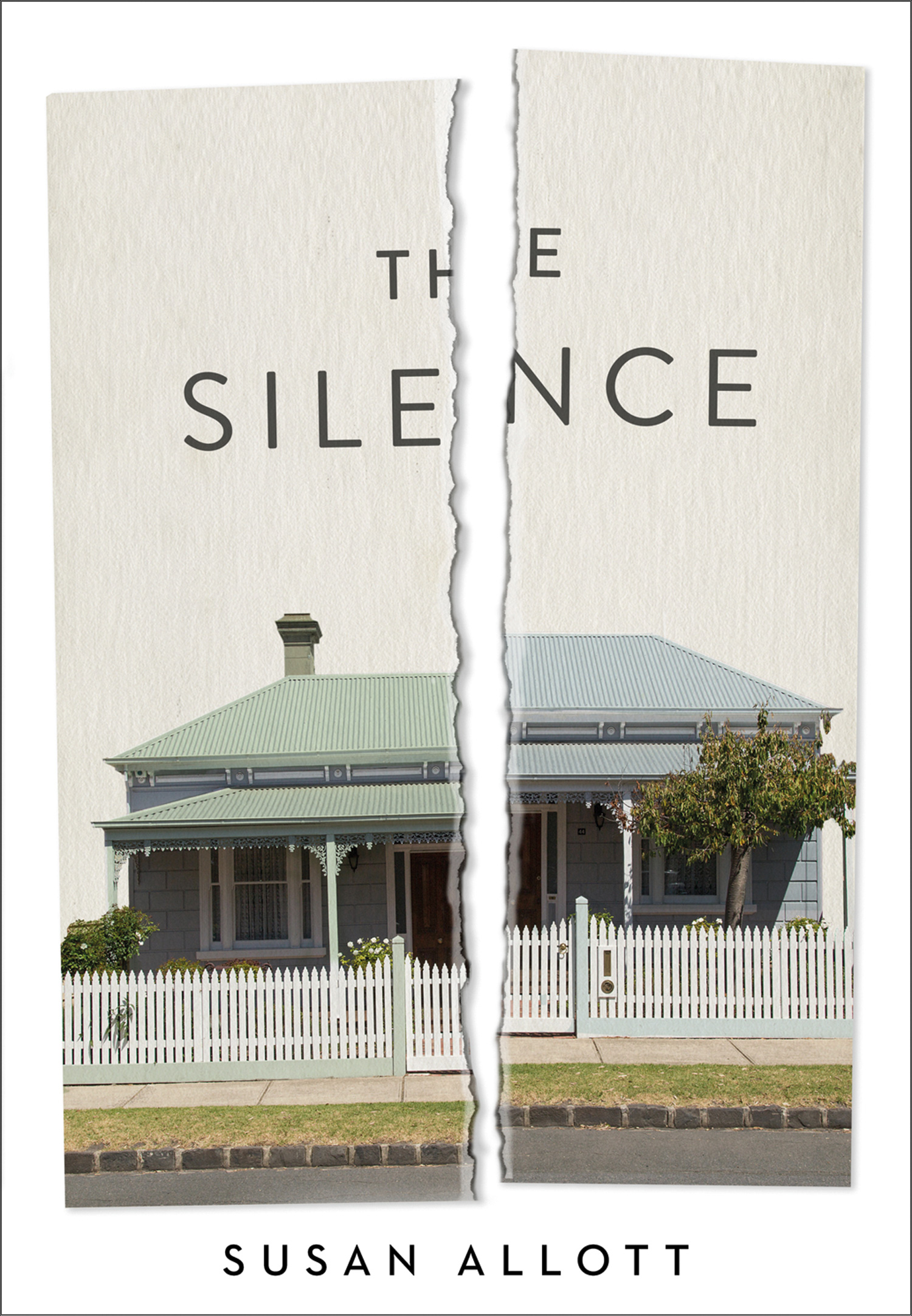
Isla unwillingly plans to go back to Australia for the first time in a decade to support her father. The return to Sydney will plunge Isla deep into the past, to a quiet street by the sea where two couples live side by side. Isla’s parents, Louisa and Joe, have recently emigrated from England—a move that has left Louisa miserably homesick while Joe embraces this new life. Next door, Steve and Mandy are equally troubled. Mandy doesn’t want a baby, even though Steve—a cop trying to hold it together under the pressures of the job—is desperate to become a father.
The more Isla asks about the past, the more she learns: about both young couples and the secrets each marriage bore. Could her father be capable of doing something terrible? How much does her mother know? What will happen to their family if Isla’s worst fears are realized? And is there another secret in this community, one which goes deeper into Australia’s colonial past, which has held them in a conspiracy of silence?
Comment: I stumbled on this book while looking for another title whose action was set in Australia. This one, too, is set there and it would also have a mystery investigation, so I've decided to give it a try as well.
Isla Green left Australia in 1967 as young girl when her mother decided she missed England too much, even at the cost of her marriage. Eventually, they returned but things were not the same for Isla anyway and she now lives in England. Her life isn't great, though, and only the sudden possibility that her father might be involved in an police investigation about their neighbor, who went missing in 1967 forces her to return. However, she isn't at a good place emotionally and the questions she asks of the police and of her family only seem to stress her out. What happened in 1967 and was her father truly involved?
This was a difficult book to rate/grade because while there are several elements I was curious about in seeing developed, the overall final picture wasn't one of great delivery. This was my first attempt by the author and I cannot compare with other things but the style and writing seemed poised and appealing. However, some narrative choices and characterization made me feel things weren't all balanced and the elements I liked individually didn't seem to mesh so great together after all.
The story is set in two different periods: in 1997, told from the POV of Isla and in 1967 from the POV of Mandy, the neighbor who went missing. In a way, this was clever, not only because it offers two different points of view which are opposite in many ways but mainly because the events only make sense described by these two characters. However, going back in forth in times can make the plot feel cluttered and jarring over so many breaks. I've felt this also due to the characterization.
From the start, it becomes obvious Isla has a drinking problem, and as things go by so does her father. I don't remember if this was addressed or mentioned as something they would deal with, but it did color my impression of them, mostly of Isla. Of course, stories don't need to be perfect scenarios and the characters don't need to be only what we envision but this kind of bleak situation, along with the family tension and things we learn of Isla's life, with all the other plot elements, makes for a very depressing story, in the sense everything is closer to being sad/bad then uplifting. I know this might be personal taste, but if Isla, for instance, were to be a happier person or if she had some contentment in her life, perhaps the contrast to the other things would have felt balanced.
Mandy, the other narrator, is a little more likable overall, although her "flaws" are related to her marriage and to her relationship with the neighbors. Mandy is married to Steve, a cop with a very unfair task. He also wants a child and Mandy doesn't, so she deceives him by taking the pill in secret. For several reasons, and after Louisa leaves her husband Joe to return to England with Isla, she starts seeing Joe differently and they become involved. Of course this cannot end well and it is due to this connection that in 1997 Joe is involved with the case again.
Honestly, there was a point I was wondering what the goal was, especially since the investigation isn't truly active as one would think of if this were to be a thriller/suspense novel. Yes, there is a reveal and we do learn of what happened to Mandy, but when this happens I was already feeling rather numb by the repetition of some situations and by the lack of connection with the main characters. Some elements felt unnecessary to have been put together the way they were.
The big issue tacked here is the inclusion of historical facts related to "the silence", as the titles suggests, of what happened to Aboriginal children in Australia, between 1910 and 1970. I think this theme was woven interestingly in the novel and hid the majority of problems with the the plot, but at the same it wasn't clear enough for the characters to be affected by it more strongly, perhaps, with the exception of Mandy's husband. Still, between this and the investigation, the author had a very good basis for a compelling story, but everyone being unpleasant for the most part and an attempt to include so much made the story feel weaker.
The premise of a woman vanishing, with everyone assuming that she left willingly for parts unknown, then a murder investigation starting thirty years later, feels very similar to the case of Marion Barter--only, of course, she disappeared in the last 1990s, not 1960s.
ReplyDeleteAs it is, this one sounds far too depressing for me; I imagine that the author may have tried to present some of the realities of life in Australia's rural communities (where Aboriginal youth are still targeted by cops and put in homes or juvenile facilities, and alcoholism is far too prevalent), but if there is no proper "righting of the universe" at the end, then what really is the point here? So I think I'll skip this one myself.
Yes, I'd use the adjective "depressing" in this context. Plus, some of that historical content wasn't as prominently explained as it should.
DeleteI've checked the Marion Barter link, and there are many similarities... of course, in this novel, the author found a resolution to the case.