Showing posts with label *buddy read. Show all posts

Wednesday, September 14, 2022

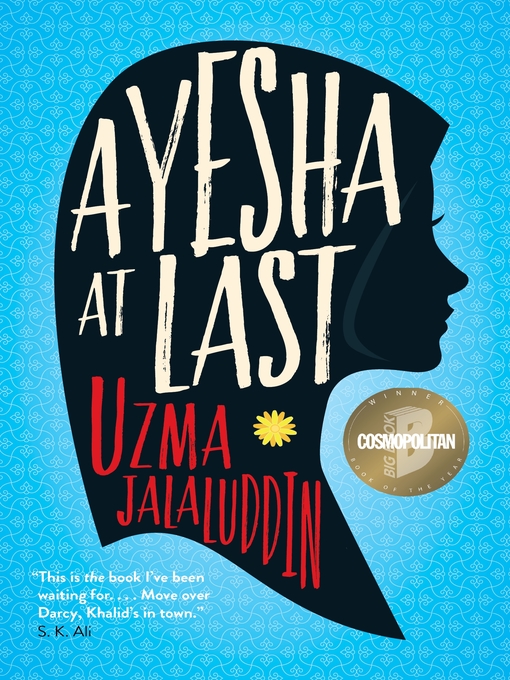
Uzma Jalaluddin - Ayesha At Last

AYESHA SHAMSI has a lot going on. Her dreams of being a poet have been overtaken by a demanding teaching job. Her boisterous Muslim family, and numerous (interfering) aunties, are professional naggers. And her flighty young cousin, about to reject her one hundredth marriage proposal, is a constant reminder that Ayesha is still single.
Ayesha might be a little lonely, but the one thing she doesn't want is an arranged marriage. And then she meets Khalid... How could a man so conservative and judgmental (and, yes, smart and annoyingly handsome) have wormed his way into her thoughts so quickly?
As for Khalid, he's happy the way he is; his mother will find him a suitable bride. But why can't he get the captivating, outspoken Ayesha out of his mind? They're far too different to be a good match, surely...

Comment: The book chosen to be the buddy read with my friend H. for this month of September, I had high hopes for it especially because it would feature Muslim characters, a theme I admit I don't tend to read much of.

In this book, marketed as a Muslim version of Pride and Prejudice, we meet Ayesha Shamsi, a 27 year old woman who just started working as a substitute teacher but her initial experience isn't one of great success. Her family life is usually a good one but her younger cousin Hafsa is now accepting marriage proposals and this does affect Ayesha's emotions since the rest of the family keeps reminding her of the fact she isn't married yet. One day she meets Khalid and all about his ways screams conservative, so she believes they wouldn't be a good match, except the longer they get to know each other and more often they interact, the more she can't stop thinking of him and vice-versa. But would their families think they should be a couple or the arranged marriage method is what they should do instead?

I actually liked reading about this cast of characters. The writing is engrossing and the story different but realist enough to make me curious about what would happen next. It can be obvious where the comparison with Pride and Prejudice happens but I don't think this story needed this tactic, unless it was just a way to expose the book to a broader audience of readers who might not look at it twice otherwise.

The author has certainly read a lot but I think what probably makes her story feel more interesting is the fact she knows what she is writing about. The author is Muslim as well and her knowledge becomes obvious on the page, especially since there are many details on the Muslim religion used to propel the story, as well as how others see Muslims and how Muslims themselves think of their beliefs and such. I'm saying this because even when the story featured things not exclusive to Muslims, their faith and traditions are never put aside and this certainly makes the story feel more realistic.

As one can imagine, several subjects are mentioned and I thought the main one would clearly be on racism because in the beginning, when the focus was on Khalid, who dresses and acts as a conservative Muslim man, this was clearly something he would be subjected to by his boss. However, the story has a wider range of themes and as we get to follow more characters - not just Khalid and Ayesha as protagonists - more little things are shared and while some things are seen in any novel with Muslim characters, some different ones were highlighted here too.

Khalid is described as fundamentalist, he tries his best to follow the strict rules of behavior of a traditional Muslim man. I think the fact he is described as having a beard and wearing traditional clothes paints quite a picture of how we should see him but I also found it interesting other Muslim men he knew sort of mocked him or teased him for it. One of the things I liked the most about the book was the slight peek into what could be the daily interactions or everyday things of people who are in a country where the majority does not have the same rituals or beliefs (action is set in Canada) and how smaller communities live alongside them. I also liked how Muslims are mostly portrayed as quite accepting of others, not imposing themselves... funny we tend to always think everyone believes their ideals are better, isn't it?

Ayesha is considered a modern woman, but she also keeps the traditions of her religion, she also uses the hijab. I think she had a great personality, a good blend of humility and independence and I could understand all her decisions, even those that, from the outside, one would say were silly, such as when she kept helping her younger cousin even though she wasn't nice to her. Of course, this means some situations could have been avoided but where would the fictional plot be then? Still, I was rooting for Ayesha and hoped she would be able to see what was in front of her.

In fact, this did happen way before the end of the book and that is when I finally realized how similar the author intended this to be with Jane Austen's book. Again, I think this wasn't necessary, the story had enough elements to work on its own... This means that, for those who know Pride and Prejudice, there is a proposal which is not accepted more or less half way, and something similar happens here, and there is still a lot of story after what one would think were string situations.

The villains of this book were a bit too clichéd, or had clichéd reasons to be antagonists so I think this aspect could have worked out a little better. Thankfully, most focus was on the main characters and in their personal challenges, and I felt I could truly enjoy reading about them and, at the end, be happy for them when they got their HEA. I think some scenes or situations could have been edited for the "lessons" to have bigger impact but overall, this was a very enjoyable story.
Grade: 7/10

Thursday, July 21, 2022

Chloe Liese - Everything For You

Gavin:
We’ve been teammates for two years, but it feels like a lifetime that Oliver Bergman’s been on my last nerve. A demanding captain and veteran player, I’m feared and friendless, while he’s the beloved rising star, all sunshine smiles and upbeat team spirit. To make matters worse, he’s obscenely attractive. In short: he’s genetically designed to get under my skin.
Avoiding Oliver has been my survival tactic on and off the field. But when Coach drops the bomb that we’re now co-captains, avoiding him becomes impossible, and keeping the truth from him–let alone my distance–is harder than ever.
Oliver:
Life was great until soccer legend Gavin Hayes joined the team and proved he’s nothing like the guy I grew up idolizing. Instead, he’s a giant–albeit gorgeous–grump who lives to rain on my parade. I’ve sworn off pranks since entering the public eye, so rather than settle our differences the Bergman way, I’ve had to settle for killing Gavin with kindness. There’s just one problem: killing him with kindness is killing me.
To make matters worse, Coach gives us an ultimatum: put an end to our enmity or say goodbye to being captains. I’m prepared to be miserable while we meet her demands and make nice, but the last thing I expect is to discover an explosive attraction we can’t help but act on, and worse yet, to realize the man hiding beneath Gavin’s gruff exterior is all I’ve ever wanted.

Comment: A recently published book being read not too long after that... rare! Lol, but I've agreed with a friend to buddy read it this month...

Oliver Bergman is a soccer player and he is living a pretty good life, knowing he does what he likes and his family is doing well. However, for the past two years he has been a teammate of Gavin Hayes, a British player who is now in the US, close to the end of his career, someone whom Oliver has be a fan of for long, for his skills but also because he came out as gay. The problem is that Gavin isn't as friendly and likable as he imagined and their relationship is rather strained. He still respects Gavin's professional work but it is true the rest is difficult. Gavin, on the other hand, welcomes the distance between them, because he sees in Oliver someone who could change everything for him...will they finally find common ground?

In this 5th installment of the Bergman Brothers series, we finally have Oliver's story. Oliver plays soccer and we've known him to be one easy guy, always ready with a smile, which we now learn means he is using that as defense mechanism against anxiety and panic attacks. His life is getting stable and considering this book takes place a few years after the previous one, we get to know what has happened to the other Bergman siblings too.

I saw some comments on the fact this time gap doesn't allow the reader to see how Gavin and Oliver met nor how the dynamics between them started, we only know about it two years after the fact. I suppose we could have had a different pace and this could have been included but in my opinion, the way this ended up happening wasn't too bad either. I do agree perhaps we could have had more scenes with them thinking about the other before they admitted mutual feelings...

I liked this novel, I liked how these two are in different places in their careers and I bet this certainly plays a heavier role in anyone's life than what a novel can convey. Soccer does demand a lot of a player and we often see some who have issues with pain or injuries and that changes everything for them. In this case, Gavin is 34, an age many professional players are ending the career or playing in less competitive championships. This doesn't mean their wok is less than those in the big leagues, but it is a fact it's not the same level of pressure.

Therefore, it was a nice opposition with Oliver, who is 24, so at one of the best years for a soccer player, already experienced in the game but with physical endurance and room to improve. Although the game wasn't as detailed in the story as I wouldn't have minded (it's the sport I understand and follow the most), I think it was enough to establish the rules in the professional relationship they had. But since this is a romance, of course the fascination was to see their personal interactions.

In this regard, I still would have liked to see more things before they were forced to spend more time together. This can indeed change the perspective when it comes how instant or not their attraction and intimacy seemed to be. However, despite Gavin's grumpiness, this is at its base, a story of mutual respect and understanding and it can be said a bit too much sometimes, and when they are in the stage of doubting the other one would actually want to be part of a couple, it's quite a weak plot choice, because it's not up to their personalities - or what we have learned of them by then - and it makes some situations feel too quick or too simple.

Despite the less appealing details, Oliver is such a sweetheart but he isn't high maintenance so to speak, so he is likable and I could easily root for him. Gavin's past is a little dramatic but it's a match to how his personality has developed through the years. I liked the dynamics between them and was always eager to have more scenes with them, but it is true I felt the sexual and emotional tension could have been done a little better at times.

All things considered, this might not be the strongest romance ever, but for fans of the series and of the author's writing style, it was a good work. At least, for me, it worked rather well.
Grade: 8/10

Tuesday, April 19, 2022

Kelly Irvin - The Beekeeper's Son

Phineas King knows better than to expect anything but shock and pity wherever he shows his face. Horribly scarred from the tragic accident that claimed his mother’s life, he chooses to keep his distance from everyone, focusing his time and energy on the bees his family raises. If no one sees him, no one can judge him. So why does he start finding excuses to seek out Deborah Lantz, the beautiful new arrival in town?
Deborah can’t get out of Bee County, Texas, soon enough. Once her mother and younger siblings are settled, she is on the first bus out of this dusty town. She is only waiting on the letter from Aaron, asking her to return to lush Tennessee to be his fraa. But that letter never comes. As she spends time getting to know Phineas—hoping to uncover the man beneath the scars—she begins to realize that she no longer minds that Aaron hasn’t sent for her.
As both Deborah and Phineas try to come to terms with lives that haven’t turned out the way they imagined, they discover that perhaps Gott’s plans for them are more extraordinary than they could have dreamed. But they need to let go of their own past sorrows and disappointments to find the joy and beauty that lies just ahead for them both.

Comment: My friend H. once suggested this book as a possible buddy read for us and now, at last, it was time to get to it!

In this book we follow the Lantz family as they travel from Tennessee to Texas, so that Abigail and her daughters and son can live near her brother John, now two years after the death of her husband. They hope the new community will be welcome and a new hope, for Abigail has reconnected with Stephen, a man she once refused to marry her husband but she hopes time has made it easier to accept a new person. 
At the same time, Deborah, her oldest daughter at 19, is facing contradictory feelings, she wants to be with her family but she is sad she left a special friend behind, Aaron, whom she hoped could marry her. This makes her reluctant to accept life in a new place, especially when it's obvious Stephen doesn't seem the type of man her mother would be happy to marry. 
They also meet the King family, namely Mordecai and Phineas, two man who are humble and both mother and daughter feel close to them, in very different ways. Will the Lantz find a purpose? Will they understand the path God had set for them on time to grasp happiness?

So, no surprise this is an inspirational novel, featuring Amish characters. I think for those who are used to this genre, this book is actually quite good and feels different from many others out there, but if this is a first attempt, I also think it works, for the themes aren't too heavy on religion - I mean, it's there, but not preaching in every page or situation - and there is a good focus on emotions and personal relationships instead of the big picture or simply the Amish style of life.

Actually, I was quite surprised this is a contemporary story! I didn't pay enough attention to the blurb but having read mostly just historicals featuring Amish characters in the past, it was quite a jolt to have references to modern stuff and even french fries at MacDonalds. This is not a problem, it was in fact surprisingly fresh and interesting to have a very different perspective from what I was used to read in this genre and I found myself interested in the characters's worries and dilemmas.

The plot is very simple and with a clear focus. The Lantz family traveled a long way to be close to Abigail's family and for her to possibly marry again..she knows it would be easier for everyone if she did it and there is a man who is interested. We learn they courted in the past but she ended up choosing her husband instead of Stephen. She hoped he would seem different now but as their interactions happen, it becomes obvious Stephen isn't an easy man to love and that their personalities don't match. At the same time, it feels effortless how she and Mordecai connect over simple things such as the fact they are both widowed, that they like the same things, and although this is never mentioned, it is clear for the reader they feel attracted too.

We also have Deborah and Phineas' story, which becomes obvious from the start. Their relationship is more opposites attract, not only because Deborah first is pining for her previous life and dreams but also Phineas isn't very social, due to an accident in his youth, which caused him to end up with many scars and his mother died. There's a certain vibe of "beauty and the beast" here but the idea is for us to get to see how they slowly realize that person is perfect because they both take the time to know each other and to want the best for one another.

I don't think it's any surprise that both couples end up finding happiness while dealing with external issues such as a fire for instance, which affects several things, but that the majority is indeed on how they an emotionally heal from what they faced before, what kind of expectations they all should have and how love and happiness don't have to be so complicated, except for conventions and if one cares for the feelings of others.

Of course, the Amish element also includes some "rules" of behavior, social conventions that must be followed within the community. I believe what was shared is realistic, although it isn't a subject I'm familiar with, but the content is approachable enough to even a non believer or for a person without any specific faith to appreciate the importance of it for the characters.

This was a simple romance, with expected scenes and situations, but I liked reading it, it did give me an idea of what the contemporary lives of people in Amish communities might be dealing with now, how they organize themselves and why and how they deal with outsiders as well...well, more or less, we didn't have much of it but I was able to get an idea. I'm not yet certain I will read the next book...
Grade: 7/10

Tuesday, March 22, 2022

Tracy Chevalier - A Single Thread

Violet is 38.
The First World War took everything from her. Her brother, her fiancé – and her future. She is now considered a ‘surplus woman’.
But Violet is also fiercely independent and determined. Escaping her suffocating mother, she moves to Winchester to start a new life –a change that will require courage, resilience and acts of quiet rebellion. And when whispers of another world war surface, she must live with a secret that could change everything…

Comment: I got interested in this book some years ago, mostly because it had a blurb which made me think about a single woman facing obstacles but learning to have a satisfying life at a time women didn't have many options if they wanted to have a fulfilling life. It also helped that, like many others, I have liked reading Girl With a Pearl Earring, the author's most famous work. Then, I convinced my friend H. to buddy read it.

I figured this book might also be a compelling one and the idea of it certainly was. In this book we follow Violet, a 38 year old woman who after WWI is considered a "surplus woman", considering the difference ratio from women and men due to so many lives lost at war. Violet lost her brother and her fiance and her prospects never changed and now she works for a little independence. Her main act of rebellion was to move out of her mother's house so she can have her own life. She care for her mother of course, but she is a difficult woman to please and endure. However, Violet struggles and being independent means she has to go without some things. In an attempt to battle loneliness she attends a service at Winchester cathedral and learns about the "broderers", women who embroider in a specific style. As she decides to join them, she gets something to occupy her time but also a new set of friends and acquaintances, among which  bell ringer Arthur, a fascinating but married man. As her existence goes on as quietly as it has always been, will Violet find what she is looking for in life?

I confess I expected something a little more objective when I started the book. I thought the end game would have a more specific goal in mind but this novel is slow paced and it doesn't lead to any thrill seeking scenarios nor does it offer a cute romance or cozy finish for us to feel Violet's life had this big purpose or why she had to go through the problems she had.

I missed a more obvious plot centered story, that's a fact. It felt as if things were being said, Violet was doing this and that dealing with feelings, with what others did/caused around her and I thought, certainly there is a reason why this was included, how can this matter when we get to the climax of the story or for how it's going to end? After all, there didn't seem to exist an end game and this was truly only an episode on Violet's quiet life and how what she faced must have been what so many other women in the 1920s and 1930s lived through.

In terms of historical content, I can't say I fault what the author chose to include, and I did learn a lot about this time period, this specific situation between wars and how society still judges some social groups over situations out of their control. It was also interesting to learn other things, which I confess I never thought about, namely how specific are the sounds of bells, how they work, also the embroiders and why some patterns were chosen, how the specific type of embroider mentioned in the novel is different from others, and the most obvious detail which I didn't know anyway, Jane Austen is buried at Winchester cathedral. It made me want to google it and see images.

Violet is a fascinating woman, for certain. She has her own mind, she is strong and clever but she is still forced to certain behaviors because of society and her time. Looking at examples like these, especially in fiction books with a drama tone, one can wonder how those women who thought for themselves coped, pushed behind a set of rules which they could not escape if they wanted to maintain their reputations and the friendship/respect of their closest friends and family. Violet isn't the only example in this book of this subject and the author, again, left a lot of food for thought. I also think her personality isn't always showed in the best light. Her acts of rebellion, while understandable, made me think the goal was to present some of the most unfair aspects of women like her, and not a truly likable, if still fictional, heroine.

However, it felt as if Violet's path had no way to run. Her choice of friends, the options she makes to keep her sanity and self respect can be seen differently depending on the perspective, but the actual actions she does, the choices she makes while the story unfolds can seem too stagnated. At the same time, what could she do? But I imagined the plot would have a more specific purpose, that something more satisfying, more definitive would happen to Violet, something that would reveal to her a path she would be happy with. I suppose some readers would say this happened, that this was accomplished with a surprising twist at the very end, but I still feel there was some build of expectations and as if something else would happen and in the end, it didn't.

I think the overall effect of how this was written made me think the pace was a bit too slow most of the time. I don't mind this but I kind of would have liked seeing something different, something to make Violet feel she would be gaining so much more than she did. Her frame of mind never really improved, and if not romantically - which could be too convenient perhaps - at least I hoped her friendships with the other embroiders and the sense of community she gained would have touched her life in an even more decisive way. She found some happiness in life in the end, but at the still expense of some bitterness over things she could not change.

All in all, this was an OK read, instructive but I wanted something even more special out of the plot.
Grade: 6/10

Thursday, May 27, 2021

Lucy Tan - What We Were Promised

After years of chasing the American dream, the Zhen family has moved back to China. Settling into a luxurious serviced apartment in Shanghai, Wei, Lina, and their daughter, Karen, join an elite community of Chinese-born, Western-educated professionals who have returned to a radically transformed city.
One morning, in the eighth tower of Lanson Suites, Lina discovers that a childhood keepsake, an ivory bracelet, has gone missing. The incident contributes to a wave of unease that has begun to settle throughout the Zhen household. Wei, a marketing strategist, bows under the guilt of not having engaged in nobler work. Meanwhile, Lina, lonely in her new life of leisure, assumes the modern moniker taitai--a housewife who does no housework at all. She spends her days haunted by the circumstances surrounding her arranged marriage to Wei and her lingering feelings for his brother, Qiang. Lina and Wei take pains to hide their anxieties, but their housekeeper, Sunny, a hardworking girl with secrets of her own, bears witness to their struggles. When Qiang reappears in Shanghai after decades on the run with a local gang, the family must finally come to terms with the past.
From a silk-producing village in rural China, up the corporate ladder in suburban America, and back again to the post-Maoist nouveau riche of modern Shanghai, WHAT WE WERE PROMSED explores the question of what we owe to our country, our families, and ourselves.

Comment: This is the book I scheduled to buddy read with my friend H. this month. I can't remember why we added it to our TBRs but it probably had something to do with the characters being Asian and returning to their country after years living in America and how the cultural and social changes might be.

In this novel, the author's debut, we meet the Zhen family and the story begins when they move back to Shanghai after years living in America. Due to Wei's work, he and his wife Lina and their daughter Karen return to a very different city from what they remember and they all realize their experience abroad has made them look different to those who never left. There is a difference in social status, in how everyone sees them, both Asians and foreigners with whom they still have contact and even in what kind of behavior is expected of them. How can they cope with such changes and what can it mean to how they deal with the impact of their backgrounds on the choices they made, especially Wei and Lina?

I think the idea of this book was an interesting one and that was, mostly, why I liked the blurb and why I felt compelled to read it. I was curious to see how the family would deal with going back to a city they left with big dreams and even though they return with social status and financial stability, are they the same people? Can they still relate to other Asians? Do others see them as foreigners now too, since they assimilated so much of the culture of the country where they stayed?

All these things inspired me to want to read the book and I thought this would be the core of the story, whether focused on the family as a loving group facing changes together or as people who would find a new connection by sharing the experience of returning. I really thought this would be it and added to the characters mentioned in the blurb, I imagined they would face some problems or some shocks when dealing with an Asian employee who didn't have the same opportunities and a family member with different points of view and notions of what was right or wrong.

Well, the focus of the story is actually the characters' secrets and insecurities. Lina spends the whole book explaining why her arranged marriage is the way it is and how she felt she was in love with her husband's brother and Wei is an workaholic who can't seem to be able to communicate with his wife and child. I suppose I shouldn't expect a focus on cultural aspects just because it's a different culture from mine and that apparently mundane issues would be so important but, alas, it feels like it was so.

I lost interest in the story as the pages went by. I kept reading so I could talk to my friend about it and I still wanted to know if there was some kind of event or reveal that would surprise me at the end but to be honest, I don't feel it happened and the end was as bland as the beginning. I see the author wanting to convey an idea, a slice of life of a family and how the things from their past influenced several of their choices but apart from one scene or two I don't think anything that matters really took place here and the characters didn't seem to evolve or be affected that much by what was going on. Sure, they would think on things but how that impacted their personalities/behavior, I don't think it showed.

If the characters don't see to have any kind of break through, what is the goal here, I wonder.... just a sharing of how expectations and cultural traditions might impact someone's choices? Not really, perhaps more an impact on their feelings about the whole thing but I was quite bored by how flat the characters' remained until the end, as if being part of this story was not even relevant, much less special.

The execution felt a little weak, some things weren't developed well, other things took too long and went nowhere (like setting up some idea/ situation and then nothing comes out of it), the author seemed to want to convey tension and uncomfortable relationships but the book ended before anything could reach any sort of climax. the things being shared, Lina's secret feelings and all that felt very thin if one looks at this as a drama she could not avoid. Some chapters were a little boring.

I was not impressed with this, I really thought the story would go on a different rout, based on the blurb. I thought it would also include a lot more Sunny, the housekeeper turned babysitter, and although I wasn't expecting a focus on romance, I feel the character's relationships were not explored well enough and the rest felt too bland. I think this will not be a book I'll remember much of in a few weeks.

Grade: 5/10

Tuesday, April 27, 2021

Bethany Chase - The One That Got Away

Sarina Mahler thinks she has her life all nailed down: a growing architecture practice in Austin, Texas,and an any-day-now proposal from her loving boyfriend, Noah. She’s well on her way to having the family she’s hoped for since her mother’s death ten years ago. But with Noah on a temporary assignment abroad and retired Olympic swimmer — and former flame — Eamon Roy back in town asking her to renovate his new fixer-upper, Sarina’s life takes an unexpected turn.
Eamon proves to be Sarina’s dream client, someone who instinctively trusts every one of her choices — and Sarina is reminded of all the reasons she was first drawn to him back in the day. Suddenly her carefully planned future with Noah seems a little less than perfect. And when tragedy strikes, Sarina is left reeling. With her world completely upended, she is forced to question what she truly wants in life — and in love.
Full of both humor and heartbreak, The One That Got Away is the story of one woman’s discovery that, sometimes, life is what happens when you leave the blueprints behind.

Comment: This is another buddy read pick with my friend H. It was in the pile since  2015 and I can't remember why anymore... I already tried to write down in my all-purposes notebook why I get interested in some books but I realized I was too lazy to carry that notebook so often I simply forgot. Anyway, this is a contemporary story and, overall, I liked spending my time reading it.

In this story we meet Sarina, an architect who is very proud of her work, who has a steady relationship and a close circle of friends which means her life is a little predictable but just the way she likes it. Things change when Eamon, the guy she feels is "the one who got away", returns to Austin and she knows they will see each other often for he is one of her roommates' best friend. At first she feels awkward because they had one night stand which led nowhere and Sarina has always wondered if Eamon simply didn't like her as she felt she liked him but somehow she finds herself working for him as he plans on renovating a house. The more time they end up spending together, tough, the more she realizes her feelings for him might not just be about missing closure from the past and she starts questioning several things...

Like I said, I enjoyed reading this book for the most part. It is true it is quite predictable in how it develops, especially the romantic relationship, but the author has managed to convey a very solid emotional response and I think that is how this can be seen as different from other books with similar plots.

Sarina is an everyday character, she is a busy working woman, she has a personal life which seems balanced and she clearly loves her friends and doing things with them. Her personality comes in little descriptions, in small things but it allows us to have quite an idea about how she is. What I liked the most was how we could see she still missed her late mother and how much she cares for her stepfather, who still lives back in Virginia, where she is from. In fact, the element in this novel I liked the best was precisely this, how the author wrote about Sarina and her stepfather, about the emotions an their relationship with one another and in relation to her mother.

I also liked how much of Sarina's job was on the page. Unlike other stories where 1) or the job is just an excuse to develop the plot or 2) we barely see the character work at all, in here the author has written quite a lot of scenes where Sarina is working or dealing with work things and there's even some professional/realistic talk about it. I don't think it was detailed enough to put off who doesn't care about the subject but to me it helped me to have an idea about her skills, her interest and professional responsibility. It was a nice detail and the author obviously asked questions!

The romance is a little...not as wonderful as I wanted, to be honest. On one hand, I must say the author was clever in creating division between Sarina and her boyfriend, in letting us know how he might not suit Sarina in the long term but I didn't dislike him. It was also refreshing to see he wasn't painted as the "villain" and until the very end I felt conflicted about the fact Sarina might pick him instead of Eamon, the new guy, a decision that Sarina left to the very end of the book.

Eamon, in my opinion, was just an OK love interest. Perhaps it's the fact this was told from Sarina's POV but I'd say this book is more 60% woman's fiction and 40% contemporary romance. Therefore, I wasn't too annoyed at not having Eamon's POV but as the story moved forward and things got to a point where it was obvious Sarina would end up choosing one guy over the other, it started to be too noticeable for me and there were some things I wasn't too fond of, some situations between them all were dragged and I'd say were there just for drama purposes. 

In my opinion, the end was rather quick for the amount of time it took to get there. One small last chapter saying how things went with Sarina and her chosen guy certainly didn't feel rewarding enough and after a story with so many interesting and complex emotions ongoing, the end did feel a little weak and incomplete. Perhaps it was just an impression on that moment but I did wish for more on that regard.

All in all, this was a good enough story, easy to read, fluid writing, interesting elements and execution but there were things I feel weren't as well done as they could. I might try something else by the author one day, and compare.
Grade 8/10

Wednesday, April 7, 2021

Kristin Hannah - The Nightingale

FRANCE, 1939
In the quiet village of Carriveau, Vianne Mauriac says goodbye to her husband, Antoine, as he heads for the Front. She doesn’t believe that the Nazis will invade France...but invade they do, in droves of marching soldiers, in caravans of trucks and tanks, in planes that fill the skies and drop bombs upon the innocent. When France is overrun, Vianne is forced to take an enemy into her house, and suddenly her every move is watched; her life and her child’s life is at constant risk. Without food or money or hope, as danger escalates around her, she must make one terrible choice after another.
Vianne’s sister, Isabelle, is a rebellious eighteen-year-old girl, searching for purpose with all the reckless passion of youth. While thousands of Parisians march into the unknown terrors of war, she meets the compelling and mysterious Gäetan, a partisan who believes the French can fight the Nazis from within France, and she falls in love as only the young can...completely. When he betrays her, Isabelle races headlong into danger and joins the Resistance, never looking back or giving a thought to the real--and deadly--consequences.
With courage, grace and powerful insight, bestselling author Kristin Hannah takes her talented pen to the epic panorama of WWII and illuminates an intimate part of history seldom seen: the women’s war. The Nightingale tells the stories of two sisters, separated by years and experience, by ideals, passion and circumstance, each embarking on her own dangerous path toward survival, love, and freedom in German-occupied, war-torn France--a heartbreakingly beautiful novel that celebrates the resilience of the human spirit and the durability of women. It is a novel for everyone, a novel for a lifetime.

Comment: This was quite a well liked book for many people, especially in 2015 and 2016 when the hype was high. I purchased my copy at a book fair but I have delayed reading it because everything pointed to the fact it would be a book to make you cry.... finally, I scheduled a buddy reading with someone and we dived in. I liked it but mostly for some parts...as a whole I wouldn't go and say it was a favorite.

In this story we meet sisters Vianne and Isabelle, who have completely opposite personalities, as they go though the events from 1939 and onward. The second world war is happening, France is conquered by the nazis and in some places, there's occupation by them. Such is the case of Vianne's house and she can't say no to that decision. She only hopes things end quickly so she can have her husband and her life back. Her younger sister Isabelle is in Paris but their aloof father sends her south because he believes she will be more protected. However, Isabelle is a rebel and after a while she can't take sharing a house with a nazi anymore so she leaves again for the capital. As we learn about the difficulties the sisters face, as well as all the injustices being committed, is there any room for hope?

I think I understand what the hype was about and why this title was so well received and even won some awards. The story is detailed but not overly graphic and there's a clear focus on the sister's paths and the consequences. I think the aim was to make this an unforgettable story about facing adversity but there were a couple of things that failed to impress me.

Before that, however, I should say that I liked reading the book and I liked thee was a certain mystery around the storytelling. The first chapter is told from the POV of an old lady and the kind of information she shares is vague enough to let us realize the story will be dramatic but not s much we can guess right away who is saying those things. Therefore, there's this on going mystery until the last chapter on who is the old lady. Of course I had my ideas but I assumed it had to be one of the main protagonists.

This, then, sets the tone for the rest of the story. We are told about what happens by alternate entries of the two sisters, where we follow what happens to them as the plot moves along. Their choices are as opposite as their personalities but, I suppose, the interesting element here is that nothing is black and white, perhaps not even in a war, and their choices make them think and consider what will happen to them. I liked this "human" side of things, but I must admit I wasn't always as...dedicated to their plights as I feel I should.

I imagine this might be one of the elements I found less captivating... For most of the novel (more or less until chapter 31 or 32) I was sad over some things, some scenes, but it wasn't as heart wrenching as I thought the book would be. The WWII is such a theme, more times not not it can make you incredibly sad and overwhelmed, but in this case I wasn't feeling it. I don't even think it was because the author wanted to do this on purpose, I just feel the writing to me simply made things seem...detached. Then the final chapters come in and well, I guess that's where all the crying is supposed to happen because some scenes did make me cry.

Another element I didn't find as compelling - everyone sees things their won way! - was Isabelle's work in the Resistance. Yes, it was risky, brave, necessary and all that but the mechanics, the descriptions of what she did, that I imagine were there to highlight the danger, the sheer belief they were doing something important (which they were), simply felt unappealing to me to read about them. I can't explain but I confess I skimmed a few paragraphs.

Unlike other readers, I was much more interested in what was happening to Vianne and her challenges in keeping up appearances, having to try to be calm in the midst of such worries. To me, the biggest twists/shock factor situations were related to her and how she lived this period of occupation. There were some passages that were quite dramatic and well done by the author when it came to Vianne.

Things progress in a way that we just have to know something bad will happen. Some do before the end, that affect what comes next and some of those events make think "really" but in a surprising way, I didn't expect the author to write the plot like that. When we come to the end of the novel and things seem to start being fixed, ready for a conclusion, there are some emotional scenes I think were well done too.

Many people talk about this being a tale of women during the war, how they coped, how they had to endure and resist such difficulties, how they also risked their lives, whether for their country or their sanity, and I appreciate all the possible ways of looking at this. Nevertheless, some parts of the book worked well for me, other parts weren't as captivating, and in the end I liked it but it wasn't as great as I thought it would be. I'll read another book by the author to compare the writing style.
Grade: 7/10

Tuesday, March 16, 2021

Jessica Shattuck - The Women in the Castle

Set at the end of World War II, in a crumbling Bavarian castle that once played host to all of German high society, a powerful and propulsive story of three widows whose lives and fates become intertwined—an affecting, shocking, and ultimately redemptive novel from the author of the New York Times Notable Book The Hazards of Good Breeding. Amid the ashes of Nazi Germany’s defeat, Marianne von Lingenfels returns to the once-grand castle of her husband’s ancestors, an imposing stone fortress now fallen into ruin following years of war. The widow of a resister murdered in the failed July 20, 1944, plot to assassinate Adolf Hitler, Marianne plans to uphold the promise she made to her husband’s brave conspirators: to find and protect their wives, her fellow resistance widows. 
First Marianne rescues six-year-old Martin, the son of her dearest childhood friend, from a Nazi reeducation home. Together, they make their way across the smoldering wreckage of their homeland to Berlin, where Martin’s mother, the beautiful and naive Benita, has fallen into the hands of occupying Red Army soldiers. Then she locates Ania, another resister’s wife, and her two boys, now refugees languishing in one of the many camps that house the millions displaced by the war. 
As Marianne assembles this makeshift family from the ruins of her husband’s resistance movement, she is certain their shared pain and circumstances will hold them together. But she quickly discovers that the black-and-white, highly principled world of her privileged past has become infinitely more complicated, filled with secrets and dark passions that threaten to tear them apart. Eventually, all three women must come to terms with the choices that have defined their lives before, during, and after the war—each with their own unique share of challenges. 
Written with the devastating emotional power of The Nightingale, Sarah’s Key, and The Light Between Oceans, Jessica Shattuck’s evocative and utterly enthralling novel offers a fresh perspective on one of the most tumultuous periods in history. Combining piercing social insight and vivid historical atmosphere, The Women in the Castle is a dramatic yet nuanced portrait of war and its repercussions that explores what it means to survive, love, and, ultimately, to forgive in the wake of unimaginable hardship.

Comment: This is the buddy read my friend H. and I agreed for march. Books with or about the WWII theme are many and since it's a theme we both like, its no wonder sometimes we settle on one. This book has cute covers (all the ones I saw are beautiful) which is a plus and the blurb sounded promising and the decision wasn't hard to make. We finally got into it this month but I must say that, for me, it ended up being less amazing than what I imagined.

In this book we meet and follow three women right after the end of the WWII in Germany. They are wives, widows to be more precise, of some of the men involved in the attempted assassination of Hitler in 1944. That failed and the men were executed but Marianne, the wife of an important man, has promised to help all the wives she could if the plans didn't go well. As soon as the war ends and people can start traveling again, she helps Benita and her son Martin, as well as Ania and her two boys. They all go to live in Marianne's husband's family castle with Marianne's children while healing from the effects of the war. As they deal with the past, can they look for to some kind of steady or even a happy future?

At first I was quite eager to read this book. I confess I created some expectations of what this story could be about and how it would develop... I anticipated hard, heartbreaking scenes, emotions and, by the blurb, I fabricated in my head this sweet second chance type of plot where these women - who suffered - had to live with survivor's guilt and the terrible memories but, with time and caring, they might be able to have a second chance at love or, if not that path exactly, at least the women would have a strong friendship and their lives would somehow be related to some kind of life at the castle or big house as I pictured instead.

Why did I imagine this would go onto sweet/ tender relationships among the women and perhaps new romances for them, as if this would be an attempt to grab life while they could after a terrifying existence while the nazis were in power, I don't know, but that was the idea I set my hopes on which means after the first chapters I started to feel a little disappointed. It's true this isn't the author's fault nor the book's, but to be honest, the story that was presented didn't win me over and changed my mind. 

It is clear the author have investigated the theme, in fact her family is part German so she had grandparents who could give a personal view of those days. She also includes notes at the end of the book to add some extra information. I can believe she has spend al those years creating and shaping the novel and that is never to be brought don, for there was a lot of effort here. However, to me, the writing wasn't as intimate as it could be. I wonder if the somewhat sense of guilt she admitted in the notes of being German and having the weight of History wasn't one reason to write less...emotionally?

I'm not saying there aren't touching or hard scenes/information here about what the nazis did and how that affected people, especially civilians in Germany, after all the enemies of the nazi regime weren't only the larger groups we tend to hear about (Jews, Allied forces, etc) and certainly many German citizens suffered but I got this from my experience in reading other books, not as much by what I was reading here. Yes, this is all quite personal and others see it differently but I think the author could have made this emotional. I felt sorry for the characters and I wished they could be able to evolve from wat happened and be there for their children, etc. But the characters felt rather boring to me.

Marianne is the main character, she is the driven force that unites these people together, although she is a little set on her goal and can't seem to see the softer side of others and that not all react like she does. Benita is younger but her experiences during the war and as soon as it ends are the worst of the three. I felt very sorry for her but despite what was being said on the page I kept having difficulty connecting with her. Ania is the most resilient, with a better ability to notice the details and the practicality of things. I felt more empathy with her.

These are the women whose choices we see while they are in each other's lives. But sadly for me, they don't live together al that long and while they do their relationship never goes beyond what it is when they arrive at the castle. Several chapters are about the past of each, about the war times and then about the future, while they are apart, etc. Now, I don't really ind this tactic but then why was this title chosen, it suggests the action will be mostly set in the castle and, after all, it isn't.

I'm sounding rather picky, I know, but despite the fact it was easy to turn the pages, I wasn't feeling completely invested in the characters' journey nor in what they experienced. The way things went, I was not convinced this was the story told in the best way possible. I know this will be unfair to say but to me these characters will be forgotten quickly, for the book didn't get past average to me, the connection just wasn't there.

Grade: 6/10

Tuesday, October 20, 2020

Jo Goodman - Let Me Be the One

A Lady with unusual connections, Elizabeth Penrose is wise, witty, beautiful, and quite determined to
remain alone.
Brendan Hampton, Earl of Northam, also known as North, is pursuing a jewel thief with the help of his three boon companions: South, East, and West—The Compass Club.
Then North is accused of being the very thief he is seeking and Lady Elizabeth steps forward with an alibi, one that necessitates a hasty marriage. Their lives thoroughly complicated by secrets, Libby must make a harrowing choice: trust her husband, or lose him forever. 

Comment: This is the latest buddy read choice I agreed upon with my friend H. 

I can't remember exactly why this was a book we marked to read, perhaps because it would feature a heroine in need of help, but after some years, who knows. Since we both like historical romance, we believed this was going to be a good bet but now we both finished, it seems it was only average for the two of us. As for me, the issue was on how the information is presented to the reader...

In this story we meet hero Brendan Hampton, earl of Northam (North) who, along with his friends from school years (heroes of the next books, this being the first), is part of a small group called the compass club due to the singularity of their titles. They are also charged to find and stop a thief who has been stealing from the ton, meaning it has to be someone who can mingle among the wealthy. That is how he comes to a house party and ends up meeting Elizabeth Penrose, a lady who seems to be a companion to the host despite everyone knowing her father allows her access to money. While they get to know one another and slowly fall into appreciation and then love, the thief strikes again and all clues point out to North. Elizabeth decides to save him by revealing herself as an alibi and that means they need to marry. But will they both trust one another with their secrets?

There were times this was a very confusing story. By reading some opinions and now that I have finished, it's clear the author had that intention from the start, so this story was a mix of intrigue and romance but that meant the method used was to keep the reader blind to certain facts. I can understand this tactic but to me, personally, I wouldn't say it was that well achieved; I know it has worked well for others.

The hero pretty much presents himself from the start as someone with a mission, so the big secret concerns the heroine. It's not too difficult to believe in the reasons why she felt she had to behave like that, as if she were someone who kept the distance from others for some reason, but the way this story is told, while her secrets are kept hidden from the reader, how some red herrings are given for distraction but to me amounted to confusion, how she still allowed herself to feel inferior over the hero in some matters wasn't done in the best way, to make the end feel rewarding. I liked there's a HEA but I was not fully convinced they deserved it...it came to a point I felt these two were just too annoying.

When I finished, I kept thinking all the little details made sense (like why she didn't trust the hero sooner) but when the big reveal is finally in the open, of course that was only possible by how the author manipulated the reader. It was not only the fact some things weren't told on purpose, but how others were mislead for the same reason. I thrillers this works very well because the goal is to uncover a truth I suppose, but here, this being a romance, the goal is to make the hourney worth the HEA and I don't think the hidden stuff was balanced enough with positive scenes or with sharing of things between them to even out the field.

Elizabeth, is, therefore, a mysterious woman. I did feel sorry for what she went through but if she saw herself in such a situation, when she got to a point of no return, I can't imagine her pride would be worth more than her honor...I think she should have asked for help..and she had someone she could go to. North is easier to read but he, too, has his weak moments. For the most part he was as in the dark as the reader so I can discount that on his behavior but he wasn't always an easy character to sympathize with, same as Elizabeth.

I've read this style is characteristic of this author, meaning this way of cleverly insert information that only means something later...but someone has written this can feel manipulative and I agree, because not everything is being told in a way that which could explain why the information wasn't given directly. The method might be clever and intentional but I wasn't as happy about it for most of the reading experience so I can't say I would feel like trying it again so soon.

Grade: 6/10

Thursday, August 20, 2020

Rosy Thornton - More Than Love Letters

When Richard Slater receives a letter of complaint from one of his constituents, a Margaret Hayton, he merely responds with his standard letter of empty promises. Clearly, this woman is insane and must be avoided at all costs. But she will not be dismissed so easily, and when Richard finally sets eyes on the twenty-something vision in stone-washed denim, with a cloud of dark ringlets and huge, serious eyes? he risks losing his heart, his head and quite possibly his political career. 

Comment: I remember adding this book to my TBR back in 2016 probably because it would feature what looked like a opposites attract type of relationship which would develop through letter exchange. I like the trope and I like the epistolary tactic of telling a story and this means I was very eager to read the book.
Of course it took some years but this month I decided to start it along my buddy H. 

This story begins with a letter Margaret Hayton sends to her MP in the Ipswich area regarding some issues she's noticed haven't been solved in where she lives. We get, from her letters, she is a self conscious citizen, albeit a little too dedicated to her causes, which are quite a few - we learn this throughout the book.
The MP is Richard Slater, an older man than her, who wants to rise to a more prominent position other than Ipswich and he only sends off patterned replies. One day, however, after some insistence from Margaret and the coincidence of a possible wake up call to his political ambitions, they end up meeting and Richard's world changes, for he expected a senior and ends up with a young woman in her 20s who is beautiful too.
As the two join forces to help a young refugee, they realize they have a lot in common but will it be possible for two different people to really make it work without causing a scandal?

The idea of this book is a great one. Other author have done it, others will likely do it again, but this concept of having a full bodied plot and story developing while the reader only has access to letters or email exchanges and never "sees" the characters interact. This means the story and the letter wording has to be done well for the story to make sense and for the situations described to be believable.

I'd say the biggest possible issue of this sort of narrative is that it might not always be very convincing people would right the way we, readers, need it to be for the story to have a cohesive development. Do we really add that much detail to our messages? If people are aware of a situation, do they describe so many things this way? I'd say there's a thin line between making a story presented like this to work out well or to be too implausible.

This said, I was entertained and delighted most of the time but there were a few moments that it did feel as if the exchanges weren't as realistic because we were given information that didn't feel as if one would really write it in an email exchange (I don't mean the more mundane or cutesy wording or even how friends call each other, but the whole full narrative of a certain situation).

The story is quite simple but there are interesting elements and secondary characters too. Although Richard and Margaret begin their association over a community issue, they soon join forces to help a woman who was welcomed by a group who works with women in need, such as refugees, women in danger, women who are recovering from a health or social situation, etc. The woman they help is from Albania and she would be mistreated by her family were she to return, over religious issues. 
As the situation develops, we get, through emails, how Margaret and Richard help her, often by reading the emails they both send other people. 

We also have emails and messages exchanged by others and this helps us to have an idea of the personality of the characters and how they are interacting with one another. There is one case along the helped women, though, which is quite serious and difficult to go through and it also causes one point of conflict further in the story between Margaret and Richard. I think what we learn is enough for us to make our minds but at the same time, it can be a little hard to feel the emotional impact it would otherwise have, because reading about the effects/consequences of some actions in a letter is not the same as reading the scene happening.

Following this, I would say it's the same thing with the romance. It didn't feel as magical or significant because the scenes and the situations described seemed quite distant from what happened before and I missed a bit more emotion and feelings being expressed on the moment.
Still, this was a sweet story at time, slightly emotional here and there but not by direct scenes.
Everything ends well, there is a HEA it's true, but the whole story could have certainly been a bit more intense.
Grade: 7/10

Friday, June 19, 2020

Colleen Oakley - Close Enough to Touch

Jubilee Jenkins is no ordinary librarian. With a rare allergy to human touch, any skin-to-skin contact could literally kill her. But after retreating into solitude for nearly ten years, Jubilee’s decided to brave the world again, despite the risks. Armed with a pair of gloves, long sleeves, and her trusty bicycle, she finally ventures out the front door—and into her future.
Eric Keegan has troubles of his own. With his daughter from a failed marriage no longer speaking to him, and his brilliant, if psychologically troubled, adopted son attempting telekinesis, Eric’s struggling to figure out how his life got so off course, and how to be the dad—and man—he wants so desperately to be. So when an encounter over the check-out desk at the local library entangles his life with that of a beautiful—albeit eccentric—woman, he finds himself wanting nothing more than to be near her.


Comment: I got interested in this book back in 2017 but only this month did I have the chance to start it. I had recommended it to my friend H., since the blurb seemed to promise an original story so we had a buddy read over it.

In this book we meet Jubilee Jenkins, a young woman who suffers from a rare condition, an allergy to other's skin cells, which is to say, she is allergic to humans. She can't touch others with her own skin that her body reacts and even goes through anaphylactic shock. 
This means Jubilee has had a very isolated and lonely life, especially since her mother married again and moved out.
Now her mother is dead and her stepfather won't continue to pay her bills. Jubilee needs a job but she sis scared to go outside and look for it, she thinks she might be agoraphobic after years locked inside the house. Getting everything she needs through the internet doesn't help to ease up her fears.
Then one day she forces herself to go out and she randomly meets an old school mate, who mentions the possibility of a job at the library. Can this be a turning point for Jubilee?

Looking at the blurb, the cute cover and the fact this is labeled both romance and woman's fiction, one could easily create the expectation this would be a sweet but emotional story to follow.
I liked reading this but I confess it was not as much for these things. My favorite element in the whole story was how Jubilee loved reading and discussed some books with the male protagonist. There's something really special for any reader when a book features characters that not only like reading too but mention titles and their opinions on them.

The story is rather original. Jubilee has a rare condition (according to the author's notes, something she made up) and that has influenced her life. It can be easy to compare with real life cases of people who suffered the stigma of their illness or conditions, though, so I did feel compassion for Jubilee and what she endured and why she was somewhat depressed and lacking belief she could have a better lot in life.

Jubilee is the central character of this story btu her interactions with others allow us not only to understand her but other key characters, such as Eric and Aja, a single dad and his adopted godson, two people who have their own issues to go through, as well as some of Jubilee's co-workers, although these more in a secondary fashion.
Jubilee took a chance because she had to but of course, it's obvious enough that the simple step of going to work makes her see and live through possibilities she didn't think she could be part of.

I think the story is very sweet, there are passages I really liked and, as I've said, all the book talk was a huge plus.
Jubilee's relationship with Eric is very slow, they become good friends but there are some issues besides Jubilee's condition that seem realistic to prevent them into jumping into a romance. This makes their interactions feel a little extra special too, I think. 
It was also emotional how they both help Aja go through his grief over having lost his parents.

All the elements in the story seem to be connected in very thin but clear lines. I liked the story although it also felt that the depth and emotional connection to some situations could have been done better. There are some issues I feel were a little rushed, not in how they were developed but in how they were dealt with. I guess I can say that despite the emotion of what was happening, there was still a certain distancing that prevented me from really being immersed in these characters' lives.

I thought this would be a cute story, the romance was more a suggestion than a full set element but that was OK too and then, the epilogue.
I figured the author would have found a better way to end the novel but the epilogue, which happens seven years later! (Years, not months. 7, not just 1 or 2), was completely out there. It seemed that the author had no idea what to do with it, only that the book had to end and she rushed to write down something in the last few minutes possible and...that end happened.
No matter what I feel about the reliability of it, it just doesn't seem adequate to what transpired through the whole novel. It really felt like a bad add-on that just popped into the author's head.

Therefore, a book that was a solid four stars had to be downgraded one whole star for me. *sigh*
Grade: 6/10

Monday, May 18, 2020

Mia Vincy - A Wicked Kind of Husband

Cassandra DeWitt has seen her husband only once—on their wedding day two years earlier—and that suits her perfectly. She has no interest in the rude, badly behaved man she married only to secure her inheritance. She certainly has no interest in his ban on her going to London. Why, he'll never even know she is there.
Until he shows up in London too, and Cassandra finds herself sharing a house with the most infuriating man in England.
Joshua DeWitt has his life exactly how he wants it. He has no need of a wife disrupting everything, especially a wife intent on reforming his behavior. He certainly has no need of a wife who is intolerably amiable, insufferably reasonable...and irresistibly kissable.
As the unlikely couple team up to battle a malicious lawsuit and launch Cassandra's wayward sister, passion flares between them. Soon the day must come for them to part...but what if one of them wants their marriage to become real?


Comment: Another buddy read with my friend H.
This book received many positive reviews last year which means it turned out to be in many best of lists as well. I saw the blurb and got curious so naturally it was no surprise I'd feel inclined to try it myself but I must say it didn't quite meet my expectations.

In this historical romance we meet Cassandra DeWitt, a young woman used to take charge of her estate and her family, something possible because she got married two years ago and although she and her husband live apart, the married status allows her to accomplish a lot.
However, the life at the estate isn't a great one and overwhelmed Cassandra can't seem tog et anything right with her family members, especially younger sisters Lucy and Emily.
Lucy is about to enter marriageable age and with her issues, Cassandra feels she needs to try to find a way for her to be sponsored so she travels to London to find their grandmother and on the attempt, she reconnects with her husband, whom she only met once or twice.
They seemed to have agreed on a marriage in name only but now, forced to interact, will they find out there's more to the other than just a convenience?

This is usually catnip for me, the marriage of convenience trope. I was eager to see how the author would treat the situation, how the distance between happened, how the getting together would be, how powerful their feelings would turn out to be too.. and in some parts, it did feel as if this was accomplished, while in others I feel things were left somewhat lacking.

Being also the first book by this author, I wasn't aware about the writing style but it was an easy story to follow. I suppose what made me not appreciate this more was the way the characters just reached some conclusions on their own minds and then the acting on those ideas interacting with others didn't match the same conclusion. For instance, at some point the heroine wrongly assumed something about another person, but when she had the possibility to act on her apologies, the action takes her to that moment but the result feels very superficial, as if her actions didn't matter because she had already got there mentally (even if she didn't). 
It was a little frustrating to read about improvement when the action didn't have a follow up... I was glad several miscommunication issues were solved but for me there wasn't a real emotion behind them.

I think the central relationship was interesting but it wasn't the kind of hurt/comfort I expected. At first it seemed it would be so but I struggled to see the matching emotions to the supposed hard scenes. The characters went through the motions but I didn't always see the emotional content suited what they were going through. I mean, the scene was there, the words were there but it just wasn't as amazing and brilliant as I wanted it to be.

Cassandra is a good heroine, a little on the martyr side which I actually tend to appreciate, but her going from it to demanding things for herself didn't feel as suited to her personality. I just think it felt she was pushed into the role of being demanding and Id have preferred her to remain quieter. I can't really explain.
Josh, her husband, was a more intriguing character and I think his evolution felt more natural. I still think, though, his emotions could have been worked better.

The romance wasn't very romantic. There were cute and supposedly heartfelt scenes but like I said, I didn't always felt the balance was there between the scene and the character's feelings.
I expected some more passion, not int he intimacy moments, but in their dealings with one another. Witty banter is amazing but I don't think sexual tension was portrayed in the best way to make this feel magical to me, it was rather automatic in how things developed.

The secondary characters had a lot to be said about them and sometimes there was no real explanation on why they mattered so much or why they behaved that way, namely Cassandra's younger sisters. There were many characters, several issues to explore among them all while the attention had to be in the main couple too, so it felt as if there was too much going on, and not all with a satisfying resolution.
It's not as if the story is bad because it isn't but the further along I went, the more picky I felt regarding the way the story is told. Perhaps it's one of those situations of "it's me, not you" that we say when it feels there's a problem but others might not see it that way.

All in all, this was a good debut novel, interesting elements but the writing wasn't always as well used to suit the type of story being told. I might read another, to see if this is just the way the author writes or if it was the story itself that led to the execution being like this... but perhaps not so soon.
Grade: 6/10

Thursday, April 16, 2020

J. Courtney Sullivan - Saints for All Occasions

Nora and Theresa Flynn are twenty-one and seventeen when they leave their small village in Ireland and journey to America.
Nora is the responsible sister; she’s shy and serious and engaged to a man she isn’t sure that she loves. Theresa is gregarious; she is thrilled by their new life in Boston and besotted with the fashionable dresses and dance halls on Dudley Street. But when Theresa ends up pregnant, Nora is forced to come up with a plan—a decision with repercussions they are both far too young to understand.
Fifty years later, Nora is the matriarch of a big Catholic family with four grown children: John, a successful, if opportunistic, political consultant; Bridget, privately preparing to have a baby with her girlfriend; Brian, at loose ends after a failed baseball career; and Patrick, Nora’s favorite, the beautiful boy who gives her no end of heartache. Estranged from her sister and cut off from the world, Theresa is a cloistered nun, living in an abbey in rural Vermont. Until, after decades of silence, a sudden death forces Nora and Theresa to confront the choices they made so long ago.
A graceful, supremely moving novel from one of our most beloved writers, Saints for All Occasions explores the fascinating, funny, and sometimes achingly sad ways a secret at the heart of one family both breaks them and binds them together.


Comment: I got interested in this book at the end of 2017, probably because it was part of someone's best of list of that year. The book has languished in the pile for months now and this time I decided to finally start it, especially because it's another one of the buddy read choices with my friend H.

In this story we follow the lives of Nora and Theresa Flynn, two sisters from Ireland who, as well as many others, emigrated from Ireland to the US in the 50s.
Nora is the oldest but she much more timid than Theresa and when they arrive in America, their behavior follows their personalities and soon Theresa sees herself pregnant without being married, something taboo back then. This makes her think of her life, of the things she has always felt and, with the initiative of her sister too, she makes a decision.
The book spans decades of the characters' lives and the impact of every little thing they did continues to affect them until the present, where the two estranged sisters must accept and forgive each other's actions in the past...

This is the first book I try by this author so I wasn't expecting anything special about the style or the narrative but I ended up enjoying the author's "voice". This story shows us the lives of the two sisters and of everyone close to them, divided into past and present so that we can see the effect of the sisters' choices in their family members as well as in them. I think the way this is told conveys a very rich vibe in terms of how our feelings are looked upon by others, on how each action and word and expectation can be seen by someone else but what we think might not be what the other person thinks too. Still, i should say there are a few moments where the lack of empathy is very clear and I think I could have felt a lot more emotional than I was at some points.

The story develops at a very steady but rather slow pace. I didn't mind this at all because the characterization was brilliant. Although the characters don't do much on the page, their thoughts and impressions of the small things they do and the things they remember make for a very rich novel nevertheless. It felt like every information was necessary for us to understand why they behaved like that. 
The focus is on the two sisters and their immediate family so, of course, the majority of the details is related to them. I liked how much we could grasp through very little things.

I'd say the most negative thing in the book is how one or two details, regarding two specific situations, are a little too vague for me. A the novel develops we start to put the pieces together, some things are more obvious than others but it's still possible to have a general notion of what was going on. But there were two things that kept me doubting how they happened and why were they important in the big scheme that I feel were not successfully explained.
It doesn't mean there was this huge unknown left in the air but I would have liked some details to have been made a lot more clear.

Nora and Theresa are the main characters and I lied them for the most part. I could imagine how pride and fear of rejection and of failure would drive people to d certain things and how that changed their behaviors through life and in their choices. 
I suppose I can envy Theresa's decision in life because it does feel she escaped a lot of her fears at the same time she dedicated herself to something different.
Nora changed in a more obvious way but becoming the matriarch made her feel more confident, even in the decisions we might not agree with.
I wish their relationship had evolved in a different way but perhaps part of this book's lesson is precisely the fact we can't really control everything.

I liked this book a lot. I was very close to give it 5 stars but the end was very abrupt. I turned the page and nothing else was there, I went back to be certain and... i guess I'd have liked an epilogue with full closure.
Also, like I said, there were a couple of things there I wish could have been explained better too. It's not that the story is incomplete but I'd have liked to see why those things happened and what the characters would be like after some things had been decided. It feels like the author attempted to leave too much for the reader's interpretation.
Nevertheless, this book was captivating to read and I felt annoyed when I had to stop to do something else, so... positive anyway.
Grade: 8/10