Showing posts with label Non-fiction. Show all posts

Tuesday, June 30, 2026

Susan Cain - Quiet

At least one-third of the people we know are introverts. They are the ones who prefer listening to speaking; who innovate and create but dislike self-promotion; who favor working on their own over working in teams. It is to introverts—Rosa Parks, Chopin, Dr. Seuss, Steve Wozniak—that we owe many of the great contributions to society.
In Quiet, Susan Cain argues that we dramatically undervalue introverts and shows how much we lose in doing so. She charts the rise of the Extrovert Ideal throughout the twentieth century and explores how deeply it has come to permeate our culture. She also introduces us to successful introverts—from a witty, high-octane public speaker who recharges in solitude after his talks, to a record-breaking salesman who quietly taps into the power of questions. Passionately argued, superbly researched, and filled with indelible stories of real people, Quiet has the power to permanently change how we see introverts and, equally important, how they see themselves.

Comment: I brought this book from the library, simply because I consider myself to be an introvert as well and was curious to see what the book would contain.

Susan Cain has compiled a set of examples of introvert and extrovert people to illustrate how introverts are actually capable, clever and ingenious, even though they are not always comfortable exposing ideas or being the center of attention. In this book, based on many case studies, the author aims to prove how being an introvert isn't necessary a negative feature, as often seems to be inferred. Thus, this book is a simple tool to demonstrate how being an introvert can be a positive element after all.

As with so many other people out there, I have always considered myself to be an introvert. I have not done well in public situations and have done my best to avoid them when I can. I went through some juggling so that I could avoid oral presentations, including missing a class to present work for another one at a time I knew not many people would attend, I have simply not done them when I could avoid them, and I have tried my best to not be at a place where others had to rely on my oral skills. 

Now, in my professional life, I need to deal with public but thankfully, in a kind of contained environment, and I have learned to deal with it. But I still avoid parties, social situations where I feel I cannot control my hopes of leaving, of if I don't know people/feel comfortable with them. I am one of those who prefer to stay home, who finds excuses not to go to a social event and praise the Lord when something is cancelled.

Therefore, reading this book did settle something in me, in the sense that being like this - I also consider myself to be shy, but that is a different trait, not the focus here - doesn't have to be as negatively perceived as I have personally thought all this time. I liked the fact the author used many examples of people she worked with, or people who are famous, to establish the fact that there are ways to deal with social anxiety and the need to fit a role that is, sometimes, more like acting than genuine feelings in some contexts.

The book is divided into several chapters, all somehow focused on several ways introverts have been overlooked in detriment of the extroverts, but in reality this isn't so, because introverted people can shine in the same situations, if only we see them through a different POV. I've found the several ideas quite interesting and all of them gave me food for thought, but I must say that, considering the examples and the institutions mentioned (for studies and so on) were all, obviously in the US - since the author is north american - some things felt very geographically limited. There are some references to Asian-American individuals but that wasn't enough, I'd say.

I also kind of wanted a bit more focus on cultural aspects, which I feel weren't really given the importance I feel they merit for how introverts and extroverts might be influenced. This book did focus a lot on corporal/big companies/law behaviors and how they work. Not all situations depicted, shared seemed to be simple to compare with other settings. I guess this makes sense, f that is the author's field, but some of the guidelines used/suggested don't seem to be as easy to incorporate in a more daily life situation, so... a little too specific, it seemed.

For me, what this book benefited me the most was in reading the examples and thinking about the fact others had to deal with insecurities and issues as much as I have. Some descriptions and even genetic data seemed quite interesting and provocative. I think the author did an OK job in presenting the information and in making it matter, but not everything was always as captivating as I imagined, simply because it would include things that passed me by, to be honest.

Still, all things considered, it was an intriguing book to read, and it did give me plenty of information to think about. I'd read other things by the author on this theme.
Grade: 7/10

Sunday, June 21, 2026

Truman Capote - In Cold Blood

Controversial and compelling, In Cold Blood reconstructs the murder in 1959 of a Kansas farmer, his wife and both their children. Truman Capote's comprehensive study of the killings and subsequent investigation explores the circumstances surrounding this terrible crime and the effect it had on those involved. At the centre of his study are the amoral young killers Perry Smith and Dick Hickcock, who, vividly drawn by Capote, are shown to be reprehensible yet entirely and frighteningly human. The book that made Capote's name, In Cold Blood is a seminal work of modern prose, a remarkable synthesis of journalistic skill and powerfully evocative narrative.

Comment: I've decided to read this book because of the challenge I'm participating in through one of my GR groups. I had it in the shelf already for it was included in a book collection I've got more than a decade ago, as long as I purchased a certain magazine.

Truman Capote saw the news about a murder in the small town of Holcomb and decided to investigate. Following that, he wrote this book, a fictionalized narrative on the events that led to and that happened during the murders. It also presents a character study on what went through the mind of the main individuals and what might have caused the killers to act and the prosecution to reunite the evidence to ask for the death penalty.

This isn't a big book but in spite of this and of knowing it was one of the author's most famous books (I also knew about Breakfast at Tiffany's), I had not had the urge to try it before now. The challenge I'm doing was a good reason and the fact it wasn't big made the choice even quicker.

I have to say I was positively surprised by how much I liked it. No, it wasn't perfect for me because I can't forget that some passages are just speculation and that several details are clearly dismissive because this happened during the 60s and nowadays we have way more scientific and psychological tools which would have explained or contextualized a lot of what caused the whole thing in a more professional manner. But in regards to how the author put everything into words... well, I already liked true crime fiction and now even more.

The writing captivated me from the beginning. I knew nothing about the case - I have not seen the movie - and was immediately taken by the setting up and the slow but methodical way the author presents the characters. I was easily drawn to the murdered family members, even with their flaws, and to how the chronological steps that took them into the place and moment of their death seemed to be described in such an atmospheric way. 

I was even more amazed at myself for how easy it also was to understand the personalities and possible state of mind of the killers and how simple it might be to think about such people for their acts and conveniently ignore they are human. I think Capote did a great job writing things in such a way that it never is implied whatever he thinks of these guys, although it is understood that they did something unthinkable for money, and not much of it anyway. 

I would have liked to see more about the psychology and the mental state of the killers during the trial but that was never a serious consideration, it seems. Still, the author conveyed interesting information and found a way for some of those facts to be read between the lines. These two committed a horrible crime for a ridiculous reason, and they have no excuse, but I liked it how the situation was presented and how, even in the middle of an unspeakable act, the background of the killers was a certainly important element to take into consideration.

This does read like a novel... in fact, there were times I forgot this wasn't so and I even wondered if the cops would catch the guys or not or if they did, would they  link them to the case? This is how well achieved the writing was to me. Also, how easy, perhaps, it would be to solve the case with contemporary technology... there was one or two moments in which convenience and coincidence seemed to be at work too...

After finishing the book, I did some research and will now try to find the movie to watch it too. I was very engrossed with this book yes, and it's still in my mind. It feels right that the family wasn't forgotten and that their story will stay for anyone to remember them.
Grade: 8/10

Thursday, March 26, 2026

Shaun Bythell - The Diary of a Bookseller

Shaun Bythell owns The Bookshop, Wigtown - Scotland's largest second-hand bookshop. It contains 100,000 books, spread over a mile of shelving, with twisting corridors and roaring fires, and all set in a beautiful, rural town by the edge of the sea. A book-lover's paradise? Well, almost ...
In these wry and hilarious diaries, Shaun provides an inside look at the trials and tribulations of life in the book trade, from struggles with eccentric customers to wrangles with his own staff, who include the ski-suit-wearing, bin-foraging Nicky. He takes us with him on buying trips to old estates and auction houses, recommends books (both lost classics and new discoveries), introduces us to the thrill of the unexpected find, and evokes the rhythms and charms of small-town life, always with a sharp and sympathetic eye.

Comment: This is another buddy read choice for me and my friend. Books about books or somehow related to books are also something we enjoy, thus why this one got on our list.

In this non-fiction diary, the author and bookseller Shaun Bythell shares several episodes of the life in his bookshop in Scotland, namely the joys and struggles of what it means to own a second hand bookshop, and the the interaction with the costumers. 

I liked this book merely because it is about a theme I appreciate and most things book related tend to interest and entertain me. I also liked that the author references several books and that he, too, reads some books and talks about them sometimes. I was also amused to see the mention of Jen Campbell's Weird Things Costumers Say in Bookshops, which I have read and enjoyed, so this was a plus I found charming. As someone who also works with public (sadly, not among books), some entries were just too realistic and one needs to find fun where it exists....

The book is presented in a diary format, with the indication of the days of the week, and the amount of money the shop made each day. The author also tells many things about his life, namely how much he enjoys fishing, and several situations related to the way the shop functions, how he helps prepare a book festival and how tricky it is to deal with those who work at the shop, considering their quirks and personalities. I liked all these things and, for the most part, the personal information was interesting, but I did expect - perhaps because of other books I had read about the life in bookshops - more examples of the fun things people say.

In fact, apart from some episodes, most of the references to people's actions were not centered on the random clients, but on repetitive ones, such as mr Deacon, and on people who interacted with Shaun daily, like Nicky, the quirky woman who works at the bookshop, and many other people who live in Wigtown and who are part of the community's life and routines. I liked these slices of life from all the people mentioned, often they were charming enough to be compelling, but sometimes it felt a little intrusive.

I liked the many facts related to how one goes being a bookshop owner, especially a second-handed one, and how much Shaun appreciated the "hunt" for special or unique books among the many people wanted to sell to him. Since the bookshop is in Scotland, there are countless references to books about things in this country, especially books on railways, fauna, flora, artists and many other things. I've found this delightful, but in a kind of distant way, you know, for many things weren't easy tor elated to, obviously.

It is also beyond glaring how much Shaun dislikes amazon but, at the same time, the business needs to deal with them. I understand that he, as many other booksellers out there for certain, has serious reasons to have this opinion, and it is his right to not hide it, and I liked it that he explained some things about this works and how the progress of ebooks and mostly the progress of how internet made it so simple for anyone at home to do what they want, making some jobs obsolete. Shaun often mentions how rewarding it feels to have people asking things, or buying books through the shop and not just browsing to order them online later.

I can see why some readers found this book to be a little depressing... the author does not hide the struggles nor the thoughts of why it would be so much easier to not carry on, and this can, sometimes, make for a slightly melancholic read, since it isn't as focused on cute or amusing scenes, but I still enjoyed it for what it is and, if possible, I'd read the sequel one day.
Grade: 7/10

Tuesday, December 2, 2025

Justin Zorn & Leigh Marz - Golden

Silence isn’t just the absence of noise. It’s a presence that brings us energy, clarity, and deeper connection. Justin Zorn and Leigh Marz take us on an unlikely journey—from the West Wing of the White House to San Quentin’s death row; from Ivy League brain research laboratories to underground psychedelic circles; from the temperate rainforests of Olympic National Park to the main stage at a heavy metal festival—to explore the meaning of silence and the art of finding it in any situation. 
Golden reveals how to go beyond the ordinary rules and tools of mindfulness. It’s a field guide for navigating the noise of the modern world—not just the noise in our ears but also on our screens and in our heads. 
Drawing on lessons from neuroscience, business, spirituality, politics, and the arts, Marz and Zorn explore why auditory, informational, and internal silence is essential for physical health, mental clarity, ecological sustainability, and vibrant community. With vital lessons for individuals, families, workplaces, and whole societies, Golden is an engaging and unexpected rethinking of the meaning of quiet. 
Marz and Zorn make the bold and convincing argument that we can repair our world by reclaiming the presence of silence in our lives.

Comment: I brought this book by impulse from the library. The theme seemed intriguing and I decided, why not?

In this nonfiction, the authors were determined to study the need for silence, especially in such a society where everything is rushed and loud and often people don't have time to stop and enjoy their own time or the need for quietness. In a few chapters they offer advice, suggestions and an analysis of how people can heal, rest, ground themselves by having quiet or silent moments.

I really won't prolong this post for long because I didn't particularly enjoy reading this book. When I picked it up and turned the pages very quickly, a few words caught my eye, namely some names and I imagined the book would be looking at the way silence can help people to get balanced or achieve some kind of peace and the authors would use real cases, situations they saw or guided in their workshops or even cases of people who could relate how being in a silent environment or something like that helped them. Well,not really, it turned out.

This book is divided into several chapters where the authors address their ideas and brainstorming, and they do name several people who used silence in some healing or positive way. This is great, but everything is rather clinical and quick, and the people mentioned don't really share a personal vision of their own paths, they are only named and referenced when it suits the type of information the authors want to convey. I mean, fine, but this was not what I imagined the book would be about. 

Therefore, this read like many other academic-type of texts, where it's all about the idea and the repeated notions of limiting people's access to distractions and technology, which often are the main causes of "too much noise". I get the idea of this book, and I think the authors did a good job organizing the text and the information included, but I was bored. I simply didn't think this was enlightening enough to really absorb the message and more often than not, I was eager to see the end of the book.

This said, I also think the book could have been edited and summarized in some sections. Some things were repeated in different sections and the examples used to illustrate an idea were often as random or as superficial as the idea itself. There is also a lot of stuff about other subjects (which, yes, can have an impact in how people react to what is around them and the lack of time to be in silence simply thinking) and the reader seems to be expected to agree with that POV, which I can accept, but this made the reading experience a rather "preachy" task.

This book didn't win me over, the content wasn't as entertaining or as relevant to me as I imagined. I think the whole book could be summarized into an essay, for instance, and that would have been enough for me.
Grade: 4/10

Friday, October 17, 2025

Catherine Gildiner - Good Morning, Monster

In this fascinating narrative, therapist Catherine Gildiner's presents five of what she calls her most heroic and memorable patients. Among them: a successful, first generation Chinese immigrant musician suffering sexual dysfunction; a young woman whose father abandoned her at age nine with her younger siblings in an isolated cottage in the depth of winter; and a glamorous workaholic whose narcissistic, negligent mother greeted her each morning of her childhood with Good morning, Monster.
Each patient presents a mystery, one that will only be unpacked over years. They seek Gildiner's help to overcome an immediate challenge in their lives, but discover that the source of their suffering has been long buried.
As in such recent classics as The Glass Castle and Educated, each patient embodies self-reflection, stoicism, perseverance, and forgiveness as they work unflinchingly to face the truth. Gildiner's account of her journeys with them is moving, insightful, and sometimes very funny. Good Morning Monster offers an almost novelistic, behind-the-scenes look into the therapist's office, illustrating how the process can heal even the most unimaginable wounds.

Comment: I got interested in this book because of the theme. I like reading about psychological/medical cases, especially if they are based on real life situations and this title had been recommended because I had read another book with similar topics. I thought the idea was interesting and decided to give it a go.

Dr Gildiner is a psychologist with years of experience and in this book she presents five stories, of five patients she saw and whom she considers to be heroes. Each patient went through complicated situations, which affected them in different ways and due to different reasons but they all have in common the fact they dealt with their issues and recovered to the best of their ability. In this book, we get to know them and what they went through and how the therapist helped them to go on a positive path of recovery.

I had no expectation regarding the book except that it would contain descriptions of how five patients went through their therapy and recovery. I like it when these types of books, which essentially contain a lot of technical information and will include professional jargon which should not be that appealing to someone not of the field, are actually quite appealing and allow us to learn through knowing how the process was for someone else.

What I liked best, in general, was the language and writing style, which was easy, fluid and accessible to the point it sometimes felt this was not about real people, and the author simply was sharing a fictional tale. I liked it that those patients were made to see fragile but not impotent and their recovery process seemed valid and based on strategies I would say felt very realistic. Perhaps the passage of time not so much... some things seemed to happen too quickly even when the author would write "after two years of therapy..." or something like this.

I also liked the inclusion of titles the author consulted and/or suggested that might have been relevant to understand the psychology regarding each patient. In no way is this boring nor too complex that someone who has not read those books or has any notion about certain names (although most readers at least recognize Freud's name) would find it impossible to follow the information. In fact, I liked it that, as with any academic work, the author does reference some sources and subjects.

Still, this felt like fiction to me in how the writing was presented, clearly the author has experience in writing other things than just scientific texts, and the patients were like characters we cherished. Even the author's role was almost like she was a character too, considering her presence in describing the dynamics of what was happening. In a way, this was quite good, but ultimately, it was also the reason why I've lowered my grade, for initially I was aiming for four...

I won't talk about each case because that is precisely the interesting part of reading the book if someone wants to, but there are five cases, each has different issues being dealt with but, as one imagines, trauma and even abuse of several kinds, are part of the patient's journey. Two of the cases are anguishing to read, even in this somewhat "edited" shape. Reading in order, I will say the first two cases were like an introduction and it felt good to see the patients succeed, but the third case had situations I think were too traumatic and perhaps different descriptions would have helped; sometimes the writing feels unappropriated.

Going into the fourth case, this was truly intriguing at the same time it was horrific but I felt the author presented things in a correct enough way. However, the fifth case was a real disappointment. I had this weird feeling from the start, it seemed the writing and the "vibe" had been too different from the others and the author's explanation was quite poor, in my opinion. It made me wonder if there were other things not done in the best way... It did seem it was not written by the same person.

This impression was such that it did color my perception of the whole book, which made em think about other passages differently. Therefore, despite a mostly positive experience, this book ended up not leaving me with the best feeling.
Grade: 6/10

Wednesday, July 2, 2025

Lucy Adlington - The Dressmakers of Auschwitz

At the height of the Holocaust twenty-five young inmates of the infamous Auschwitz-Birkenau concentration camp—mainly Jewish women and girls—were selected to design, cut, and sew beautiful fashions for elite Nazi women in a dedicated salon. It was work that they hoped would spare them from the gas chambers.
This fashion workshop—called the Upper Tailoring Studio—was established by Hedwig Höss, the camp commandant’s wife, and patronized by the wives of SS guards and officers. Here, the dressmakers produced high-quality garments for SS social functions in Auschwitz, and for ladies from Nazi Berlin’s upper crust.
Drawing on diverse sources—including interviews with the last surviving seamstress—The Dressmakers of Auschwitz follows the fates of these brave women. Their bonds of family and friendship not only helped them endure persecution, but also to play their part in camp resistance. Weaving the dressmakers’ remarkable experiences within the context of Nazi policies for plunder and exploitation, historian Lucy Adlington exposes the greed, cruelty, and hypocrisy of the Third Reich and offers a fresh look at a little-known chapter of World War II and the Holocaust.

Comment: I got this book at the library. No specific reason why, but I will say that I thought it would be a fiction story. It wasn't, but I still had a good reading experience.

During the Holocaust, several women prisoners at Auschwitz, mainly, have been tasked with sewing fancy clothes for the Nazi wives and other women. This was an idea by the camp managers, especially Hedwig Hoss, the wife of the officer in charge. In an attempt to save their lives, several girls accepted this task, even if that meant living with the hypocrisy of doing something for those who called them animals. Lucy Adlington has reunited evidence about what these girls were doing and was lucky to be able to speak to the last seamstress who survived, which was the main base for this work. All tales from the Second World War are despairing, and this is no exception, but it does have some friendship moments the girls shared...

Reading this book was easy, in the sense that the author wanted to convey information in a way that would allow the reader to focus on the task the girls were doing, and not only on where they were. Still, the book documents, as in a more accessible way (as opposed to a traditional scientific or academic text and language) the journey from the early persecutions of the Jew to what it all meant when they were told they would be sent to work and promised a return.

The chapters are divided into a chronological fashion so that we can follow the girls in what was happening to them. One can say a lot of the information had already been given in many other books, fictional and not, but the author used mostly the memories of Bracha, one of the girls who survived the camp and who went on to live in the US. My favorite part of the book were the photographs included, most of them owned and shared by Bracha, and due to the 30s and 40s style of photographing, it seemed they were all just regular people and this is what is truly scary. Anyone suffering or anyone causing that suffering can seem very "normal".

It was also interesting the focus on the dressmakers. Some of the girls mentioned already had interest in fashion and clothes before they were sent to the camps and it was satisfying to see them showing everyone how skilled and clever they were, even at such a high price.... I should say that the story does focus on a few girls more than in others and I assume that, since Bracha, the person the author spoke with, had better knowledge of some (even photographs), the correspondent amount of information applies.

Although the book is told in an non fiction style, the author sometimes offers commentary and the "tale" is written in a more simplistic way. Despite this, the author has plenty of reference books at the end, and many footnotes, which sometimes refer to some work or another. I will assume again that this is as a valid project as any other more academic presentation, but with a language that makes it easier for the common reader. If one had already read about the WWII theme, many things might seem repetitive or cumulative, but the context is informative.

Obviously, Bracha survived, as did others, and the final chapters about how they left the camp after it was released and what happened to them in the aftermath were rather bittersweet. It's true the focus is more on some girls than others, but they all were victims, all were real people and it certainly feels unfair what they went through. I will share that I did cry a little bit in the end, simply because, due to age alone, Bracha has died before the author published this book. Lucy Adlington shares something Bracha had said and it made me think that life is really short and sometimes we don't know how our life might affect someone else... how a word or a look might impact us.

Another interesting aspect often mentioned was how exactly the Nazi women requesting the clothes outside of the camp, and even Hedwig Hoss herself, knew about what was happening and what it meant. I still don't feel convinced they could claim they didn't know...
Anyway, perhaps this book is too specific and doesn't approach all the necessary elements to make it a more reliable text for what it meant to live in Auschwitz, but it did teach me some new things. I ended up not minding this wasn't fiction...
Grade: 7/10

Tuesday, May 6, 2025

Susan Spencer-Wendell - Until I Say Goodbye

In June 2011, Susan Spencer-Wendel learned she had amyotrophic lateral sclerosis (ALS)--Lou Gehrig's disease--an irreversible condition that systematically destroys the nerves that power the muscles. She was forty-four years old, with a devoted husband and three young children, and she had only one year of health remaining.
Susan decided to live that year with joy.
She quit her job as a journalist and spent time with her family. She built an outdoor meeting space for friends in her backyard. And she took seven trips with the seven most important people in her life. As her health declined, Susan journeyed to the Yukon, Hungary, the Bahamas, and Cyprus. She took her sons to swim with dolphins, and her teenage daughter, Marina, to Kleinfeld's bridal shop in New York City to see her for the first and last time in a wedding dress.
She also wrote this book. No longer able to walk or even to lift her arms, she tapped it out letter by letter on her iPhone using only her right thumb, the last finger still working.
However, Until I Say Good-Bye is not angry or bitter. It is sad in parts--how could it not be?--but it is filled with Susan's optimism, joie de vivre, and sense of humor. It is a book about life, not death. One that, like Susan, will make everyone smile.
From the Burger King parking lot where she cried after her diagnosis to a snowy hot spring near the Arctic Circle, from a hilarious family Christmas disaster to the decrepit monastery in eastern Cyprus where she rediscovered her heritage, Until I Say Good-Bye is not only Susan Spencer-Wendel's unforgettable gift to her loved ones--a heartfelt record of their final experiences together--but an offering to all of us: a reminder that "every day is better when it is lived with joy."

Comment: I got this book randomly at the library and was interested in it because it would be an auto biography of someone who was aware of her illness and wanted to leave something for her children. Before starting this book, I had never heard the author's name.

Susan Spencer-Wendell was a journalist and had a very busy life when the first signs that something wasn't right became obvious. Her left hand seemed weird and she couldn't move her fingers properly. From this to a devastating diagnosis felt like a second but realizing what her life would end up being made her want to try to create memories with her family while she was able. She found ways to share things with her husband and children and also her closer family members, and this book would be her final goodbye, something those who loved her could cherish.

It was predictable of me that, after having finished the book, I went on to search some superficial information about the author and what happened and such. I say this because throughout the book the author clearly intended on presenting herself in the most positive and uplifting way possible. There aren't many references to her bad thoughts or to the certainly bad moments and stages she went through. There are hints of it, yes, but very minimal that it almost feels as if she wasn't as sick as she clearly must have been.

Since I had no knowledge about the author nor about her situation before reading this book, the "story" was engaging to me and I did feel for this woman, who was quite young, and a disease like ALS was so heartbreaking for besides not having a cure, it also led to a situation in which she would lose control of her body. The way this information is presented means the author and those close to her would have a short span of time to be together and to deal with the impact of this situation.

To minimize this for her children and to leave them something they can remember fondly, instead of just thinking about her disease, she planned on writing this book, which at some point a publisher friend made possible. Susan does set up the book with information on her professional and personal life and I wondered on the chance she was given, to write her won words somehow and to know they would be published. I wasn't really thinking about it from that angle, but some reviews of other readers have highlighted the "privilege" Susan and her family had regarding some things and how this also colored what she was able to do.

With this in mind, it is certainly "lucky" that she could travel so much and go to many places - to create the memories and to investigate her biological parents' origins, especially her father's - in a way that is made to seem simple and easy but it clearly must have been not. I will not go into the financial aspects of what her experiences meant but I will simply have to assume the family was well and could afford those things. Others with ALS might not have the same opportunity, and their final days might be very different... but this is Susan's story with all that is involved.

The experiences themselves are the sweet and nostalgic type, of course, doing things with those around her, especially the children. Not everyone is able to say goodbye in such a fashion and the kids were quite young, but some things are everlasting... for the three kids it certainly must be. I did wonder how Susan could physically accomplish some things, though...she required a lot of help for most of the experiences and I figure she must have minimized what it cost to her and, to an extend, to her husband, who was with her through everything.

This was an interesting book to read. I thought it would be more emotional but the author's journalist background gave it a more practical aspect, i'd say. It also had less ALS content than what I imagined, and I suppose that was on purpose, after all this is a memoir for specific people, not a study on the illness' progress.
Grade: 7/10

Monday, April 14, 2025

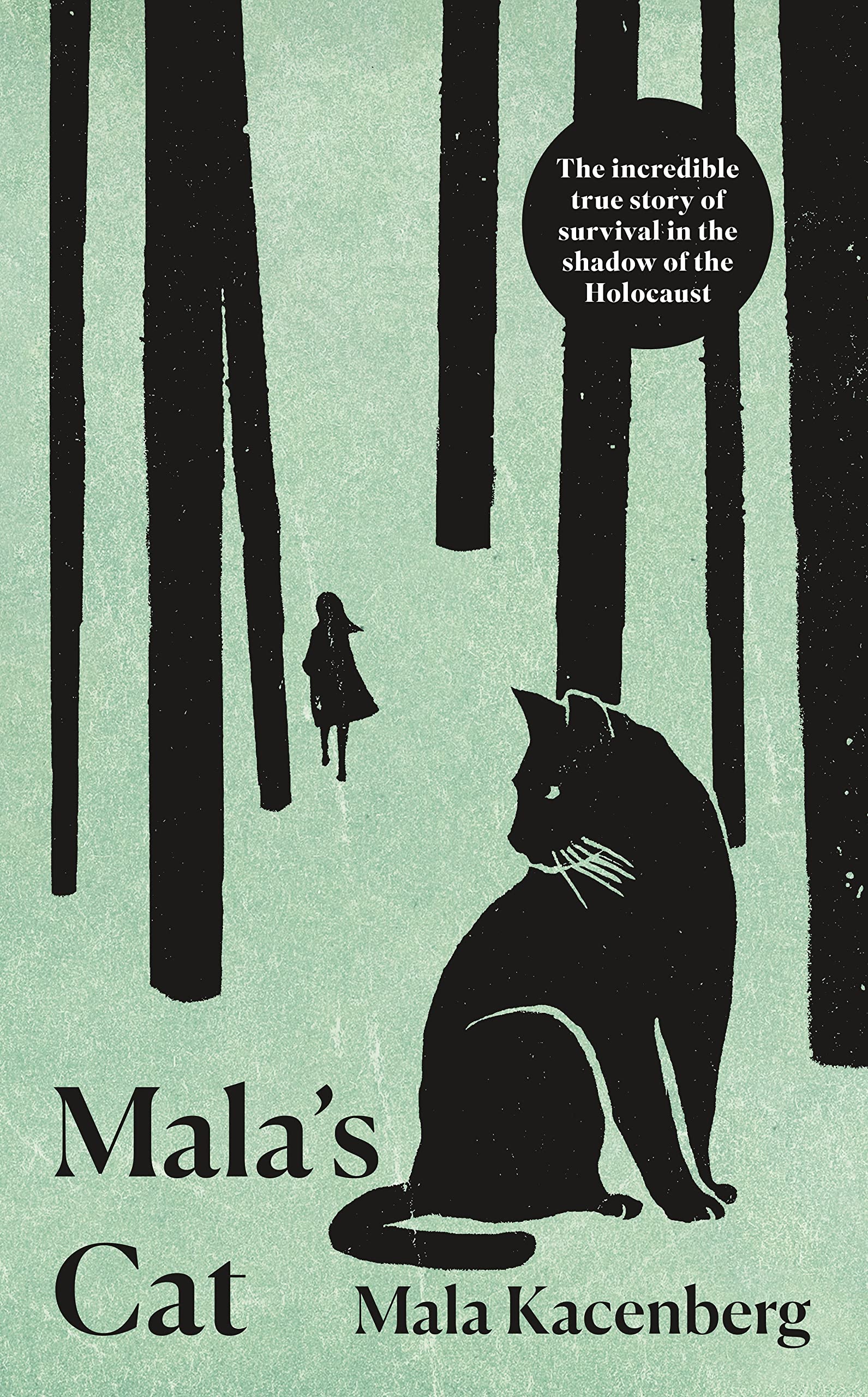
Mala Kacenberg - Mala's Cat

This memoir, rescued from obscurity by the efforts of Mala Kacenberg's five children, should be read and cherished as a new, vital document of a history that must never be allowed to vanish.
Alone in a forest with only a cat for company - this is the deeply moving true story of one little girl's remarkable survival in the shadow of the Holocaust.
Growing up in the Polish village of Tarnogrod, on the fringes of a deep pine forest, Mala has the happiest childhood anyone could hope for.
But, when the Nazis invade, her beloved village becomes a ghetto and family and friends are reduced to starvation. Taking matters into her own hands, she bravely removes her yellow star, and sneaks out to the surrounding villages for food.
On her way back she receives a smuggled letter from her sister warning her to stay away: her loved ones have been rounded up for deportation. With only her cat, Malach, and the strength of the stories taught by her family, she must flee into the forest.
Malach becomes her family, her only respite from loneliness, a guide and reminder to stay hopeful even in the darkness.
With her guardian angel by her side, Mala must find a way to navigate the dangerous forests, outwit German soldiers and hostile villagers, to survive, against all the odds.

Comment: Unless I previously plan on choosing something for the GR challenge I participate annually, I tend to pick random books at he library. I still love to go there, even if they can't get many recent books that quickly. Anyway, last time I went, I've decided to bring this book along, and it helped it wasn't a big one which would demand a lasting commitment.

Mala was a happy young Jewish girl who had a pretty normal life with her family until everything changed with the Nazis occupying other countries, such as Poland. In a seemingly random situation, Mala escapes the terrible fate her family and so many other people she knew were sentenced to, and she starts living in the forest with her cat Malach, foraging into villages to find food. There are many obstacles in her way and even more dangers, with the possibility of capture at any moment, but Mala will use all her resilience, all the lessons her family had taught her and her own wit to defend herself and to be proactive in escaping the Germans...

This is labeled as a non-fiction memoir by Mala Kacenberg, a Polish woman who was a child and teenager during WWII and who was a Jewish survivor of the Holocaust. I had never heard of this woman nor about her having written a book, but the cat in the title was why I've decided to give it a go. 

As far as WWII stories go, of course the theme alone would include certain devastating descriptions and references to unfair and criminal situations. Whether non fiction of fictional tales, books with this theme always seem to be somewhat emotional and there are details that are, sadly, repeated. Well, in reality this was the first thing I've noticed about this book because the repetition of what other books had included, somehow failed to make me emotional.

I think this happened due to narrative choices. Mala is the obvious narrator and while I can't say if this is really her personal style or because she didn't really write the words and only dictated them to someone or something, the narration feels detached. Everything was quite factual, which wouldn't have to be bad, and there aren't gory or violent descriptions either, but I still didn't feel much in sync with what was supposed to be the feeling related to this or that situation. Mala's descriptions of events and her own steps felt very practical and pragmatic despite the certain heartbreak she must be feeling, but that didn't' come through. Her "voice" remained too clinical.

Portuguese cover

I've now read some other reviews and some readers say she comes across as being a bit too self assured and her descriptions of her young self don't make her seem vulnerable as she had to be. There is quite a clash between what she is describing and what she was feeling, which is very superficially presented. Then, since she keeps reinforcing her Jew roots and why she was persecuted with so many other people for this... well there are time where it does seem she sets herself apart from others. Of course, this isn't about who suffered the most, but the lack of common points with who she was and how she behaved make her seem untouchable somehow.

I won't go into validity of this or that assumption, but there are some passages that don't paint Mala as being as likable as that. I won't comment on what she felt or if she should have emphasized her suffering, but her testimony felt impersonal, which is odd indeed in a first person narration. It was also a little hard to accept she could have evaded the Germans for so long and often only because her cat was there to kind of warn her.

Speaking of the cat, I surely expected more of the cat, or better, of having the cat playing a bigger role. The cat felt like a prop to be honest, sometimes even seemed as if the cat was there so suddenly, out of nowhere and I was wondering where the cat had gone and how could she be there at that specific time... it seems as if the goal was to make the reader see the cat as an omen, almost as if she was magical and could help Mala at the perfect time. I really thought this would be more centered on her experience in the woods with the cat for company...

As a WWII story, this wasn't as heavy as others, to be fair. But it wasn't told or edited in a way that was memorable, either. Perhaps because of the author's natural style? Some situations are repetitive and described with a lot of detail - sometimes too unlikely to be believable even! - and other situations quickly rushed through... maybe they should not have been included to begin with, I don't know. What I think is that, testimony apart, this wasn't a great book to read or to cherish, to be honest. Even with the cat.
Grade: 5/10

Friday, February 28, 2025

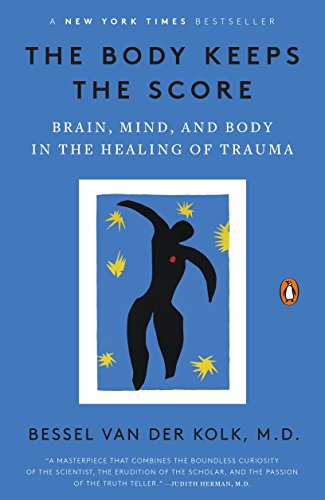
Dr Bessel van der Kolk - The Body Keeps the Score

A pioneering researcher transforms our understanding of trauma and offers a bold new paradigm for healing.
Trauma is a fact of life. Veterans and their families deal with the painful aftermath of combat; one in five Americans has been molested; one in four grew up with alcoholics; one in three couples have engaged in physical violence. Dr. Bessel van der Kolk, one of the world’s foremost experts on trauma, has spent over three decades working with survivors. In The Body Keeps the Score, he uses recent scientific advances to show how trauma literally reshapes both body and brain, compromising sufferers’ capacities for pleasure, engagement, self-control, and trust. He explores innovative treatments—from neurofeedback and meditation to sports, drama, and yoga—that offer new paths to recovery by activating the brain’s natural neuroplasticity. Based on Dr. van der Kolk’s own research and that of other leading specialists, The Body Keeps the Score exposes the tremendous power of our relationships both to hurt and to heal—and offers new hope for reclaiming lives.

Comment: Another book I brought from the library by impulse. I was simply quickly turning the pages and some words popped up to catch my attention. The blurb also suggested this would be an interesting theme to learn more about and that was it.

In this book, dr Bessel van der Kolk (whose name I had not heard before) presents an interesting summary on his years of studies and projects developed to learn more about trauma and how to help patients dealing with its effects. Although this cannot be a complete manual on "how to", it offers case studies and the projects developed and even suggestions to possible treatments that could go beyond chemicals. There also inclusions of work done by other doctors and scientists and how the healing of the brain is a much more complex work than what many might imagine.

I had no expectations, for once, going into this book. What I know about trauma and how to treat this doesn't go further than what is common sense and what we see in some literature or movies - with all the limitations that such vehicles imply. Still, I decided to read the book because I was curious and the main reason why I felt like trying such a big book which would certainly contain medical terms and professional jargon I would not always understand was quite simple. While turning the pages very randomly, I've noticed names being mentioned, which means this book would have case studies and examples from real people, even if not their real names.

Now, since finishing the book I've checked out some reviews by other readers and the most negative ones point out some issues which, as always, might be a matter of interpretation as well as many other things, but there was also a lot of references to the author, dr van der Kolk, not having behaved properly with female co-workers or such. I have not investigated anyway, but I've read the book without being aware of this information and tried to focus on the theme discussed and think about the goal of this book.

Another frequent critique was the fact the author seemed to include too many details on trauma and too much focus on "defending" the patients and not having the same apparent compassion for those affected by their actions. I actually felt interested in reading this because there were references to real people and their cases, that was what made this book more captivating and why someone like me, who lacks knowledge in medicine, psychology and proper treatments, would feel a connection to what was being described/shared. If this was just about facts and specific literature in the field, I would likely not choose to read it. 

In regards to the fairness, the respect or any other term one might want to refer to the way the patient's cases were used, I cannot say. Was it correct to present things this way? But I'm also assuming we were not given the whole information to judge beyond what feels right or wrong in how the reader might see the information...

The book is divided into several chapters, where trauma in different situations is identified and presented (veterans, children, sexual abuse) and in the final chapter the author introduces possible techniques and/or treatments to help patients, so pills or other chemical use don't have to be the only option. I will admit this was where I struggled the most to absorb information. I suppose for many reasons, the methods presented aren't as easy to prove or to demonstrate effective and it did feel a bit too vague. Still, it goes along other type of literature I've read before (for instance, healing trauma through hypnosis, exploring past lives regression and meditation...) which isn't as accepted or generalized.

All in all, apart from the impossibility to confirm whether the information used is as correct as it implies - certainly a lot has been updated since 2014, when this book was originally published - I still found it to be interesting and gave me food for thought. The fact the theme is being studied and that many might benefit from books like this one, about it, can certainly be more positive than negative in the bigger scheme of things.
Grade: 7/10

Tuesday, January 21, 2025

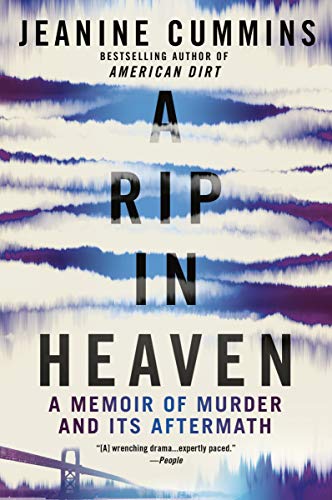
Jeanine Cummins - A Rip in Heaven

The acclaimed author of American Dirt reveals the devastating effects of a shocking tragedy in this landmark true crime book—the first ever to look intimately at the experiences of both the victims and their families.
A Rip in Heaven is Jeanine Cummins’ story of a night in April, 1991, when her two cousins Julie and Robin Kerry, and her brother, Tom, were assaulted on the Old Chain of Rocks Bridge, which spans the Mississippi River just outside of St. Louis. When, after a harrowing ordeal, Tom managed to escape the attackers and flag down help, he thought the nightmare would soon be over. He couldn’t have been more wrong. Tom, his sister Jeanine, and their entire family were just at the beginning of a horrific odyssey through the aftermath of a violent crime, a world of shocking betrayal, endless heartbreak, and utter disillusionment. It was a trial by fire from which no family member would emerge unscathed.

Comment: I brought this book from the library by impulse. I had heard of the author's name but had not read anything by her, and this book's blurb made me curious enough to try it.

In this memoir/true crime story, the author shares her perspective of what happened to her family after the attack on her cousins and brother in April of 1991. That night, the three cousins were attacked in an old bridge in the border between Missouri and Illinois, and only her brother Tom survived. In the aftermath, when they all thought justice would be made, they went through the exact opposite, which had repercussions for years and an eternal memory of loss. In this book, the author not only shares this but fictionalizes scenes of what might have happened in the moments she wasn't present. Everyone knows danger is everywhere, but when it affects one's family...

I was aware this author become a very famous name mostly due to her book American Dirt (which I have not read) but I didn't know she also had writen this memoir. Therefore, it was a surprise to find this book at the library but the blurb caught my eye and I thought it would also be a good way to check out her writing style.

The book feels as if it's being told as fiction. The author wrote things in a way to make it have a linear timeline, with bits of information she witnessed (in regards to her close family) and which she learned (such as the evidence of others, who saw/ lived through certain situations) and that she fictionalized according to the information reported later on by the police (for instance, in regards to the assailants). Of course, her POV is beyond partial... I've seen some reviews on this book where people claim her work is too partial to be fairly presented, but this is about her family, this is based on reality, so I can put aside some less achieved narrative aspects knowing this.

It's true, perhaps, that the story as a description could have been presented in a more engaging way, and it does seem that, probably for publishing reasons and to keep the identity of certain people away from the narrative - some family members requested this of mrs Cummins - , there isn't always a fully interwoven blend of who was doing what or how pertinent was someone's personality with the development of events and why she chose to add soemthign in a specific moment. Still, in terms of fluidity of reading and comprehension and even empathy towards what was happening, I think she did a good job.

The events are simple. While at a family holiday, several cousins had the oportunity to get to know one another in a way distance would not allow and Tom, Robin and Julie bonded quite well. On the night before the Cummins were to return home, Tom Cummins and his cousins Julie and Robin Kerry went on to spend some time near the old bridge Chain of Rocks, which was no longer being used since the new bridge had been inaugurated. While there, they randomly exchange some conversation with four guys and then go separate ways. However, the four guys suddenly decide to go back after them and attack them, which includes raping Julie and Robin. This happened on the bridge and the night ends with the three cousins being pushed. Only Tom survived.

When the police comes and then the reporters and the families become involved, the tragedy of this situation twists what Tom has seen and lived through and he is not seen as a victim... from this moment on, the family tries what is possible to help him and to prove that they were, indeed, attacked. Jeanine Cummins was not there but by talking to her brother, to her family and by investigating what led to the moment where those seven people met on that bridge, along with the lawyers and police reports, she created a time line. I dothink the author tried to not write in an exagerated manner... perhaps an editing suggestion, or perhaps enough time had passed that she could choose how to write, but this could be any other report about a crime story.

It's also true that the partiality of the text is a given and the four guys are described in a way that puts them in a terrible light. I don't know how the author could write about her family and what they all went though and not give this biased impression, but she was rather factual about is known to be true. Still, it's true she fictionalizes the four guys' intentions and state of mind and possible reasons for the attack. I have not investigated other sources about this to compare with what she is writing, though. Perhaps this is the real flaw in this book; allowing readers to have official links or something could have given her work more veracity.

Apparently a lot was published at the time of the crime and not everything was correct nor fair, let's say. The author is trying to give a new perspective on what happened and how everyone in her family was affected. I liked the writing style in this book and that includes the notes the author uses before and after the main text, to give context to what she has done. Other readers have commented, however, that during the narrative, for the purpose of that same fluidity, she is writing in third person and not first, and she is a character, narrated by herself after all. That does sound weird at times.

All things considered, I did like reading this story as the presentation of a crime, but a few things don't seem to be consistent.
Grade: 7/10

Wednesday, November 27, 2024

Mini-Comments, again

And a new post with some smaller comments on books that I really don't have much to say, but that I still wanted to register in my "diary". 


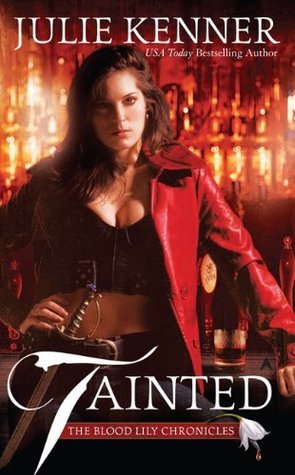
Tainted by Julie Kenner is a UF story, the first of a series, and a book I had to read for several years. The story is quite in par with the usual stories one finds from this genre: the heroine, Lily, dies and somehow is brought back to life in the body of someone else, with the purpose of accomplishing a task, which is to save people from a demon threath, etc. 

Of course the idea isn't bad and I did like several situations the author invented/imagined, but the writing style is, as it has happened with many other books in the genre, very much about the heroine's process of what is happening and, since it's first person, her "voice" should be appealing, which was not much to me, personally. Thus, I was easily distracted from what I was reading.

The book isn't big and the main plot not that tricky but let it be said this is the start of the series and the end of the book isn't really an end, which means one needs to read more installments in order to know what will happen next. I wasn't that thrilled by this story to go and try the following ones, therefore this is it. One less off the pile.
Grade: 5/10


The Origin of the Conflict Israeli-Arab (1870-1950) by Georges Bensoussan is the literal translation of a small book I brought from the library. The contemporary theme seems to demonstrate that peace won't happen for the immediate future and I was interested enough in reading this "summary" by a Moroccon author. 

I won't go into the content for it is so complex and broader than what the media makes it seem, that of course I don't know enough to now determine if this book is as factually correct as it is supposed to be. What I can say is that, for a summary of the historical situations which led to the current war, this seemed to be a competent text. The author divides the book into dates and the main situations which happened in each time line, often a continuation of similar events, until the moment things got into an impasse in the 50s. Nothing changed in the meantime, except what is current knowledge.

In terms of a reading experience, I would consider this to be a good book, mainly because it does offer a chronology which can help understand what led to what we see nowadays. Some situations, more linked to political aspects weren't as easy to grasp, though.
Still, this isn't meant to be a book about offering solutions, or blaming more one side than the other.
Grade: 8/10

Saturday, July 27, 2024

Stephanie Land - Maid

At 28, Stephanie Land’s plans of breaking free from the roots of her hometown in the Pacific Northwest to chase her dreams of attending a university and becoming a writer, were cut short when a summer fling turned into an unexpected pregnancy. She turned to housekeeping to make ends meet, and with a tenacious grip on her dream to provide her daughter the very best life possible, Stephanie worked days and took classes online to earn a college degree, and began to write relentlessly.
Maid explores the underbelly of upper-middle class America and the reality of what it’s like to be in service to them. “I’d become a nameless ghost,” Stephanie writes about her relationship with her clients, many of whom do not know her from any other cleaner, but who she learns plenty about. As she begins to discover more about her clients’ lives-their sadness and love, too-she begins to find hope in her own path.
Her writing as a journalist gives voice to the "servant" worker, and those pursuing the American Dream from below the poverty line. Maid is Stephanie’s story, but it’s not her alone..

Comment: I was looking for a possible title to offer a friend for her birthday and of the genres I know she likes, this one popped up at some point. I ended up choosing something else, but the title of this book stayed with me and I ended up buying it for myself.

Stephanie Land is a young woman who sees herself with a young child, with no real support from her parents and with an ex who turns up to be an abuser. To make end's meet while she thinks about what to do from there, she works as a maid and studies at night. While some jobs are fine and she gets used to people's homes and those she interacts with, there are situations where everything is more difficult than she ever anticipated. While caring for her daughter is something she does tirelessly, there are many things that seem to bring her down and the system itself is one of them. Could Stephanie find a way to improve her life and of her daughter?

While reading this book I will admit I sometimes had conflicted thoughts: sometimes I felt Stephanie had not done really smart choices and some of her issues seemed a little one sided, but there were times I could see her experience was a hard and devastating one. Now that I've finished reading, I checked a few reviews and it seems my thoughts are as polarized among other readers; some loved this memoir, others think Stephanie was actually very entitled and whiny.

Thinking about this antagonism, I must wonder, could it be that for many people the details Stephanie uses to explain her life and work choices seem fantasy or exaggerated on purpose? So that readers have pity on her? Reading/seeing something can originate different reactions based on many things, but who among us has not judged someone else for this or that? I'm still thinking about this, but in the case that Stephanie really twisted what she went through so that now her autobiography garners more sympathy, then perhaps it's a good thing sometimes I felt I was reading this as fiction.

With this I mean, the "voice" Stephanie uses is very polite. Always. I kept thinking, of course the book needed to be edited, probably polished somehow so it could be published, but the texts are just too correct, somehow bland and even the supposed social commentary on issues like welfare and food stamps was a bit too politely correct. I get it, and I assume Stephanie's current career as a writer and how she often says she liked writing might have contributed to this, but... I did expect a more poignant or heartfelt narration, especially if this is her tale.

My doubts aside, the content was interesting for certain. I have not been in Stephanie's shoes, but some things she describes really seem to match what we know about some statistics, and I could easily imagine some of the scenes she mentioned. I actually expected her to detail even more the maid work she was doing, though. I see this is memoir about her life, but with that title, I really thought we would have more of her actual job and not the half-half of the job and her personal life. Of what she shares regarding the job, some things are really captivating.

Before I had my current job, I worked as a carer at an older lady's house. Her daughter was my employer and I'd do specific hours, mainly afternoon and night, until the old lady went to bed. She had dementia and a huge part of my job was to help her, spend time with her, but I also did some odd jobs like ironing and doing the dishes if necessary. I was not a full titled maid, but I had a little bit of that experience. When Stephanie writes about seeing her employers in a certain way... well, it's human nature. I also thought things to myself about my employer and the house and decisions they all made... It's just impossible not to think about it, even if one doesn't verbalize.

Saying this, I understand why some readers thought Stephanie was being unprofessional or careless, but I didn't see it that way. I guess it's one of those things, one might see something through a negative perspective, but until someone has actual experience of the same situation...anyway, I did expect more maid content from this novel, but despite that and what I might now perceive as less interesting, it was still a fascinating book to read and offered food for thought. I won't comment specific declarations Stephanie writes about because I don't know the full extend of the American system, but I suppose it's like in most countries: some things are not being done as well as they could, money lacks for many services, human resources aren't enough either, to name a few.

All things considered, perhaps I can summarize my experience this way: if I think Stephanie was describing her life in a fictional way, as if this is a story anyone could have lived through, I had a good enough time reading and turning the pages. If I think this is meant to be a criticism of many things so I can sympathize and believe her to be better for having gone through it and now having the ability to write about it without acknowledging personal flaws... ehh.
Grade: 7/10

Wednesday, June 19, 2024

TBR Challenge: Jen Campbell - Weird Things Customers Say in Bookshops

This Sunday Times bestseller is a miscellany of hilarious and peculiar bookshop moments: 'Can books conduct electricity?'
'My children are just climbing your bookshelves: that's ok... isn't it?'
A John Cleese Twitter question ['What is your pet peeve?'], first sparked the 'Weird Things Customers Say in Bookshops' blog, which grew over three years into one bookseller's collection of ridiculous conversations on the shop floor.
From 'Did Beatrix Potter ever write a book about dinosaurs?' to the hunt for a paperback which could forecast the next year's weather; and from 'I've forgotten my glasses, please read me the first chapter' to 'Excuse me... is this book edible?: here is a book for heroic booksellers and booklovers everywhere.
This full-length collection illustrated by the Brothers McLeod also includes top 'Weird Things' from bookshops around the world.

Comment: June this year is special in the TBR challenge, for the theme is "bananapants" and it implies a certain type of book, with a crazy type of content. The first thing that came to mind was to find a book with a strange or different type of story and having looked around some of the titles I had in the pile, I saw this non fiction one, with a very suggestive title. How much crazier can something be than the silly things some people say?

In this little book we have several entries of weird things people say in bookshops, and it can be seen as a funny and quick reunion of what can happen when one mixes up a certain lack of awareness, perhaps the lack of knowledge of certain subjects and the amazing natural things sometimes people say in the spur of the moment in a public situation. The examples were taken from experiences in two main bookshops, and then there is a section with a few entries sent by booksellers in other places.

This is a short compilation of what those particular people said in bookshops, therefore not very representative, but for anyone who likes books, who likes the world of books and has some knowledge of books or related subjects, this will sound quite fun at times. To me, this was a funny book to go through, because I also work with the public (sadly, not in a bookshop nor a library) and all those weird, sometimes silly stuff we find in the internet people say/do being apparently unlikely in this day and age of information being available everywhere? Well, not really, and people do say silly things.

I think my issue here was not as much the entries chosen, like I said for those who like books and book related stuff, this will be appealing. If there is one critic I can do is that the entries are very limited, I imagine for comprehension reasons and because why extending the scene, but each entry read so quickly, I saw myself just turning pages almost without much thought. This means it's very easy and quick to read, but some examples are not as interesting as others, or perhaps they don't make as much sense depending on one's geography.

The edition I got was also illustrated and I will confess I sometimes thought to myself I wish there were less images - with a art style I don't appreciate particularly - and more entries, because the book was already small, then having so many small entries, then the images... I mean... I also saw this started off as a blog, and perhaps on that platform the graphics work out better, but I think the way the information is presented in book format could have been better planned too.

In relation to the entries, they were mostly fun and the result of a specific context, such as this one:
Customer: What kind of bookshop is this?
Bookseller: We're an antiquarian bookshop.
Customer: Oh, so you sell books about fish.
Or we have others I liked more, such as this one:
Customer: It’s amazing, isn’t it, how little we really know about writers’ lives? Especially the old ones.

Bookseller: I guess the lives of writers have changed a lot.

Customer: Yes. And don’t forget about those women who used to write under male names.

Bookseller: Yes, like George Eliot.

Customer: I always thought Charles Dickens was probably a woman.

Bookseller:…I’m pretty sure Charles Dickens was a man.

Customer: But who’s to say?

Bookseller: Well, he was pretty prominent in society, lots of people saw him.

Customer: But maybe that was all a show – maybe that was her brother, while Charlene was at home, writing.

Bookseller:…

Again, I need to say I think this is better appreciated for readers who like to imagine these things, and I think this was a good try for me because I work with the public and one never knows what comes next, but I also like bookshops and libraries and I can certainly imagine the "adventures" of those who work there needing to be polite about certain situations.

While reading this book I also remembered another one, with entries compiled by Gina Sheridan, about what people say in libraries. I used to follow the blog: https://iworkatapubliclibrary.com/ but it seems as if it's no longer being updated or used. What a pity because this blog had many entries and some were more poignant than silly, which I liked too.
Anyway, this certainly fit the bananapants notion if one thinks of the things people do say in bookshops (and everywhere), but I did expect to have more content. I know there is a sequel, perhaps one day I might try to get that one.
Grade: 7/10

Wednesday, January 31, 2024

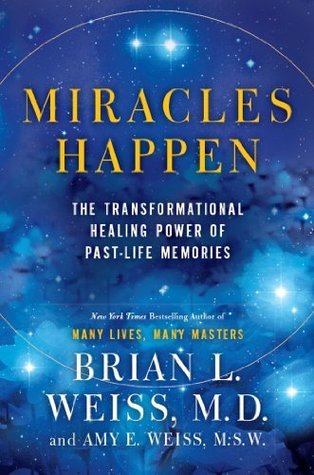
Brian L. Weiss - Miracles Happen

In his revolutionary book Miracles Happen, Brian Weiss M.D., the New York Times bestselling author of Many Lives, Many Masters, examines the physical, emotional, and spiritual healing that is possible when you freely accept and embrace the reality of reincarnation. 
Trained as a traditional psychotherapist, Dr. Weiss began to explore how reincarnation and past life regression can lead us to our higher selves after a startling encounter with a patient. Now a leading proponent of past-life therapy, Dr. Weiss shows us that, indeed, Miracles Happen, with seemingly incredible but true stories that demonstrate how, by getting in touch with and understanding our past lives, we can dramatically improve the present.

Comment: This is the most recent full length non fiction book by Brian Weiss, a psychologist and psychiatrist who had a patient once, and while helping that patient by trying hypnosis and meditation, he was amazed to realize she was having a regression to a past live. From that on, he has written many books and tried to treat many people with this method.

In this book the author collects several real life cases, of his own knowledge or shared by other experts, where the message is always the same: it can be possible to help healing or to alleviate physical issues through the regression to a past life or going through the experience of accepting spiritual meanings to what happened in the past. Most of the information used was obtained from several sources, mostly related to the courses people could register at, while others came from the private consultations at the doctors's office. All have in common that this technique can help unravel memories which can, therefore, help in understanding why a physical or mental issue is causing problems.

Although I have not posted about any of them here in the blog, since my teenage years that I have read the books by author Brian L. Weiss. I remember the first one I got was given to me by my father, we got the book at a one of those stores we can find in highway stop stations, during a trip we made to the north of the country. I was so happy he had said yes to buy me a book! Anyway...

This book, and all the others before, are set on the premise that we should accept that all of us are in a cycle of life, living and dying and being reborn again. Just the concept itself is hard to grasp and even admit, much less defend as a valid way of trying a healing process. I have never tried meditation nor regression, but it's a fascinating subject and while part of me wonders about its likeliness, the other part imagines it cannot be. Some of the books have addressed this, that many patients of dr Weiss or of other therapists using hypnosis and regression started off as skeptic and had successful experiences.

I mean, how to say a definite no without trying and I think I'd have too much a practical mind to really accept, but... isn't it the fascination with the idea precisely that, that perhaps there's something out there that could help, could point out to a different perspective of life? I think most people live in a way, or have beliefs that would not open them to this subject, and that is where my doubts rely on: how can this technique be that real, that successful, when it depends so much on the person having the experience?

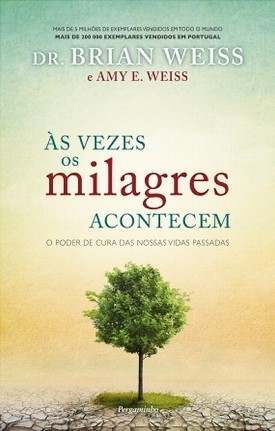
Portuguese cover
In this book - I'll admit, not the one I liked best - part of the message is that people can use these techniques in several ways or for different goals, but there's also a more obvious content (to my POV) on spiritual notions, mainly the idea that we are all good, we are all going though life to learn lessons, to understand something that will help us move on from life to life... humm, I confess this is also hard to accept, especially if one thinks about those going through more than hardships in life. I won't talk about that, but let it be said some ideas might not be easily accepted.


I saw that dr Weiss was even on Oprah years ago and that many people follow his ideas, want to be seen by him, obviously buy his books, but again, the more cynical part of me, is he truly that well liked, are people really trusting what he says? It's difficult to have an idea about the dimension this subject and about dr Weiss' success, even more so when this is not "conventional", Could it be that, due to that alone, this technique is still seen as something that works only for believers? One could wonder why there isn't more publicity about it, if it could be that positive and wonderful...

Well, as for the reading experience, I didn't think this book was as appealing as one or two others were, because the cases presented were "edited" let's say, and in other books dr Weiss was able to develop each case with more context. I also wasn't too fond of the commentary after each case, it sounded very much like a summary of something we should grasp on our own. I think I could also say that despite the information here and there, this is not the best book to start reading about the author's work for most of it does infer readers already have previous knowledge of the subject.
Grade: 7/10

Monday, December 4, 2023

Mini - Comments

The following two non fiction books were my last picks at the library. I had not heard of the authors before but the blurbs seemed intriguing enough and I thought, why not?


The Secret History of the World by Jonathan Black is a very interesting summary of the history of the world, such as indicated by the title, but from the POV that secret societies of several kinds have hidden in plain sight all the time. This is, therefore, a chronological presentation of events, since the moment humans were alive in the planet until our days, and the author focus the main figures and moments in history to highlight his investigation. Apparently, he has worked and read a lot on the subject, has talked to people who claim to be part of some sort of secret society and this is the compilation of his efforts. 
To be honest, I can't say if his arguments are as black and white as he claims, as with everything in life, it all depends where and how we place ourselves to see something, but I can attest to the pure entertainment of reading this, of going through historical events and facts and "see" the through a different POV. It was fun and easy to read and made me remember some chronological dates, as well as reflect on history and religion. I don't think I was swayed to have any eureka moment about hidden worldwide secrets but I had a good time reading this book!
Grade: 8/10

-//-

Dewey by Vicky Myron is an autobiographical book where the author tells the real life story of Dewey, a cat rescued in a cold morning and that became the live-in inhabitant of a library in Iowa. The book isn't long and does focus on what life was after the cat became part of the library's life and how pretty much everyone was somehow affected by his presence. The story also includes some personal views by the author and a little bit of her own life, since she was the cat's owner for all purposes. 
I can't say this is mind blowing nor is it that original a story that one must be immediately touched by it. Nevertheless, I have a cat and I could resonate with several things the author mentioned when speaking about him and how many library patrons would love to see Dewey or interact with him. The book isn't long and does offer a good enough summary of what the experience was but nothing is eternal, so the end is kind of predictable... still, it was a short read and good enough to pass the time.
Grade: 7/10