Showing posts with label Richard Zimler. Show all posts

Saturday, June 4, 2022

Richard Zimler - Unholy Ghosts

Worldly, Jewish, at one time a standout on his legendary Greenwich Village basketball team, an American classical guitar teacher seeks a new life in Portugal after the death of so many friends. But what he calls the viral eclipse over sexuality pursues him even there, when Antonio, his most talented and beloved student, tests HIV-positive and threatens to give up on life at just twenty-four. Desperate to show the young man that he still has a future, “the Professor” arranges a car trip across Spain to Paris, hoping to be able to convince a leading virtuoso there to begin preparing his protege for a concert career. Antonio's estranged father, Miguel, a stonemason by trade, insists on coming along with them, and en route the three fall into a triangle of adventure, personal disclosure, violence, and at last a strange redemption.

Comment: I brought this book from the library. I have enjoyed the books by this author and although this is a different one from his usual genre, I still felt like trying it.

In this book, set in the early 90s, we follow a guitar teacher as he takes a great student of his on a road trip to France, to seek a better teacher for the young man. At the same time, the student's father decides to join them, for he wants to have a connection with his son before it's late. The student has recently discovered he HIV positive and at a time the disease spread through so many without any possibility of cure, this feels like it can be the last time he could have to do something. The problem is that the relationship between the three men is rather complicated and only seems to become more confusing as the days go by...

This is the second book written by the author, only recently published after years being kept aside for social and political reasons. The author includes a note at the beginning of the book, to explain why and how this book came to be, and thinking about the time he wrote it, it's understandable why the delay, for the subject - gay characters and AIDS - were still quite radical themes to publish about, in terms of fiction. I suppose I can agree because this book does touch plenty of content the majority at the time probably wouldn't have accepted...

The subject of this book is hard to think of but the author has a way with words and I could easily recognize here the same talent I saw in other books by him I read. I think in part some wording, some style choices were meant to shock, to force the reader to pay attention, but it is true the battle against AIDS and how so many people, whether they were gay or not, were infected and died before progress allowed, at least, a control on the symptoms and the effects of medication. I couldn't help but think about it, as with any other disease - now is cancer for instance- , stealing lives before it's time over random possibilities. We know there were risks by having unprotected sex, but how some resisted more than others...that is still actual.

Portuguese cover

While reading, I couldn't help but feeling, as it happened with one or two other protagonists in other books, how similar the protagonist was also so similar to the author himself: a teacher from the US comes to live in Porto and marvels/discusses the differences between cultures, while emotionally making connections with strangers and happens to be gay. In the introduction note, the references made are a little hard to ignore, so this is very clearly autobiographical.
Nevertheless, I must confess that while I liked reading about the subject - the theme is hard but the writing is both poetic and harsh - the fact the professor and the student and his father share a confusing link, are mixed up in a weird mess of sexual partnerships...it is indeed rather weird, especially thinking of today, how easily both father and son ended up wanting to have sex with the professor. I don't think this is a spoiler, for it happens rather soon in the book.

I think the professor is a very complex character, he is obviously self sabotaging, he is depressed, he is still dealing with a terrible break up and reading about his experiences in life, I can't help but wonder how much the author inspired this book on so many other gay men who suffered, who sadly (one can see now) went through promiscuity in search for emotional validation when the world told them they shouldn't feel what they did... In this aspect, how not to consider this work as something extraordinary and special, but I'm afraid some sections of the story feel a little too unlikely and perhaps part of the message was lost on the way.

I still liked reading this, is raw and heartfelt. However, the author could have imparted the same message or the same content using a different tactic, and in the end I feel some details were made more confusing than necessary.
Grade: 7/10

Tuesday, July 24, 2018

Richard Zimler - The Seventh Gate

It's Berlin, 1932. Sophie is a smart and sexually precocious fourteen-year-old coming of age during Hitler's rise to power. Forced to lead a double life when her father and boyfriend become Nazi collaborators, she reserves her dreams of becoming an actress for her beloved elderly neighbor, Isaac Zarco, and his friends, most of whom are Jews working against the government in a secret group called the Ring. When a member is sent to Dachau, she realizes there must be a Nazi traitor in the group. But who? Through successive mysteries, reversals, and surprises --and a race against time --The Seventh Gate builds to a shattering end. In its chilling but sensuous evocation of the time and place, Richard Zimler's novel is a love story and a tale of ferocious heroism.

Comment: I got this book from the library. As I expected, this was a successful story for me because the author's style is one I'm used to and this particular plot revolves around world war II themes, something I'm also usually interested in.

Again, the author used the idea of a man from the Zarco family trying to protect century old documents which are relevant especially because they are the proof of crimes committed against the Jewish Zarco family and Jewish communities in the Iberian Peninsula back in the 16th century.
In this book, a descendant of the family, Isaac Zarco, living in Berlin during the 30s uses the documents to explain to himself why such a situation is happening in Berlin and in the world. At the same time, those more closely connected to Isaac suffer the effects of Nazism and prejudice...

I loved this book. It's sadder than what one might think despite the theme and my poor description but it's powerfully done. Richard Zimler may have less managed books than others, as any author does, but for me this one is probably one of his best. I think a little bit must be the theme...how can anyone resist the mix of sadness and anger connected to stories based on WWII, especially because they are most likely something that happened somehow?

This story follows Sophie, the "narrator", through her life since she was a teenager in Berlin during the 30s. Since she lives near Issac she gets to meet his friends and she gets fond of them, which clashes with the way Germany now sees Jews and people not considered Aryan or perfect in their standards.
As one can imagine, this story is obviously filled with situations that wouldn't be as impressive if only we didn't know how real they were.
The author also chose to include details not usually seen in these types of books, namely the inclusion of the prejudice against others than only the Jews, people who have also been targeted, like the dwarfs, the mentally unstable, the sick, and how they were persecuted, trapped and sterilized against their will.

Again, this book was so sad but so touching, I couldn't not feel emotionally drained in some parts. Readers who like stories set in this time will certainly like the historical content, which also reveals the author's investigations. It's deeply disturbing, if course, to imagine the veracity of the situations depicted here. However, one can't get away from the impact is has too: after all, knowing these things were real is what makes it powerful.

People should not forget History but it's incredible to think so many just can't think about the facts anymore, not the same way and human are still committing crimes in the name of unmentionable and useless forces. How can humans get so low? How could people betray oneself so much?
Yet, real life, reality proves it every single day.
Books like this shouldn't be put aside but what we read as terribly descriptive fiction...happens everyday, even under different disguises or names.
So sad we are the villains and will keep on being so.
Grade: 9/10

Tuesday, June 26, 2018

Mini-Comments

Ruthless. That was what they said about Damien Rosier. Handsome. Wealthy. Powerful. Merciless. No one messed with his family, because to do so they would have to get through him. No one thought he had a heart. Not even the woman he gave his to.
Cynical. That was what they said about Jasmin Bianchi. A top perfumer of her generation, Jess had achieved commercial success by growing a protective shell over a tender heart. The one time she cracked it open to let Damien in, he crushed it—after a night of unbelievable passion.
Lovers. That one magical night couldn’t survive the harsh light of dawn. When Jess woke up to discover the man in bed beside her had stolen her company, she fled.
Enemies. Now she’s come to the south of France with a threat to his family heritage. If he wants to reclaim both it and the woman who walked away from him, he’s going to have to fight as dirty as only Damien can.
But Jess knows how to fight dirty, too. And these days, she has nothing left to lose.
Certainly not her heart.


In his acclaimed novels Hunting Midnight and The Last Kabbalist of Lisbon, Richard Zimler has spun luminous historical fiction from the experience of the Jews of the Iberian Peninsula. Spanning decades and continents, his new novel is set in the lush world of colonial India during the age of the Inquisition. Here is the astonishing story of Tiago Zarco, a young man whose family fled forced conversions in Portugal and now lives in a twilight between local Hindus and the ruling Portuguese Catholics. As Tiago comes of age in Goa, the capital of the spice trade, he struggles to keep the far-reaching powers of the Inquisition from destroying his family and pulling him apart from the Hindu girl he loves. When an act of betrayal puts his beloved father in prison, Tiago is forced to hunt down the traitor and make an unimaginable choice…and for him, a harrowing journey begins–one that will show him the depths of human depravity, and the dark, poisonous salvation of revenge….
At once a grand historical adventure and a riveting tale of love and mystery, Guardian of the Dawn brilliantly illuminates a world that has rarely been described–in a novel that blazes with passion, fury, and hope.


Comment: I've been quite swift in finishing some books lately, so here I left two more small comments on books by authors I also read last month. These two new additions weren't that different from the previous ones, and I feel I don't have to spend a lot writing about them, as any information would be repetitive.

A Wish Upon Jasmine is the second installment in the La Vie en Roses series by author Laura Florand. As it happened with the previous installment, this was one was also a little boring. Again, we have this introspective style, int he same mental process we have when we think stuff to ourselves. This feels like not even thinking at all when it's something we do, but to read about it won't feel the same and it's repetitive and the plot doesn't seem to move forward. It's a pity, actually because the story is sweet. 
Damien and Jasmine met one night, they felt magical with one another but a misjudgment caused Jasmine to run and now that they are together in the same place over a sudden inheritance, they reconnect and the words they exchange are amazing, their love scenes very special. This is very cute overall, the reasons why we should like and care for the characters is very clear, but the story is also without much action, therefore boring at times. 
I loved this style in the first 3 or four books by the author. Then it became repetitive and lately, only too boring. I think this might be it for me when it comes to Laura Florand...
Grade: 6/10

Guardian of the Dawn is the third installment in the loosely connected Sephardic Cycle books centered in Portuguese-Jewish descendants of a certain family throughout the centuries. In this third story, the action takes place in the Portuguese colony of Goa, in India.
As expected, the story is well written, fascinating and filled with gray-shaped situations, which means the reader can decide what to defend and what to condemn. Some scenes feel very strong, emotionally, while others make everything easier but this is the author's talent, to make one think about things. 
As it happened with the previous books, the central story is rich and detailed, the author investigated the time period and that feels very well presented and allows for the readers to learn things too. I like how this author's books seem so well balanced, even if his views on this and that can also look too obvious. However, just the experience of reading about complex characters who see themselves in complicated situations and can't always control what happens not only is quite realistic but a status we still live with nowadays. 
An engrossing reading for certain, but the style is very similar among his work but unlike the previous book, this felt easier to read. One can also say the author's voice is easily recognizable.
Grade: 7/10

Saturday, May 26, 2018

Richard Zimler - Hunting Midnight

At the dawn of the nineteenth century in Portugal, John Zarco Stewart is an impish child of hotheaded emotions and playful inquisitiveness, the unwitting inheritor of a faith shrouded in three hundred years of secrecy--for the Jews of the Iberian Peninsula have been in hiding since the Inquisition. But a season of loss and bitter discovery brings his innocence to an abrupt end. It is only the ministrations of a magical stranger, brought to Porto by his seafaring father, that restore his safety: Midnight, an African healer and freed slave, the man who will become John’s greatest friend and determine the course of his destiny.
When Napoleon’s armies invade Portugal, violence again intrudes on John’s fragile peace, and seals his passage into adulthood with another devastating loss. But from the wreckage comes revelation as he uncovers truths and lies hidden by the people he loved and trusted most, and discovers the act of unspeakable betrayal that destroyed his family--and his faith. And so his shattering quest begins as he travels to America, to hunt for hope in a land shackled by unforgivable sin.
With stunning insight and an eye for rich historical detail--from the colorful marketplaces of Porto to the drowsy plantations of the American South, from the Judaism John discovers as a young man to the mystical Africa that Midnight conjures from his memories--in Hunting Midnight Richard Zimler has crafted a masterpiece.


Comment: In my path to read all the books by Richard Zimler, an author I've come to enjoy, this time I got Hunting Midnight at the library. This is the second book in the Sephardic Cycle series which tells us the story of the Zarco family though the adventures of someone from the family, usually in different moments in time. This second book features John Zarco Stewart, a young boy who is born in Oporto and who see his life change a lot during the disturbing days of the french invasions in Portugal in the beginning of the 1800s and how his life goes from there.

In this story, set around the Napolean invasion of the Iberian Peninsula and more specifically in Portugal, we follow the adventures of John, a bright dedicated boy whose aim in life seems to be the best friend he can be even if he can't avoid the tragedy surrounding his childhood. John has a bright mind but he feels very guilty to not have helped his closest friends when he could and that shapes the rest of his life, in particular after his father brings home Midnight, an African freed slave who becomes John's best friend. With Midnight, John will learn many new things until the day something happens and Midnight is gone which turns his family upside down.
Going through many historical situations, John will then create a life that can't be peaceful if he doesn't try his best to know what happened with the man he considered his best friend...

It took me a week to read this book. It's not that it's a bad one, actually far from it, but there was something about it and my own sort of slumping mode that stopped me fro enjoying this as much as I did others by the author. 
Al his books have a certain dark tone, they are very raw when it comes to human behavior throughout history and society. But I have always seemed to focus on the beauty of the writing or on the compelling characters but this time I think the latter must have been my let down.

The plot of this is book is complex. There are some minor references to the previous book so this can be read out of order. This also means the plots are quite independent and can be read without previous knowledge. The author does seem to travel in time, this plot is set during the early 1800s mostly, the previous was 16th or 17th century if I remember correctly. In all these time periods, though, humans have behaved atrociously towards one another and this is the harsh part of the author's books.

Some of the content of this book is difficult, for the author describes a lot of- based without a doubt on historical registers - situations and scenarios that should be the imagination of a mad person but are, sadly, true. I'm talking about wars and its consequences, rape, racism, prejudices, slavery, death, many abasing things people do to one another without any reason except the product of corrupt and ignorant societies. Although these subjects are all difficult to read about, the author has talent and inserted them all along other historical issues but always through a lens one can be able to process well. At least I thought the content was understandable despite the negative scenes here and there.

Usually, reading about such sad realities is bad but the author always include something that makes it bearable, like things seen through the innocent eyes of a child which give us a different perspective. I liked this here too because while John was a child it was a pleasure to see things through his POV. However, I must say I felt too disconnected from the "good" characters in this novel, including John after a certain point. It's all very well explained, psychologically makes sense but... I got to a point I couldn't focus on the good sides of the character but focused only on their flaws. This sort of made me less eager to read which, alongside my overall slump, didn't help me in getting much will to read.

Of course the moment we read doesn't have anything to do with the real content of a book but we are always affected by our will/taste/state of mind and I guess I wasn't in the best to read this. Still, there were some things I didn't enjoy as much, the characters weren't all very appealing to read about, their lives too harsh and the positive elements eclipsed by the negative ones so... not the best for me. I hope the next one is better suited to my taste.
Grade: 6/10

Friday, February 23, 2018

Richard Zimler - The Gospel According to Lazarus

In the New Testament, we are told that Jesus resurrected a beloved friend named Lazarus from the dead. Yet the Gospel of John – which contains this episode – does not tell us how Jesus accomplished this miracle or if he had a special purpose for saving his companion. The Gospel of John offers us only two more important details about Lazarus: that his notoriety attracted crowds to Jesus’ appearances and that he found himself menaced by Annas, a former High Priest of the Temple. The revived man’s fate clearly became tied to that of Jesus, who, because of his political and spiritual activism, had also earned the wrath of Annas and his son-in-law Caiaphas, the current High Priest. For what purpose did Jesus revive his dear friend? How will the events of Passion week affect Lazarus’ unique understanding of Jesus’ purpose, as well as test their friendship and love? In The Gospel According to Lazarus, Richard Zimler narrates this mysterious and influential story from Lazarus’ own point of view. His impeccably researched novel reveals itself in alluring layers, and his intensely moving exploration of Jesus’ final week from the point of view of his childhood friend adds a level of poignancy and desperation to the story that is certain to disturb some readers and greatly touch others. 

Comment: The person who usually lends me books gave me this book last week and I couldn't say no to it, first because that would be rude and also because I like the author's work a lot.
This is the most recent book published by the author, it's from 2016 but as far as I've seen, it has only been published in Portuguese so far (the author lives in my country and has double nationality). It seems it's only going to be released in english later on. I got this information here, the same place I got the english sort-of blurb.

This story focuses on Lazarus, he is the narrator of this tale that starts immediately after his resurrection by Jesus. Now Lazarus needs to deal with the way others see him as someone special at the same time the conspiracy against Jesus escalates. This is a story about friendship and possibilities and perhaps about how a single act might change a whole lot even if we don't see it right away.

I'm catholic but I like to read things about religious figures in a non doctrine way. I can have my beliefs and still look at some things through metaphor eyes, which I'm sure it's the way to read religious texts such as the Bible. Must we believe all those words are the only truth? For some it is so, I bet, but if we only consider the fact the Bible texts were written years and decades after the supposed situations happened, how credible they can really be? In this book, however, that is only a side effect of thinking about this. The real focus is Lazarus, his life and what he experienced after his resurrection. What I mean to say is that despite whatever one believes in, this book isn't a religious preaching, only a perspective of what might have happened to those people.

The best thing about this book is the same about all Zimler's books: the writing. There are beautifully written passages and that's where we can see he has a talent for saying things in the best way. This is not a book about being religious, about God and Jesus being the mighty ones, it's a story about known characters and the everyday routines they had. But those apparently little scenes, the ways of life, the difficulties poor people like the ones mentioned the most faced in what was basically a divided and unbalanced society, these are the real interesting parts. I did like to put myself in those days and imagine things from an historical POV.

Of course what we are reading about might not be very realistic. The author has done a huge amount of research, he is as methodic and correct as possible and based his story on published texts, on all the details that have gotten to the public so far about Bible figures and the historical customs of how life was during the roman empire in the region.
The everyday steps however are pure imagination and only link the more important moments we have come to know about by reading Bible passages. But those moments come to life beautifully and it was such a pleasure to travel to those people's homes and lives and see what might have been. But the imagining it is half way to be able to create our own ideas...

I liked the book, the descriptions, the thoughts. The author points out important and realistic historical situations and contexts but he never tries to make us think only one way (or his way) as the only possible way to see things.
It does make you wonder about what really happened to people who now seem larger than life but must have been as ordinary as you and me...
Grade: 9/10

Thursday, January 11, 2018

Richard Zimler - Strawberry Fields Forever

Teresa Silva is a witty, combative and maddeningly articulate 15-year-old who moves from the comfort of her Lisbon home to the New York suburbs. Unprepared for life in America she finds solace in her books, her unstoppable sense of humour and her father's playful affection. Her only friend, Angel, is a gifted but awkward 16-yeard-old from Brazil who worships John Lennon and his music.
When her beloved father dies, Teresa's world comes undone. When Angel is beaten up by other students for being gay and flees to the streets of Manhattan, she decides to take the only way out that seems to make sense.
With fierce irreverence, black humour and piercing insight, Zimler traces Teresa's desperate and moving journey toward herself.


Comment: Another book I got at the library and since I've been a fan of the author since the first book by him I tried, I think I might see if I can read all the library has available.

In this book, we have the story of Teresa, a teenage girl who moved from Portugal to America with her parents and younger brother when her parents decided to emigrate. Teresa is a smart girl but the culture and the language are different and it takes its toll to need to adapt and deal with complicated situations, such as the illness of his father and subsequent death. From that point on, Teresa lets go of her will to be a good person and only an almost tragedy stops her from doing something unredeemable...

This is not a very long book, in fact, my edition in Portuguese has 229 pages only. The story is narrated by Teresa in a way that feels like this is a diary she's writing to let the reader know her story. Overall, I liked it and it was really easy to read because once again the writing is appealing and filled with compelling information.
One detail I obviously liked is how there are some references to Portuguese society and situations and that just makes the book feel more realistic to me, because I know what those things mean. 

The story itself is quite profound, even when the writer tries to disguise some details through some comedy relief scenes or behind the conversation skills of teenagers.
All the themes addressed in the life of Teresa are emotionally draining and difficult to overcome and not only because she is a teenager and dramatizes things. Her father dies and because her relationship with her mother isn't the best and her only serious friend is going through complicated issues as well, makes it very difficult for Teresa to fully dissociate who she is from what she doesn't want to feel, she has not yet managed to process things properly. This is one thing everyone likely feels, whether a teenager or not, this fear things are getting out of control and it's better to not think nor worry. However, we can't turn in and off out emotions as easily as that.
Of course, it's not a perfect story, it does not always engage well, and some details felt a bit too dramatic, quite overdone for shocking reasons. Although this is only my interpretation.

I've read some comments and one person has said this book is introspective. I agree in some part, because Teresa doesn't want to let others realize how despaired she is feeling and often we, in our real lives, also don't want to worry others, we things we are being annoying, we thing people will be tired of us or of out conversations if we insist..., therefore, all the emotions portrayed go beyond teenage angst and actually provide an interesting look to what certainly goes in our inner self when we don't feel like sharing. I liked this "serious" tone and content that, although not too away from the author's usual register, is still more alike a non fiction essay rather than a fictional story, created just because. I liked the dichotomy perception it gave to the overall story.

This story ends up well, the characters all seem to grow emotionally and there's this sense things do get better if only we help each other or look for help in those that can provide it. 
All things considered, for me this is another good book by the author.
(I used the Portuguese cover)
Grade: 7/10

Tuesday, November 28, 2017

Richard Zimler - The Night Watchman

Chief Inspector Henrique Monroe of the Lisbon Police Department is not your usual cop. Eccentric, elliptical – and stunningly observant – his peculiar behavior at crime scenes is legendary. But his colleagues put up with it because, in the end, Monroe's the best of the best. But he has a double-sided secret. And when he's called to investigate the brutal slaying of well-connected Portuguese businessman Pedro Coutinho, it's not just the murder case that will unravel – but his own identity, too. As Monroe's investigations lead him deep into a torrid world of shady political corruption and sexual violence, the details of the case trigger memories from his childhood in rural Colorado – memories he has travelled far, and worked hard, to hide. His behavior becomes even more upsetting and inappropriate than usual, and even his family – his wife, his brother and his two young boys – start to fear for the man they thought they knew.

Comment: I saw this book at the library and since I like the author's writing, I decided to rig it home and read it. Last month I also read something by the author so I know I'll always be entertained by what this author does.

In this book the author takes us through a murder investigation in Lisbon. The main character is a police investigator who apparently suffers a double personality but the two parts of him join forces to solve the crimes. As the plot moves forward, though, it gets more and more obvious some things are just too difficult and the solutions aren't always fair. Can the narrator deal with his life issues, the need to seek justice and at the same time be the man he has always dreamed of being?

I was fascinated by the author's ability to create a story featuring Portuguese facts from years ago in a book that reads both contemporary and cultural.The author lives in the country and for me, as a Portuguese person, is always interesting to see things written by a different perspective, especially by an author who isn't from here but has known the Portuguese reality for years now and he can incorporate details quite well. Maybe I'd say he is a little bit harsh here and there about how to mention things but the reality is who hasn't when the action took place? (I mean starting around the economical crisis in 2010/2011)

It was also interesting to have a main character with what we could say is a split personality. The reasons why aren't too difficult to guess since the first person narrator informs us constantly on how his childhood was and how that affected his life and his brother's, but now his life can have a purpose thanks to this aspect of his personality. It was also quite interesting to see how it worked out, especially when he had to deal with his family and friends. I can't speak about his mechanism because it' not something I'm familiar with but I guess he coped in a believable way, if one can accept the notion without having really seeing it (movies don't really count).

The main subject however, isn't this, but the crime the narrator is investigating. I must say the theme isn't pleasant, isn't easy to swallow and the way the story ends only made me want to punch someone; the author didn't stop to think about sensibilities, the theme can seem quite raw to the public and if he wanted to aim for shock, he made it. I confess I expected something more on the lines of a romance but he chose to go realistic instead so, while the plot remains too raw it's also a wake up call and this can be either seen as good or bad, depending on how one looks at it.

I enjoyed several details about Lisbon, about the look a foreigner can have looking at it, I liked the different characters, especially the ones closer to the investigator. There is a lot to appreciate in this author's work but this is not a perfect book, I'd certainly change some details but on the other hand, maybe that's just my personal impression and not a real issue.
For all purposes, I'd recommend it but the fictional aspects can be challenging to think about.
Grade: 8/10

Wednesday, October 25, 2017

Richard Zimler - The Search for Sana

A story of friendship, loyalty and dispossession. 
In February 2000, Richard Zimler went to Australia for the Perth Writers' Festival. While he was there, he met a talented dancer from a Brazilian mime and dance troupe. The tragic step she would take the next day would change his life forever, and launch him into an obsessive, three-year investigation of her past. He discovers a childhood lived at a time of peaceful tolerance between neighbouring Arabs and Jews in the old districts of Haifa. As this tranquillity becomes fragile, and despite their ethnic and religious differences, two particular girls - one Palestinian one Israeli - forge a bond of sisterhood strong enough to last a lifetime. 
Zimler's investigations lead him deeper and deeper into a web of illusions, cruelty and deceit - and finally to September 11, 2001, when the tragedy he witnessed in Perth is set in the starkest of political contexts. 
Part memoir and part thriller, The Search for Sana blurs the conventional boundaries between fact and fiction as it takes an intimate look at a lifelong friendship, and the inception of an unthinkable crime.

Comment: I got this book at my local library mostly because I have enjoyed the previous books I've read by the author and this one wasn't so big I couldn't manage to add it to my monthly lists. As always, it was like a treat to enjoy this book.

This is a book narrated in the first person by the author himself about how he once met a woman in Australia and a brief encounter is the starting point to a mystery he needs to solve, if only for his piece of mind. The problem is that every new tidbit found about the woman brings the author deeper into a situation he couldn't ever imagine. Propelled by the fact he feels he "owes" her memory a semblance of truth, he will try to uncover why she must have felt the need to jump to her death and what he finds is quite shocking.

I must say that it's slightly complicated to imagine this as a real life event, such as the author describes his research and travels to find out more about Sana, the woman he met and who killed herself the day after that random meeting. Some things seem too far fetched, too unlikely and unrealistic when one thinks about the known events from those years but to be able to trust the author and believe his words...then this is truly surprising.

Richard Zimler is a very talented writer, in my opinion, and the way he writes about Sana's life, the sort of things she went through... I can only imagine it was not easy for him to write this in a way that would be both approachable for the reader but efficient at the same time, meaning, he had to give enough clues for this to make sense and interest for the readers while still maintaining his own "voice" and perspective of the whole thing. I guess this is probably why it can also be difficult to see this in the way that (I assume) is the one the author intended: sometimes it feels he's too close to everything he describes, he is part of the pot after all. On one hand this can also mean the content can look a bit too unlikely and maybe part of the aim is lost. 
I'm not saying this is wrong and I can't honestly think of a way to do this much better or with the "correct" approach, except in a non fiction perhaps, but it's the vibe I got sometimes.

At the core of this novel the main theme could be summarized in one word, I'd say. Unfairness.
The conflict at the base of all this, the terrible fight between Israelis and Palestine, is at the same time a subject the world needs to solve but also a situation that has gotten out of control too quickly. Looking through the outside, it always seems the solution could be so easy if only presidents and people in power were able to see it. 
It just seems to unfair how so many people suffer because of a situation that should have never gotten to the point where it is today and in this book we often see described scenes of how low human beings can get thinking they have reason behind them. I guess this is part of the reason the book can feel as strong as it is, because it touches an issue still happening in the world for everyone to see and who knows about all the individual problems we never hear about but are right now touching and influencing people's lives?

When I finished the last pages of the book, I must say I was left a bit shocked. This can be easily read as fiction but to imagine it's true and that part of what we read here is just a little detail among a bigger master plan is truly appalling. But one thing is for certain, this story no matter how many little details I forget, will always remain with me somehow.
Grade: 8/10

Wednesday, September 18, 2013

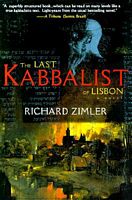
Richard Zimler - The Last Kabbalist of Lisbon

Sold in six countries and repeatedly back to press in the U.S., The Last Kabbalist of Lisbon is an international bestseller and an extraordinary novel that transports the reader into the universe of Jewish Kabbalah during the Lisbon massacre of April 1506. Just a few years earlier, Jews living in Portugal were dragged to the baptism font and forced to convert to Christianity. Many of these "New Christians", in secret and at great risk, persevered in their Jewish prayers and practiced their rituals, and the hidden, arcane practices of the kabbalists, a mystical sect of Jews, continued as well.
One such secret Jew was Berekiah Zarco, an intelligent young manuscript illuminator. Inflamed by love and revenge, he searches, in the crucible of the raging pogrom, for the killer of his beloved uncle Abraham, a renowned kabbalist and manuscript illuminator, discovered murdered in a hidden synagogue, along with a young girl in dishabille. Risking his life in streets seething with mayhem, Berekiah tracks down answers among Christians, New Christians, Jews, and the fellow kabbatists of his uncle, whose secret language and codes at turns light and obscure the way to the truth he seeks. A marvelous read, a challenging mystery, and a telling tale of the evils of intolerance, The Lost Kabbalist of Lisbon compels and entertains.

Comment: I decided to read this book because of a book club. I had previously read another book by the author and I was quite impressed with it, so I didn't think twice about getting this one to try as well.The book ended up not being the chosen by the book club votes, but as I got it from the library, I took the opportunity to read it anyway. I was quite eager to know what it would be like considering it would be set in Lisbon, my country's capital.

This is the story of a manuscript the author found in a house where he lived for a while in Turkey. Having lived in Portugal as well, he recognized the potential and decided to present it to the world as a romance, becasue he felt the real autor deserved it. He even dedicates the book to the narrator's family and memory.
The story is the path Berekiah Zarco takes to find out who murdered his beloved uncle back in 1507. While describing the things that happened in those days when religion was a nest of problems and life was so different from nowadays, we see his life story and we get a close view of what it was like to live in Lisbon in the 16th century.

The book is amazing. I live in this country and I know Portugal was a conflictuous place due to the Inquisition and the issues among Catholics and Jewish during the troubles in the Church. People were very quick to judge and to condemn and people were burned at the stake for any number of reasons but mostly because they weren't Catholics. It's known that Catholic countries had no fairness to other religions and many people were forced to change their religion or they would burn. However, many people only pretended to convert and would stick to their beliefs in hiding or among family members. The Jewish population was severely punished in those days and many would run from the Catholic countries to places not as keen in punishing them.

This book focuses on many of these issues and Berekiah was a recent convert along with his family and so many people from his community. He was forced to have a Catholic name, Peter, and to worship a different religion. However, he never put aside his Jewish traditions or even the Kabbal, a certain segment of Judaism.
The best thing in the story wasn't exactly the pursue of the mysterious killer or even the rage Berekiah had towards the unknown person, I was more impressed with the descriptions of the political and historical situation in the beginning of the 16th century and how people lived back then. It's so mind blowing to know those things happened for sure and someone was telling exactly what happened. Inquisition is an awful weapon and it's hard not to feel empathy towards those late people who died horribly in an era of distrust and hate and without information. But that's how things were and it's almost unbelievable, even more so by knowing it was all real.
The book is full of details about those people's lives, about ways of life and traditions and the book felt richer because of that. All characters somehow portray a possibility, they seem as real now as they surely were then and until the end we get to know them all pretty well, all by the narrator's voice.
I was quite amazed and do recommend the book to everyone.

I know there are more books told by this narrator and I'd like to read them, I'll try the library again someday soon. What a journey through History...

Tuesday, July 24, 2012

Richard Zimler - The Varsaw Anagrams

Warsaw, 1941--an exhausted and elderly psychiatrist named Erik Cohen makes his way home to the Jewish ghetto after being interned in a Nazi labor camp. Yet only one visionary man--Heniek Corben--can see him and hear him. Heniek soon realizes that Cohen has become an ibbur--a spirit. But how and why has he taken this form?

As Cohen recounts his disturbing and moving story, small but telling inconsistencies appear in his narrative. Heniek begins to believe that Cohen is not the secular Jew he claims to be, but may, in fact, be a student of practical Kabbalah?of magic. Why is he lying? And what is the importance of the anagrams he creates for the names of his friends and relatives? Heniek traces his suspicions and comes to an astonishing conclusion?one that has consequences for his own identity and life, and perhaps for the reader's as well.


Comment: Another read because of a book club.
I had seen this author's name often in my local library. I always imagined it would be boring, detailed stories, describing monotone behaviors that would be as much appealing to me as eating shrimp, which is to say...not at all.
I'm happily proven wrong because I loved the author's book. I mean, the story is too sad, but I liked reading it. What a paradox it can be sometimes, isn't it? To enjoy a story /book but not the book/story? Anyway... apart from surprises and wrong impressions from things we didn't know of, this author has written a moving story but also very sad like I said. I cried a couple of times because if it's awful to read about it, how much more awful, how much hard was it to bear the pain of it in flesh? This thought crossed my mind many times, and after reading this and after some talks I've had with people, I still think how many German people feel the burden of their heritage, specially because so many were innocent in all that but the world sees the whole, not the details...

So, the book is obviously about the Nazi oppression. This story focuses on the Jews living in a neighborhood in Poland, forced to live in ghettos before deportation to concentration camps. We go through so many details of their lives, of the lack of food and dignity they were forced to suffer and it's like a slap in the face to think the only rational living creature in the planet can be so stupid and illogical.
The main plot is how Erik Cohen tries to find out what happened to his nephew (almost a grandson actually) after he was killed and dumped in barbed wire for the Jews to find and see. The whole book shows us Erik's thoughts and actions to discover the truth with the help of friends. During this, we get to see little things about what life was for those people and how they were reduced to live like animals, worse than that while Nazi Germans ate what they wanted and did what they wanted. Two scenes didn't leave my head until this day, how Erik as a psychologist is asked for a German lady to see her daughter because she tried to commit suicide and when told he would be paid, he only asked for food. The other is how a 14-year-old living only with her mother in the ghetto wanted to have sex with 60-something Erik because she didn't see any way to gain money so she and her mother could have the first meal in a week.
This was real, I'm sure. The story is fiction but Holocaust did happen. Jews were killed. Jews were forced to live horribly before dying. It's not the fact the fictional story impressed me, it did, but to know this is a book after real things that happened in our world, to real people in real places is still such a shock.
In the end of the book the reader is left thinking a couple of things about the story, which I'm still a bit confused about, but to be honest, after finding out the guilty person for the killing of Erik's nephew, it's the truth behind the fiction that stays on. This book is worth for its reality.
I really liked this, despite how sad it was, and I'll try more books by him for sure, but not so soon..it's really very emotional and it can drain one's chest like I never imagined.

So, things to keep in mind after reading this post: Reality can be worse than we imagine, we can have wrong ideas about things we never tried before and how common it is to enjoy stories when the book sucks and vice versa.