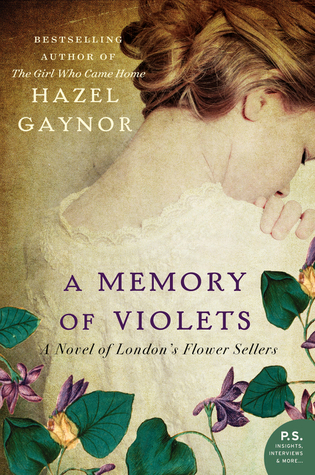
Dolly Lane is a dreamer;
a downtrodden maid who longs to dance on the London stage, but her life
has been fractured by the Great War. Memories of the soldier she loved,
of secret shame and profound loss, by turns pull her back and spur her
on to make a better life.
Dolly Lane is a dreamer;
a downtrodden maid who longs to dance on the London stage, but her life
has been fractured by the Great War. Memories of the soldier she loved,
of secret shame and profound loss, by turns pull her back and spur her
on to make a better life.When she finds employment as a chambermaid at London’s grandest hotel, The Savoy, Dolly takes a step closer to the glittering lives of the Bright Young Things who thrive on champagne, jazz and rebellion. Right now, she must exist on the fringes of power, wealth and glamor—she must remain invisible and unimportant.
But her fortunes take an unexpected turn when she responds to a struggling songwriter’s advertisement for a ‘muse’ and finds herself thrust into London’s exhilarating theatre scene and into the lives of celebrated actress, Loretta May, and her brother, Perry. Loretta and Perry may have the life Dolly aspires to, but they too are searching for something.
Now, at the precipice of the life she has and the one she longs for, the girl from The Savoy must make difficult choices: between two men; between two classes, between everything she knows and everything she dreams of. A brighter future is tantalizingly close—but can a girl like Dolly ever truly leave her past behind?
Comment: When I finished the first book by Hazel Gaynor I tried, I was left with a positive experience and have wanted to repeat it. Since that first good attempt, I read another one which was good but a little less impressive to me and, now, I've finished this one and it's yet another small step lower than the other one. My experience has been decreasing with time and I wonder if it's time to stop...
In this book we have the story of Dolly Lane, a young woman who lives in London during the 20s, a time post war where many people uplifted their spirits with cinema and parties and high expectations of positive things, gaiety and dreams of fame.
Dolly also has aspirations to become an artist but her humble origins make it difficult for her to chase that dream and, therefore, that means she needs to work until an opportunity comes her way. When the story starts she is about to begin working at the Savoy, considered one of the greatest hotels in London.
While we follow Dolly through her work and connections, we see her become a wonderful woman but she is someone who has secrets and, like practically all women, sadness and loss over what the war turned reality into. Will Dolly overcome what she faced in her past so she can become who she dreams of being?
This is a story set exclusively during the 20s. We have some references and scenes from the war times but only through letters Dolly exchanged with her sweetheart Teddy.
There are three narrators that help us decode what is happening: Dolly, Teddy and Loretta (a famous actress who helps Dolly at some point) and the story is divided into three parts. To be honest, the division doesn't seem to be that important, since the plot is continuous but I suppose each division creates a barrier in the emotional stage the characters are at.
This is a dramatic story, the main character is poor, she has had disappointments and unfair things happening to her in her past so, on paper, she should be everything I'd look for in the heroine of a novel. However, I didn't always like to follow Dolly's thoughts, perhaps because her eagerness to be an actress even if that meant she would put herself in a situation that could be harmful for her, would strike me as useless and considering the context, even more so.
I like heroines down on her luck that do something of their lives but while still maintaining their feet in the ground and not looking for difficult to achieve goals.
Of course, this means that Dolly's self confidence, especially when other things bring her down or prove to her she should be thankful for the good things she has, is at its highest when she does get praise for what she aspires, in particular in the person of Loretta May, a famous actress who also hides some secrets and her brother Perry, a composer who befriends Dolly when she replies to his ad for a muse.
The relationship between these three is never too complex as I thought it might develop and, to be honest, the way the author chose to develop them and where they go towards the end of the novel doesn't always feel like the best course of action.
I think the idea is there and I was captivated by the notion of these people trying to be the best they could at such a convoluted time and the setting is unusual enough for me, since the 20s don't seem to be a moment in history I'm very fond of, but the plot leads to a very weird situation that I don't think was solved as well as the author could and there was an obvious goal of reaching drama and intensity that the how was a little lost.
I've seen some readers didn't like the end for a specific reason but that didn't bother me that much. I was more annoyed at the fact Dolly wasn't as impressive a character as I wanted hr to be and that such a long time passed from the last chapter and the epilogue. What happened in between is unknown and I don't think the effort and pace were used correctly: I'd rather have a better solution of everyone's issues and less epilogue gap or, even better, no epilogue at all, the best could have been to leave the entirety of the end to the reader's imagination, since the scene with Dolly's last decision.
As a whole, this book has a lot to praise about and it does offer some good reading time. I just think that, for me personally, the characters were never as easy to sympathize with, their plights worthy and complex but their personalities focused on details I can't relate to (like the desire to perform, to be famous) and that I felt were portrayed in a very detached manner.
I liked the characters' backgrounds a lot more but those were just another element to motivate the characters and not as exploited as I'd have preferred.
This was good but not as good as it could be, I'd say.
Grade: 6/10