Showing posts with label Anthony Horowitz. Show all posts

Thursday, December 4, 2025

Anthony Horowitz - Marble Hall Murders

Editor Susan Ryeland has left her Greek island, her hotel, and her Greek boyfriend Andreas in search of a new life back in England.
Freelancing for Causton Books, she’s working on the manuscript of a novel, Pund’s Last Case, by a young author named Eliot Crace, a continuation of the popular Alan Conway series. Susan is surprised to learn that Eliot is the grandson of legendary children’s author Marian Crace, who died some fifteen years ago—murdered, Elliot insists, by poison.
As Susan begins to read the manuscript’s opening chapters, the skeptical editor is relieved to find that Pund’s Last Case is actually very good. Set in the South of France, it revolves around the mysterious death of Lady Margaret Chalfont, who, though mortally ill, is poisoned—perhaps by a member of her own family. But who did it? And why?
The deeper Susan reads, the more it becomes clear that the clues leading to the truth of Marian Crace’s death are hidden within this Atticus Pund mystery.
While Eliot’s accusation becomes more plausible, his behavior grows increasingly erratic.. Then he is suddenly killed in a hit-and-run accident, and Susan finds herself under police scrutiny as a suspect in his killing.
Three mysterious deaths. Multiple motives and possible murderers. If Susan doesn’t solve the mystery of Pund’s Last Case, she may well be the next victim.

Comment: This is the third - and apparently last - installment in the Susan Ryeland books, and we can thank actress Leslie Manville (from the adapted TV series) for it, since she expressed her wish to do one more season to author Anthony Horowitz. 

When this story begins, Susan is about to leave Greece definitively for her life there no longer makes sense to her. She expects that once back in England, she can find a way to go back to her work as an editor, something which has been tremendously affected since the events in the first book. Coincidentally, her current boss asks her to edit a continuation on the Atticus Pund novels, with a new author doing it, Eliot Crace, who comes from a famous family but his previous books didn't go well. Still, Susan is glad that the chapters she is given seem very alike the original author's work and she believes this can work. The problem is that Eliot isn't always reliable and the more she reads, the more it seems that, like Alan Conway, Eliot Crace is also hiding secrets in his novel...

I really love this type of novel, in which we have a story within a story. As we follow Eliot Crace's novel, it's also a means to understand the "real life" plot about Susan and those she interacts with while she does her job and investigates. This worked out very well for me in the first book, even better in the second and here, despite the cleverness of Horowitz' planning, I will have to say I wasn't as greatly wowed.

To be fair, my issue isn't with the mysteries, both the one in the fictional novel and the one involving Susan. I think my general appreciation of this novel was just a little bit lower because of the tone. I feel the tone in this book was darker and less hopeful as the others somehow made me feel. I can understand this, clearly this is aimed to be the last book - which makes sense plot and character-wise - and with that we need to deal with some finite situations and expectations. But some passages, some scenes were still a little too sad, too disheartening for me, mostly related to Susan's life while she does this job.

With this I don't mean things don't end up in suitable way; in fact, the end is pretty much a tidy bow on the series and the adventures of these characters, but some situations were quite distressing at times. I saw that some readers have been disappointed and some even think this book is pointless, but I still think it was a great story to read. I was taken by the mysteries and the complexity of what was happening and the process of it all, although one of the murderers seemed easy to guess (psychologically, I mean, not that I guessed the clues), while the other was more surprising to me.

As it had happened with the other books in the trilogy, we get to follow the two story lines in sometimes alternated parts, and they have many points in common, so we get to have an idea about what the other story might include just by reading one first. Anthony Horowitz is a very clever planner, in the sense that so many things are intricate and connect in ways we would never imagine, so the final work reads as if it's a simple mystery but it surely means countless hours planning and creating everything...I do like the wit and the depth that goes into these stories.

This time I kind of liked the real life plot a little bit better, even counting with the bleaker moments, than the fictional story within. I say this because with the other two books, the fictional historical plots featured situations I was more impressed by, which the contemporary setting didn't do as much, but in this third book the opposite happened. Perhaps due to the content and the expectation about this being Atticus Pund last case. The development felt a bit erratic.

For me, this story worked out quite well. The characters were consistent and layered and I had a great time trying to analyze their actions and what could be a clue or not. I hope the author can think about other series with these elements because the juxtaposition of two plots with connecting elements was one of the book's best features. 
Grade: 8/10

Saturday, November 26, 2022

Anthony Horowitz - Moonflower Murders

Retired publisher Susan Ryeland is running a small hotel on a Greek island with her long-term boyfriend. But life isn’t as idyllic as it should be: exhausted by the responsibility of making everything work on an island where nothing ever does, Susan is beginning to miss her literary life in London – even though her publishing career once entangled her in a lethal literary murder plot.
So when an English couple come to visit with tales of a murder that took place in a hotel the same day their daughter Cecily was married there, Susan can’t help but find herself fascinated.
And when they tell her that Cecily has gone missing a few short hours after reading Atticus Pund Takes The Case, a crime novel Susan edited some years previously, Susan knows she must return to London to find out what has happened.
The clues to the murder and to Cecily’s disappearance must lie within the pages of this novel.
But to save Cecily, Susan must place her own life in mortal danger…

Comment: Two months ago I've read and loved Magpie Murders, the first book I tried by this author. I'm now thankful I'm only reading these books now, because I could simply pick this second one instead of having to wait the years it took until it was published. The stories aren't linear sequels, but this second one has enough references to the first that reading in order is absolutely necessary.

The protagonist Susan is now living in Crete with her boyfriend but it is clear that things at their hotel aren't as simple and carefree as she might imagined, once everything was ready. When a British couple shows up, Susan immediately knows they have money and aren't there to book a stay with them. Lawrence and Pauline came to Crete to speak to Susan personally because heir daughter Cecily has been missing and they believe it has something to do with a book by Alan Conway, whose editor was Susan. Apparently, Cecily noticed some kind of clue in a book which is obviously based on the family's hotel in the UK and in a crime which happened there. Soon after making a phone call to her parents about it, she wasn't seen anymore. Susan isn't certain if she can really help but the couple will pay her "work" investigating what Cecily might have seen in the book and the fact she does want to be back in the UK also works to convince her. Will she be able to find anything? Could it be she will be in danger herself?

I did find the other book clever because of all the connections and clues and ideas, not only related to the main plot but also to the story within the story. The author must have a wonderful imagination and organizational skills to keep everything steady or, at least, a very good editor too, to help him with all the details that need to make sense! Once again, this was a very clever book and I think I liked it slightly more than the first!

The structure of this novel is pretty much the same as the other book, but the fictional book featuring Atticus Pund, which was introduced early on in the first book comes up a bit more towards the middle of the plot of this one. It's quite a treat how much effort and detail was put into creating that story. I actually think mr Horowitz could start his own "small town cozy mysteries during the 40s" series and those books would be quite a success! It's true they are smaller, more concise plots along the lines of Agatha Christie (an obvious influence), but so rewarding nevertheless.

However, I must say that despite my enjoyment in reading this story, I don't think the overall effect was as well achieved as it had happened in the other book, not only because the wow factor wasn't as obvious anymore, but also because I feel the real show stopper this time was the primary plot regarding Susan and the people she interacts with at the hotel and in her investigation. It felt as if that was the actual mystery to be concerned with, when in Magpie Murders I felt the focus was divided equally into the two plots.

Susan's investigation was very clever and easy to follow, even though I'll confess at some point I did wonder if the killer wasn't a certain someone, based on one clue but, of course at that point there were still plenty of red herrings to come out way... still, I was surprised by how everything came to happen but the killer's identity wasn't a complete novelty. The plot is still well thought, don't be mistaken; But I did think the reason why things happened that way could have been stronger. 

I also can't help thinking how unlikely it is that Susan, not a police officer or anything alike it, can so easily talk to people and they answer her questions... this is addressed a few times throughout the book so we know there's a valid reason but I think to myself, if I were involved, would I so easily want to speak with someone who is not an actual authority figure...? Oh well, it serves its purpose!

While all this happens and Susan talks to people and connects clues and we discover things, the big picture starts to come to life. The murder which happened at the hotel and that propelled the whole thing happened before the events of Magpie Murders which is quite funny to me, here we have a prequel regarding a book published but with events which are a sequel. It is quite ingenious and astute how the author planned everything. Some of the distractions and red herrings are also doubly clever because they offer possibilities but even those have a special meaning and get some kind of importance in the novel, unlike the times where things are used just so the reader doesn't guess things right away.

At some point, Susan realizes what really happened and she can finally explain to Lawrence and Pauline wat happened to Cecily and what she saw that sealed her fate. I still think some small details feel a little forced, like the initial clue Cecily sees in the book! Now I know what it was and how she would have made the connection she did but to be fair, it's not that obvious and the reason why it was for Cecily didn't fully convince me... still, when Susan explains things to the majority of characters, just like Poirot does in Agatha Christie's novels, it was quite a rush, to finally see the big picture.

I had such a wonderful time reading this, even with the flaws or the details I think could have been better, it was a very well done story. I certainly hope the author might write something else in this series or in this genre because it's a very consistent and rich work.
Grade: 9/10

Thursday, September 15, 2022

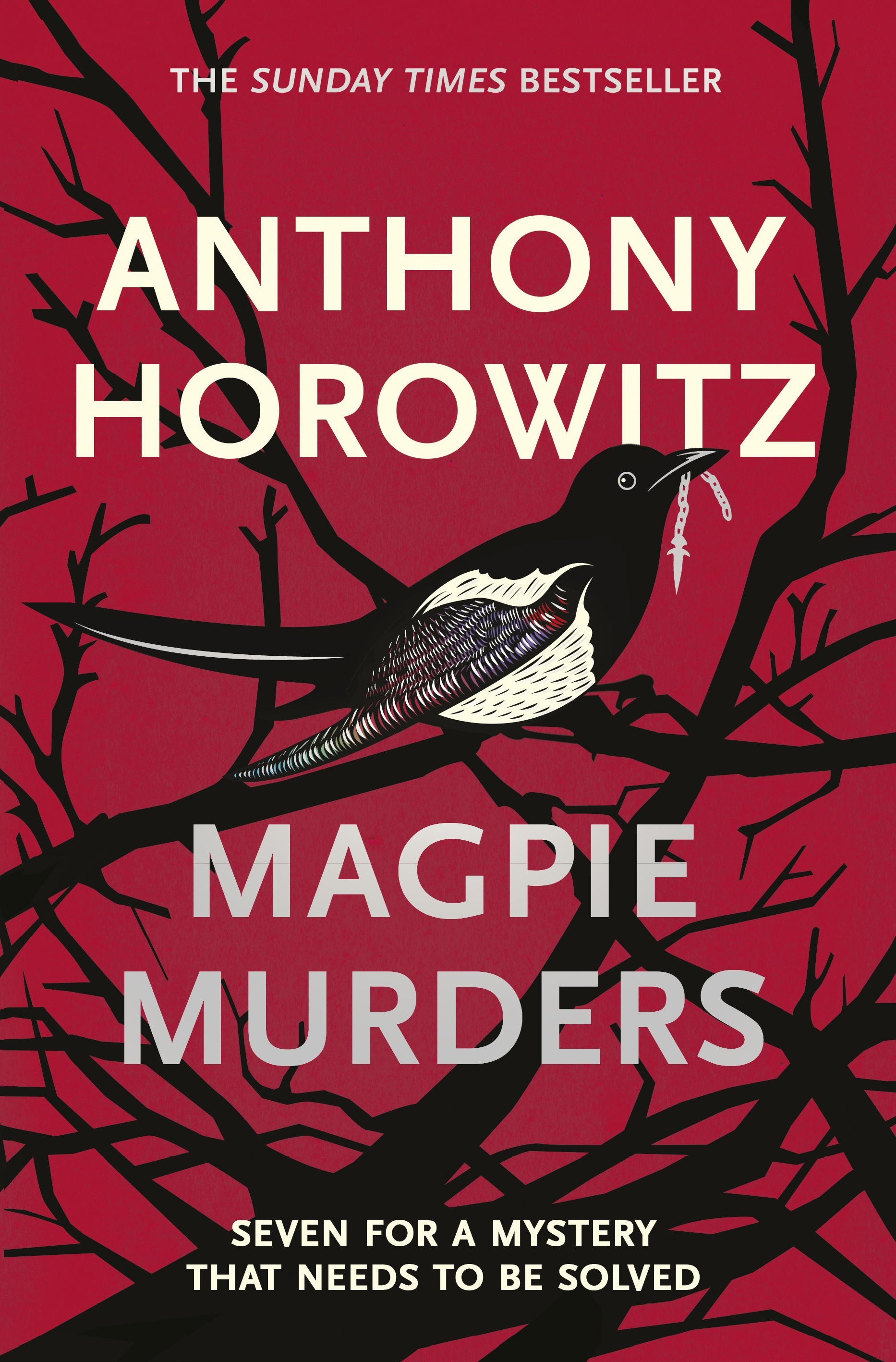
Anthony Horowitz - Magpie Murders

When editor Susan Ryeland is given the manuscript of Alan Conway’s latest novel, she has no reason to think it will be much different from any of his others. After working with the bestselling crime writer for years, she’s intimately familiar with his detective, Atticus Pünd, who solves mysteries disturbing sleepy English villages. An homage to queens of classic British crime such as Agatha Christie and Dorothy Sayers, Alan’s traditional formula has proved hugely successful. So successful that Susan must continue to put up with his troubling behavior if she wants to keep her job.
Conway’s latest tale has Atticus Pünd investigating a murder at Pye Hall, a local manor house. Yes, there are dead bodies and a host of intriguing suspects, but the more Susan reads, the more she’s convinced that there is another story hidden in the pages of the manuscript: one of real-life jealousy, greed, ruthless ambition, and murder.

Comment: This mystery caught my attention because the story would be about books and had a story within the story. Since this is a theme I tend to enjoy, on to the pile it went until now.

When this books starts we learn that Susan Ryeland, an editor at a publishing house, is about to start the new and last book in a popular series. The author has gained fame because of this mystery series, pretty much along the same lines as Agatha Christie's style, but now that the final book is to be released something strange happens. The author dies and it all points to suicide, including even a suicide note, but Susan seems suspicious, especially since while reading the author's last book, there are way too many clues in it to make her think the author wanted to hide some kind of message in his book. But Susan isn't a detective, can she go beyond being a mystery reader to put all the clues together and finally see what has really happened?

This was definitely a very clever book! I had a wonderful time reading and more than trying to guess anything, for me the fun was to see so much of the usual behavior of a reader while going through a mystery. Susan is an editor but she also reads the book and so much of her impressions follow the pattern of who likes to read mysteries, from thinking about suspects and trying to guess the meaning of clues and so on.

In fact, I really loved this part of the story: Susan reads her author's book and when the last chapter seems to be missing, she has to think abut what she has read and who could be the killer, who was hiding something, a method I found very realistic when any reader is trying to understand what is happening. The author of this book, Anthony Horowitz, is known for his work in this field, since he is also responsible for adapting Agatha Christie's stories into a TV series, so his knowledge is quite well used and done here.

There are two stories being developed in this book:

- The main plot, in which Susan investigates author Alan Conway's "suicide" and everything related to that and some missing pages of his final book;

- The story within the story, which is a very clear and intriguing whodunit, written by character Alan Conway.

This Magpie Murders starts with an introduction by Susan and right away we actually have Alan's book which, I must say, was an extremely convincing little story and one I had great fun reading. Actually, it was very addictive to learn about a fictional place in England, just like any other country village, where things just happen. It is obvious the inspiration on Agatha Christie's work and other similar authors, and it felt as if that story could truly be any other published mystery out there.

The fictional story was very well done, for Alan Conway is described as being a good writer but an unpleasant person and he seems to dislike the fame he has because of books so many like and he actually was tired of. This brings up an interesting theme, shared by many real authors, who get tired of their characters' success with the public. I think all these little things, clues, hints, red herrings both in the fictional story as well as the ones in the main one were all wonderful to make me reflect.

I could not guess the truth about the story within the story. Pretty much like Poirot, the detective in that fictional story was very precise in describing events and finding the culprits. It was really quite an adventure to read that little story. As for the mystery Susan Ryeland investigates, that one was a little bit easier for me to guess. The motives for the death of Alan Conway weren't difficult to guess but the whys of certain clues and how the sequence of events went was the true beauty of the plot, as it usually happens in these types of the books, where the journey is often richer than the result.

I can't explain why but looking at this from a certain POV, there were just too many details related to one situation which seemed to be too vague and I kind of imagined obviously something more had to matter and I was right. Just not the hows of things. Still, the last twist in Susan's investigation was a bit naive, I mean! She edited crime books, would any person in true fear of discovery such a secret/crime behave like she did in those last pages? It does feel it was a good shock factor instead.

I was a lot more impressed with the solution for the story within the story, which i think was well done. I also loved all the clues and red herrings in both stories because often we are lead to believe some things are important when they aren't and vice versa. It was also fun to read this book because of this and that is why, of course, now I want to read the next one, featuring Susan again. Hopefully, it will also be fun and captivating!
Grade: 8/10