Showing posts with label Grade 4/10. Show all posts

Friday, October 16, 2026

A.K. Caggiano - Throne in the Dark

His dark destiny awaits, and nothing will stand in his way. Except her.
Dark lord
Demon spawn
Prophesied realm destroyer
With a demon for a father, Damien Maleficus Bloodthorne’s destiny could be nothing but nefarious, and with the completion of his most vicious spell, Damien is on the cusp of fulfilling the evil inevitability all of his dark machinations have led to.
And then, her.
Bubbly
Obnoxious
Blonde
Harboring secrets of her own, a tiny yet troublesome thief calling herself Amma completely upsets Damien’s malevolent plans when she mistakenly gets chained to his side through magic, forcing him to drag her across the realm. Killing her would fix things, of course, but the nauseatingly sweet Amma proves herself useful on Damien's unholy crusade and then proves herself the source of something even more sinister: feelings.
Will Damien be forced to abandon his villainous birthright to help the tender thorn in his side? Or will he manage to overcome the virtue Amma insists on inspiring and instead cut it out at the heart?

Comment: I decided to give this book a try after seeing it being recommended as having a grumpy/sunshine pairing and I do like this romance pairing, so...

Damien is the son of an evil lord and he feels his destiny is to be as evil. He also wants to help free his father, who has been imprisoned in a crystal, and to do that he finally comes up with the perfect tool, a magical orb. However, his plans to use the orb, which would allow him to control someone in the best place to be useful, go terribly wrong when he meets this young woman at a market and she tries to rob him. In the process, she grabs the orb, which is then absorbed by this woman, making it necessary for him to stick close to her...
Amma is on a mission, she wants to retrieve a certain scroll, and she had to travel to a shady area where it's supposedly located, but all goes wrong when she meets Damien. Now, not only does she need to stay close to him but she is being controlled by him. Nevertheless, she is able to see a side of him that isn't as evil as he claims to be, but how will he react when he learns her secrets?

I didn't have a great reading experience with this one, to be honest. The little summary I wrote above is pretty much all I got from this story, because the details are very fuzzy and I can't say I'm really disappointed I didn't get more details. This was a boring story to me.

Of course I can now say that the writing style didn't work for me, I could not see the opposites attract trope nor the world building being as attractive as it was meant to be. I struggled with having interest and I confess I actually forced myself to keep going, just to not DNF another book. What I liked, which is the reason I didn't grade this even lower, was the individual details about some characters and the magical elements here and there.

The plot is confusing to me, the only thing I got out of it was that both main characters had a mission, had to accomplish a certain task and then they went, looking to do it. On the way, it seemed as if they were on a sort of road trip, in which they met many new people, for some reason or another, and sometimes that gave them a new perspective things and of one another, sometimes it felt as if they were simply doing stuff because the plot had to advance.

Since I wasn't particularly interested in either mission - at first Damien seemed he would be a complex character but I quickly lost interest - I was just turning the pages without retaining much information. I got the feeling not much was happening and the goal was for Damien and Amma to become aware of each other and realize there was more to them than what seemed at first. Usually, I love these types of romances, in which protagonists "peel off" layers as they get to know each other, but this time I didn't have that sensation.

When I finished, I saw the reference that the story would continue in the next installment, thus this being a trilogy of course not everything was made obvious here, but I don't feel interested in going on. I liked Damien, for the most part, and would not mind knowing more about him, something that can be remedied by looking at reviews on the next books, but Amma wasn't a character I empathized with, personality wise. She's a great person but... not captivating to me. Clearly, their romance was pretty much nonexistent here, this is the first book and things were mostly being set up.

This didn't work out for me. Several elements were cute, yes, but the ensemble of them didn't seem to fit properly, even more so when the tone was also meant to be slightly funny (it wasn't, for me). Anyway, one more off the pile.
Grade: 4/10

Friday, July 3, 2026

Kate Quinn - The Astral Library

Alexandria “Alix” Watson has learned one lesson from her barren childhood in the foster-care system: unlike people, books will never let you down. Working three dead-end jobs to make ends meet and knowing college is a pipe dream, Alix takes nightly refuge in the high-vaulted reading room at the Boston Public Library, escaping into her favorite fantasy novels and dreaming of far-off lands. Until the day she stumbles through a hidden door and meets the Librarian: the ageless, acerbic guardian of a hidden library where the desperate and the lost escape to new lives...inside their favorite books.
The Librarian takes a dazzled Alix under her wing, but before she can escape into the pages of her new life, a shadowy enemy emerges to threaten everyone the Astral Library has ever helped protect. Aided by a dashing costume-shop owner, Alix and the Librarian flee through the Regency drawing rooms of Jane Austen to the back alleys of Sherlock Holmes and the champagne-soaked parties of The Great Gatsby as danger draws inexorably closer. But who does their enemy really wish to destroy—Alix, the Librarian, or the Library itself?

Comment: I've picked this book because it is one of the choices my buddy friend and I had for this month. I was quite excited to read it but it turned out to be a disappointment.

In this story we meet Alix, a very down on her luck woman who is having a lot of trouble making ends' meet and when things really reach rock bottom, she decides to go to the public library, which is a place where she finds a lot of comfort but this time something weird happens. She stumbles through a door and that is how she finds herself at a strange room, being welcomed by a librarian she had never met before. This librarian explains to her she is now at the astral library and she can choose to visit any fictional work she wants, as long as it is part of the public domain, and she can stay for a year, renewing it if she desires. Alix is amazed and she feels this is the opportunity for the adventure her struggling life through the foster system never provided. The problem is that someone is eager to change the rules about how the astral library works...

I was very excited to read this book, whose premise sounded very promising since it's about books, the existence of a magical library and the possible adventures the heroine would face throughout the plot. I also kind of liked the idea that she didn't have an easy life and wanted her to be able to enjoy a fun adventure.

The first chapters, where we get to see how difficult the heroine's life is, were interesting and while depressing, were very realistic. I assumed we were being told this so that it would feel even more obvious how the change would impact the heroine's life once she started her adventure. When she discovers the astral library, the possibilities were great: all readers probably already dreamed of being part of the world in their favorite books and if added to it, the idea that one might jump into worlds or to spend time there, even if not as the protagonist, it all seemed a great utopia. 

I should say that this is the first book I try by the author and I knew it isn't her usual style/genre. I know she has published historical fiction (another of her books has also been in my TBR pile for long) and I already expected that this one would not be what gave her recognition. Still, I feel very disappointed because as soon as Alix starts interacting with the astral library's librarian and starts off the quest to help save it from someone who intends to cause problems, all went south for me.

Alix started to sound more and more annoying, even if she had the right ideas and the heart for the task. The magic of the library allowed people to travel into fictional worlds, to live there if they wished and to renew that yearly. Great ideas, but then the characters kept jumping between "worlds" and it started to seem as if their importance was only in regards to how it helped the main characters do accomplish what they wanted. I'm specifically thinking about the fact the characters who chose to live in fiction were all people who suffered/were hurt/were chased, etc, and they were, let's use the word, worthy, of this adventure. This is a good tactic but we don't spend enough time in each world for it to seem that it mattered which one.

Thus, it felt that the point was more to name worlds, to use titles and author and not as much if it would matter for Alix and the others. Clearly, this happens because the Kate Quinn had a plan, which it was to use this book a way to highlight how much libraries are necessary, how much our current way of living isn't interested in places which don't originate profit. I don't mind the fact the author had and agenda with this book - many readers in several platforms mostly disliked this as the reason for negative reviews - but it does bother me that including these things took over the plot or the proper execution of it.

The more I read, the more annoying the story became and I was actually bored and considering not finishing. I've kept going the book isn't big, honestly. 
There is also a very slight romantic element with a friend of Alix, but this felt avoidable and I think the author only used this element because the guy, Beau, liked fashion and was a convenient way for Alix to have special outfits for two of her "travels".

The end was practically a declaration of war on current practices which make more and more demands for places like libraries to be financed in such ways that they origin some kind of profit. This would, obviously, mean the end of free access to all, independently of their financial situation. The debate will remain and I do applaud the author for her views and message, but... the wonderful premise of this book and the reason why many likely wanted to read it....lost.... at least in my opinion. I wanted more fictional story and less amount of things that ended up not mattering.
Grade: 4/10

Tuesday, June 9, 2026

Delphine Dryden - Gossamer Wing

After losing her husband to a rogue French agent, Charlotte Moncrieffe wants to make her mark in international espionage. And what could be better for recovering secret long-lost documents from the Palais Garnier than her stealth dirigible, Gossamer Wing? 
Her spymaster father has one he won’t send her to Paris without an ironclad cover. 
Dexter Hardison prefers inventing to politics, but his title as Makesmith Baron and his formidable skills make him an ideal husband-imposter for Charlotte. And the unorthodox undercover arrangement would help him in his own field of discovery. 
But from Charlotte and Dexter’s marriage of convenience comes a distraction—a passion that complicates an increasingly dangerous mission. For Charlotte, however, the thought of losing Dexter also opens her heart to a thrilling new future of love and adventure.

Comment: Here is one more book I can't remember why I've added to my TBR but it probably has to do with the marriage of convenience trope.

Charlotte Moncrieffe is a young widow who is also a trained spy and all is ready for her mission in France except it would not be believable for her to travel alone and her superiors find her a man who could be her husband. In fact, she knows about him, for they have been exchanging letters upon her requests for his devices but nothing would prepare her for how attractive he is, both physically and for her personal senses. Dexter Hardison has a title he often ignores which makes him a good husband on paper but he finds it an extra that he and Charlotte work out so well in person as they do in letters. The question is, while on this mission, can they separate what is real and what is fake in their relationship?

In this story we meet two people who had been exchanging letters which, of course, is an easy way to establish that a certain connection was already there. I didn't doubt that Charlotte and Dexter would be a solid couple because the understanding of who they were was already there, even though the exchange wasn't necessarily personal.

Thus, the idea of the romance was immediately established as stable and I was eager to see how getting to know one another in person would add to the connection. I think that, at first, this was well done, and I was convinced that they would slowly learn about one another in a romantic way. What was being shared about their personalities in the beginning also made it look as if they would be likable characters and I was quite interested in what was happening.

I will say that this is the first book I try by the author and I had no idea about her style, but in the beginning all seemed to go well. I should also mention that this impressed me in spite of the fact I'm not terribly fond of spying plots and two or three books with this theme I have read in the past months have not been that impressive, but I hoped this element here would not be that important anyway, with the focus on the romance, I hoped.

Well, my enthusiasm was soon lost, I'm afraid, because the interesting and vibrant tension between the protagonists practically disappeared after their "marriage". The dynamics between them, while kind of believable for that situation, no longer seemed appealing and the intimacy between them too quick and without the same "mood" as before. How they interacted with one another no longer felt appealing and I could easily ignore the sex scenes.

In regards to the plot, which I confess I never really paid attention to, there was indeed a lot of spying business and other secondary issues related to the mission that I skipped here and there in order to get to the romance, but like I said, that wasn't winning the story over for me anymore either. I wasn't fond f the idea of giving their enemy a POV because it meant that I knew I'd not like the person and it made it easier to just glance at those paragraphs, making a few more pages I was not interested in reading.

This experience got to the point of me being almost ignorant of what was going on with the plot. I've forced myself this finish and not even the (usual) fun details about the world building compensated. I simply consider it a success that I've finished because there are more elements I didn't like than the ones I did. I really think the plot lost interest once they went on with their mission and, supposedly, that is when the fun times would start, so... one less on the pile.
Grade: 4/10

Thursday, March 19, 2026

Alice Archer -The Infinite Onion

Grant Eastbrook hit the ground crawling after his wife kicked him out. Six months later, in Seattle without a job or a place to live, he escapes to the woods of nearby Vashon Island to consider his options. When he’s found sleeping outdoors by a cheerful man who seems bent on irritating him to death, Grant’s plans to resuscitate his life take a peculiar turn.
Oliver Rossi knows how to keep his fears at bay. He’s had years of practice. As a local eccentric and artist, he works from his funky home in the deep woods, where he thinks he has everything he needs. Then he rescues an angry man from a rainy ditch and discovers a present worth fighting the past for.
Amid the buzz of high summer, unwelcome attraction blooms on a playing field of barbs, defenses, and secrets
.

Comment: One more case in which a recommendation by a reader somewhere made me look for this book and the blurb sounded appealing, and that is why I've decided to try it.

In this book, Grant is a 38 year old who never seemed to reach his full potential, which is why, in part, his wife divorced him and why he is just now quitting his menial job. He decides to squat at his ex's brothers' cabin while he thinks about what to do. He isn't aware of the security cameras which is why his former brother in law finds him, but not before Grant's life reaches rock bottom, without money nor a place to stay and to make it worse, the eccentric neighbor of the propriety next door, Oliver, seems to pity him.
Oliver is convinced he can help Grant, but only if he demonstrates he is eager to change, and Oliver decides to make a deal with him, conveniently forgetting he has issues of his own. As the two of them start a game of pull and push, too many things come to the surface and not all of them are things they truly want to deal with. However, as their connection deepens, so do the stakes if they both fail.. after all, who will save whom?

This is my first book by this author and without the recommendation I probably would not have noticed it because it's not the usual type of plot I gravitate to. I mean, it did sound as if this would be a bit more introspective than what I seek, but since I sometimes like to get in this mood, I thought why not.

It turned out to be a complicated book to read and to classify, in fact. As always, one of those cases in which I liked some elements but others weren't great. I feel a little bad to not have appreciated this more, but the way the plot is structured made me struggle, at times, with what the characters were really thinking or doing. This happens because while we have the POV of both protagonists in alternated chapters, we also have their dreams and what ifs mixed up with actual situations and sometimes it was hard to distinguish what was what.

The setup is also tricky to go through because both main characters have serious issues and emotional traumas to deal with and it felt as if how they did process things throughout the story wasn't done properly. Grant is basically homeless when the story starts and he is also depressed, in my opinion. He feels he never got to identify himself with anything he did and his wife left him because he didn't try to be ambitious. I can understand how his mind state would have "told" him things that weren't right and I did feel some pity for him and for how much stress he had.

He forges a connection with some kids who live nearby, including Kai, the nephew of his ex, who still cares about him and looks up to him somehow. Grant instinctively understands Kai would want to tell him something so he makes him comfortable enough to trust him, as do the other kids. Let me tell you, this did sound a little too odd but it all serves to let us know Grant found his call, and how his quirks might have a reason to be, which is to work with kids, but the way to get there... too odd.

We also follow Oliver, an artist who seems to be helpful at first, then a little weird in how the only will help Grant if they play things the way he, Oliver, deems necessary... Oliver also "helps" others deal with traumas through artistic experiments but this sounded very insecure, after all Oliver is not a therapist and he, too, has a lot to process, so much that as things went by I started to think Oliver needed way more psychological help than Grant! It was hard to accept the idea these two would be in any condition to welcome a relationship.

The romance didn't convince me because the guys aren't in the best place, emotionally, for a real commitment to feel based on solid awareness of one another. There's also the detail that Oliver had a friend with benefits who distracted his attention throughout the novel and, honestly, I just c«didn't by it that Oliver and Grant were attracted to one another beyond the physical. I think the many secondary details about and around them were not conductive for a believable romance.

I suppose that, thinking about this book, I can say it is about accepting oneself, admitting we need help when we are at a bad place, physical and emotionally, but I wasn't captivated by it anwyay. I think the author has a very specif way of how she wanted this to be delivered, but the method isn't easy to appreciate. In real life, these two finding each other and a goal in life would be a great story of resilience, but on paper it was often boring and the events dragged and I lost interest many times. I kept going to finish because I had to know if the guys would "heal" somehow, but it wasn't a really rewarding reading experience.
Grade: 4/10

Wednesday, March 18, 2026

TBR Challenge: Rosanne Bittner- Sioux Splendor

Learning that an innocent Native American boy is to hang at the hands of vengeful miners, preacher's daughter Cynthia Wells sets out on the rescue and is amazed when the imprisoned Red Wolf turns out to be a handsome, full-grown man.

Comment: One more month has gone and here we are for another TBR Challenge post! The theme for March is "tropetastic!" and I suppose pretty much any choice would fit somehow, but I've decided to pick a book that would have a trope  - opposites attract - and a certain expectation to it, since it would feature protagonists from different cultures, a Native American and a white woman.

In this book, Cynthia Wells is a young 16 year old who is traveling with her parents and younger brother to the west, where things aren't as "civilized" as back East for her father is a preacher. Everything is a novelty here including the fact there are Indians around and they seem to be dangerous but this doesn't stop her from freeing one, Red Wolf, after seeing how he is treated and tortured. This action has consequences, which change her life and some time later she is kidnapped by other Indians and is taken to Red Wolf, someone very different from what others have said he was. They fall in love and learn to be a couple but the whites would not care that she is now happy and their lives among the Indian community are still in danger. Is there any hope for them to be together?

There will be some spoilers!


Well. This is my first book by the author, and I've gotten the paperback edition from an used books site, some years ago, when I was feeling in the mood for some stories featuring Native American characters. Years have passed, of course, but I thought this might be a good time to try this one, even though it is a book which was published in 1990 and surely this would mean situations/plot choices I'd feel annoyed at, but nothing like trying.

It wasn't great, no, for those reasons exactly. I wasn't as bothered by the racist and xenophobic allusions throughout the novel because I expected those, considering the fact this is an historical and that there's a note on the author's bio at the back claiming she is known for her historical accuracy. What I feel angry at is that, in spite of this, the text (and the characters at times) come across as insensitive, which might be correct for the time the story takes place (late 1800s) and the way of things when this was written (certainly late 80s for this to be published in 1990). Still, I kind of wanted the author to place herself above this, and to showcase compassion, and a little more empathy in how she would write.

Anyway, the plot is pretty much simple, Cynthia and Red Wolf meet when she helps him, there's attraction there but both think they will never see each other again, until she is kidnapped. It turns out that the man kidnapping her isn't the villain she assumes and she reunites with Red Wolf. Her way of seeing things and lifestyle does contrast immensely with what she now needs to do around the other Natives and their families but Cynthia is one of those heroines who adapts easily and their life gets on track.

They fall in love and the many things that should keep them apart don't really matter. Cynthia is ready to be Red Wolf's wife and at this point I felt the romance was more than done but then, we were half way through the book, certainly problems would appear yet... and they do. I think the author's writing style wasn't bad and there were passages/situations in which things were presented in a way that gave me food for thought. The dated aspects of the writing style and the inherent issues related to how one would write about these themes back them were glaring but until a certain point not truly abhorrent. I was not enjoying this exactly, but it wasn't distasteful either.

Then, there's a plot change and Cynthia is taken from Red Wolf after a terrible attack of the whites on the settlement where Cynthia and the others were living. This led to her going back to her family and to need to re adapt to living among "her kind" once more, for her family forces her to go back East, but this time she had another issue to deal with, for she is pregnant and her child will clearly not be like her. I did like that, in this part of the novel, Cynthia seemed to have gained self assurance in who she was and in her feelings, she never renegaded Red Wolf, she loved her child and she proudly assumed him among others.

Years go by and then the story was going towards its end, so now Cynthia is older, more mature and all that and she assumes Red Wolf forgot her so she decides to marry so that she can try to have more children and "move on". At this point, I was certainly rooting for this heroine and when she marries a seemingly good man, running for some political thing, I thought how would the author deal with this, an incredibly dramatic scene in which she sees Red Wolf and her husband martyrs himself so that she can live her eternal love in happiness? Well, the author disappointed me here, very, very badly. Things don't work out between Cynthia and her husband because they don't have a good sex life.

Years in which they are both miserable and why? Well, her husband is actually gay and of course this would not have been easy to accept  and much less to process. But I was still so, so disappointed that Cynthia reacts poorly when she finds out, that the husband is made to seem to "battle a demon" and that when they talk, she is disgusted while keeping his secret at the same time, as if this is the epitome of a good heart! Arghh! How this annoyed me... I mean, I understand the dual setting for this story, the historical content and the 1990 publishing date but.... so, so disappointing.

Anyway, Red Wolf comes back to the picture, they find each other again and get their HEA while the poor husband gives her a divorce which she graciously accepts to be known was caused by her adultery, then he becomes an afterthought and all ends well. There wasn't that much content about Native American culture, only the necessary references here and there, and most things weren't that far out, but... I still finished the book feeling like this was terribly unfair. I was leaning towards a 3 stars grade overall, but the last part really brought it down for me. Oh well.
Grade: 4/10

Friday, February 13, 2026

Anstey Harris - Where We Belong

One summer.
One house.
One family learning to love again.
Cate Morris and her son, Leo, are homeless, adrift. They’ve packed up the boxes from their London home, said goodbye to friends and colleagues, and now they are on their way to ‘Hatters Museum of the Wide Wide World – to stay just for the summer. Cate doesn’t want to be there, in Richard’s family home without Richard to guide her any more. And she knows for sure that Araminta, the retainer of the collection of dusty objects and stuffed animals, has taken against them. But they have nowhere else to go. They have to make the best of it.
But Richard hasn’t told Cate the truth about his family’s history. And something about the house starts to work its way under her skin.
Can she really walk away, once she knows the truth?

Comment: I got interested in this book because it would feature an interesting setting and reading very superficial comments made it seem as if there would be a hint of romance as well.

Cate and her son Leo need to move out, especially since Cate's job has become redundant. Since her late husband Richard had a family estate in the countryside, including a very particular museum, they drive there on purpose, to spend the summer while Cate looks for a new job, otherwise they would be homeless. However, things aren't that simple and the person in charge of the museum, Araminta, doesn't seem to be very welcoming, at least not to Cate, and the museum isn't doing very well. Still, Cate and Leo need to try to do their best and as they get to know more people and learn more about the place, they start seeing it through different eyes. Will they be able to see past the problems and feel they actually belong to this new and surprising world?

At first, all was going well and the early pages seemed to imply at one of those stories where the characters need to learn something/overcome something and falling in love with a new place is just the thing to give them a new look at life. There are countless books out there with this premise and I tend to enjoy reading about the potential of these life lessons, especially if there is romance included.

However, it soon became obvious to me that this story wasn't that simple or that it would follow the pattern I imagined. The plot begins when Cate and Leo arrive at the estate and get to see the museum, which was devised by her late husband's grandfather, but I confess I struggled to picture certain things in my mind and it took me quite a while - I can't truly tell if this had been made clear earlier or not - to realize that Leo isn't a child as I first thought, for instance. Likely, there are other details that I've missed as well. 

The story is narrated by Cate, and for the most part she is a character I sympathize with, more so because she shares, in timely fashion, tidbits about her life and how it had been with all the things she has had to deal with, namely raising her son without her husband, who died. There's more to this situation that what we are aware of at first, and as we get to understand her trials and how this has affected her, I cannot help but to empathize with her and what she had to face. I did like her as a character, but I cannot say I was always eager to read about what she was thinking.

Since we only get her POV, there are some details that feel fuzzy. Still, I was quite eager to see where this would go but I'll have to say that around half way, more or less, my focus started to decrease. It became more and more difficult to remain interested in what was happening. At that point more characters were introduced, including someone who seemed to be the love interest but I was no longer eager to keep reading. I still wanted to know how the story would end and that means I've finished the book but all the details of that final part of the novel didn't seem to make much sense.

The museum with the stuffed animals and quirky things seemed great at first too and I imagined this would be a great setting for good scenes but I'll have to agree with those who felt the vibe was more along the "creepy" line. I also think the connection between the museum, Cate's late husband and her role in self discovery weren't as smoothly conjugated as I think the author could have done. There were times that ti felt some details were just an afterthought and not truly important for the plot.

The romantic element was a let down as well, and led to a very confusing end. Well, several situations made the end seem confusing, but then there's also the issue of the very final page feel as if the story was not complete. Did Cate really find a way to "save" the museum and if so, are her feelings about that as genuine as it seems? I think the end was way too open ended for this feel final to me. I'd have preferred to have more closure on the situations that had been hinted at throughout the novel.

Sadly, this book ended up not working out for me. There are good elements, and interesting ideas (mostly in how Cate processed her feelings about her husband's death) but the big picture isn't one I can say was great.
Grade: 4/10

Monday, December 15, 2025

Lani Lynn Vale - Hissy Fit

He is the one that never looks her way.
He is handsome and strong.
He is rough around the edges and mean.
He is everything she’s ever wanted.
He doesn’t even know she exists.
Her life is a joke.
She doesn’t step on cracks in the sidewalk.
She laughs at inappropriate times.
She talks when she shouldn’t.
She is clumsy and trips on air.
She is finally on his radar.
God help her now.

Comment: I cannot remember why this book was in the pile, but having finished I can only assume it was because the dynamics are "confident guy/clumsy heroine", a sort of opposites attract which tends to be one of the tropes I like the most.

In the small town Gun Barrel (?), at the local school, teachers Ezra and Raleigh don't really see each other that much, and Raleigh is a klutz in movement, always looking silly after her often misadventures and accidents. However, after one of this little episodes at the store, Ezra helps her and accidentally sees what she was reading on her phone, which makes him intrigued. Discovering they work at the same school (?) makes things easier for him to approach her, but can Raleigh believe he is really interested in her? Besides, some people don't really like it that they might become a couple...

This is another book which wasn't very appealing to me due to the writing style. There is no method, no reliability to the characters' actions and no structure to the plot. This reads as if the author had lots and lots of ideas, wanted to present them just like that without considering segment and evolution of situations, and the heroine is a klutz all the time. It's just not credible and even if the goal was to write something funny or on the comedy side, to me this failed.

I can no longer remember all the details I've found silly, but Ezra and Raleigh working at the same school and he not knowing seems far fetched,even though their areas are not the same (sports for him, something else for her, I can't remember). It also felt weird how some school bureaucracy was presented here, but perhaps this is something any US reader gets and I don't. The family dynamics between Ezra and his family was cute but completely inappropriate because it never stopped being crazy.

I am as fond of funny/cute stories as other readers but I do prefer some serious elements, some conscious thinking regarding the characters' development and that was missing here. Both the plot and the characters were too crazy, too exaggerated in everything and I kept thinking this read more like a silly comedy than an actual story plot. This was a pity, actually, because the ideas were interesting, especially the ones related to the school situations and the romance.

There were several serious issues included in this story which were masked by silliness or not debated as they should, namely bullying, illegal relationships, fake complaints and lying. Again, all this was meant to be a tool to justify something happening after, but these are serious subjects (and one or two more at least which I didn't add to avoid spoilers) and they shouldn't be used this way, as if it's not a big deal after all. Some were addressed and dealt with, but not good enough in my opinion.

The romance was too quick as well, not really gradual but not exactly insta either. We are told Ezra didn't notice Raleigh before, which fine even though they had been working in the same school for a while, but the jump from him noticing her - she had had a crush on him before - to the point where he is wildly attracted to her is too sudden, there is no real emotional development. The relationship itself isn't that bad but without other things it simply felt less than it could.

Ultimately, this was rather juvenile in execution. I couldn't see the appeal, but certainly it works for other readers well. I can't feel interest in following up the series (it's a trilogy featuring secondary characters in this book) because the writing style didn't convince me.
Grade: 4/10

Friday, December 12, 2025

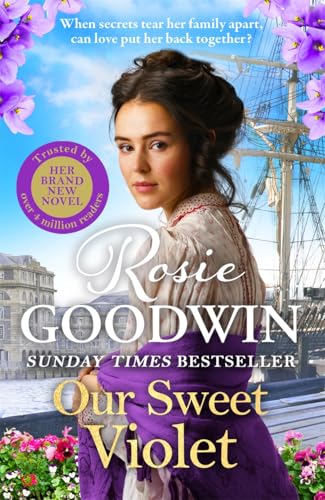
Rosie Goodwin - Our Sweet Violet

As the much doted-on daughter of the local doctor Violet Stroud had a comfortable, happy childhood - despite a distinct lack of love from her cold-hearted mother. But when her father unexpectedly dies, Violet's life is turned upside down. As secrets about the family come to light, Violet finds herself homeless and with no one to turn to apart from Edie, the family's gentle and loving housekeeper.
Violet and Edie set out on their own to run a café by the docks and life, while humble, starts to settle down. Perhaps, Violet may find happiness again and even . . . love? But when Violet's brother, Oliver, comes back on the scene, chaos follows at every turn, and while walking home alone one night, something unthinkable happens. With her contented existence and her chance at true love under threat, Violet must summon all the strength she has to put her life back together. Will she ever find the peace that she so desperately desires?

Comment: I was given this book for my birthday but until then I confess I had never heard of the author, which might seem strange since she is certainly prolific.

In this story we meet Violet, a sweet natured girl, whose live changes after the death of her beloved father. Her mother Anne has never been caring towards her, only for Oliver, her brother. To make things worse, their house was actually rented and they have to leave, which means her mother sends her away, without any place to stay. Thankfully, she has Edie, their cook, who promises to help and they even find a way to start their own business which suits them both well. Violet also meets people who cheer her up but she keeps worried for her brother, whom she idolizes although he has never been a good person. But when her life has yet another change, Oliver comes back and the unthinkable happens. Will there be any happy end for Violet?

To be fair, this book has a good enough base, extremely predictable yes, but with talent and ingeniousness any good writer could develop it in any way/genre. My problem with it is that I simply disliked the author's style and found it to be almost juvenile.

I do feel bad about this, after all it was a gift and I never want to have to tell those who give me books that I didn't like them,even knowing it's not their fault (it works both ways; I love to give books and sometimes they might not suit the person as I imagined, obviously) but this one really failed. I mean, it's clearly an easy book to read, it has some interesting scenes and situations but it's written in a very simplistic way and the characters are extremely under developed.

I think that the author probably had many ideas and decided to use them all. Reading some comments on this book and of others by her, it seems many readers who didn't give the books high grades mentioned how repetitive and similar the plots are, or at least the themes. I suppose I can see how that might happen but then the story feels very superficial and filled with cliches. This makes the reading experience feel less good and for my personal taste, things didn't work out.

Violet is a sweet girl of 16 or 17, I can't be certain, when the story begins and she never stops being this young and sheltered, in any of her interactions with others, even when hardship and disappointment happen. Yes, she is sweet but lacks sense and is incredibly TSTL, nothing makes her see what's in front of her and I admit I often lost patience with her and skipped some passages. All characters are only readable at a superficial level, which means I never felt the emotional investment to really care, and even the villains were characterized very thinly, making some of their actions seem trivial.

Then, there's the plot. Many terrible things happen to Violet and then many good ones too, a very ridiculous mix that for me had poor results. Violet is sent away from her home, then her cook happens to help her. They start a business but them gangs threaten to break stuff if they don't pay. Violet meets a good man but then thinks he is engaged. They need help when things go well but then the help starts being ill. Then her horrid brother starts manipulating her to give him money., then several other things that only cause her worry. Then this and that, but thankfully Violet has an aunt, never mentioned before but who leaves her a house and an inheritance, then.... and so on and on...

I mean, lots of things, so many situations are over the top, unrealistic, unnecessary, and in the middle of all this, Violet goes on as a sweet, silly, naive girl. When the very worst happens, instead of finally giving her a change of attitude, it only serves to add more drama. But at least this is not the type of drama that affects the reader in an impossible way, since the writing is so shallow it never leaves an emotional impression, but it is a pity. For an historical, the ideas are there, but... I really didn't find this interesting. I've finished because it was a gift, but I would not wish to read anything else by the author.
Grade: 4/10

Tuesday, December 2, 2025

Justin Zorn & Leigh Marz - Golden

Silence isn’t just the absence of noise. It’s a presence that brings us energy, clarity, and deeper connection. Justin Zorn and Leigh Marz take us on an unlikely journey—from the West Wing of the White House to San Quentin’s death row; from Ivy League brain research laboratories to underground psychedelic circles; from the temperate rainforests of Olympic National Park to the main stage at a heavy metal festival—to explore the meaning of silence and the art of finding it in any situation. 
Golden reveals how to go beyond the ordinary rules and tools of mindfulness. It’s a field guide for navigating the noise of the modern world—not just the noise in our ears but also on our screens and in our heads. 
Drawing on lessons from neuroscience, business, spirituality, politics, and the arts, Marz and Zorn explore why auditory, informational, and internal silence is essential for physical health, mental clarity, ecological sustainability, and vibrant community. With vital lessons for individuals, families, workplaces, and whole societies, Golden is an engaging and unexpected rethinking of the meaning of quiet. 
Marz and Zorn make the bold and convincing argument that we can repair our world by reclaiming the presence of silence in our lives.

Comment: I brought this book by impulse from the library. The theme seemed intriguing and I decided, why not?

In this nonfiction, the authors were determined to study the need for silence, especially in such a society where everything is rushed and loud and often people don't have time to stop and enjoy their own time or the need for quietness. In a few chapters they offer advice, suggestions and an analysis of how people can heal, rest, ground themselves by having quiet or silent moments.

I really won't prolong this post for long because I didn't particularly enjoy reading this book. When I picked it up and turned the pages very quickly, a few words caught my eye, namely some names and I imagined the book would be looking at the way silence can help people to get balanced or achieve some kind of peace and the authors would use real cases, situations they saw or guided in their workshops or even cases of people who could relate how being in a silent environment or something like that helped them. Well,not really, it turned out.

This book is divided into several chapters where the authors address their ideas and brainstorming, and they do name several people who used silence in some healing or positive way. This is great, but everything is rather clinical and quick, and the people mentioned don't really share a personal vision of their own paths, they are only named and referenced when it suits the type of information the authors want to convey. I mean, fine, but this was not what I imagined the book would be about. 

Therefore, this read like many other academic-type of texts, where it's all about the idea and the repeated notions of limiting people's access to distractions and technology, which often are the main causes of "too much noise". I get the idea of this book, and I think the authors did a good job organizing the text and the information included, but I was bored. I simply didn't think this was enlightening enough to really absorb the message and more often than not, I was eager to see the end of the book.

This said, I also think the book could have been edited and summarized in some sections. Some things were repeated in different sections and the examples used to illustrate an idea were often as random or as superficial as the idea itself. There is also a lot of stuff about other subjects (which, yes, can have an impact in how people react to what is around them and the lack of time to be in silence simply thinking) and the reader seems to be expected to agree with that POV, which I can accept, but this made the reading experience a rather "preachy" task.

This book didn't win me over, the content wasn't as entertaining or as relevant to me as I imagined. I think the whole book could be summarized into an essay, for instance, and that would have been enough for me.
Grade: 4/10

Tuesday, October 28, 2025

Eliot Grayson - The One Decent Thing

Everyone says kindness costs nothing. It’s a lie. Kindness can cost you everything.
Sebastian
The only decent thing my high school bully ever did for me got him sent to prison. Aidan was a jerk, but he saved me from making the worst mistake of my life, and in return, my parents ruined him. Now that he’s out, I’m determined to make amends. No matter what he needs, no matter how long it takes, I will make it all up to him. But first I’ll have to figure out how to hide my attraction to my sexy, confusing new roommate.
Aidan
Saving him cost me everything. I have nothing and no one—except Sebastian. He’s determined to make good on a debt I never asked him to repay. He’s offering me money, a place to stay, and help adjusting to life on the outside. But all I’m really wondering is … who can save Sebastian from me—the desperate, bisexual ex-con who probably wants more from him than he’s willing to give?

Comment: I've added this book to my TBR because of the premise: someone is wrongly accused of kidnapping and goes to prison but after being released becomes friends with the mistook victim. I thought this would be quite an original plot.

Aiden is a young man with no real prospects but he feels decent enough when he sees Sebastian, someone he remembers from being bullied at school for being gay, waiting alone at a bus stop and decides to help. Sebastian tells him he is waiting for someone but Aiden doesn't believe him, clearly understanding what is going to happen if Sebastian accepts a ride from an unknown man. However, by taking him to his house, he is accused of kidnapping, no matter what Sebastian says. After doing his time, Aiden is ready to start again new, but then, Sebastian is there, waiting for him and wanting to give back, to help him as Aiden tried before and they become roommates. But is Aiden ready to see Sebastian in a different way...?

I will confess I wasn't much impressed by this story, certainly not as much as I hoped for when I read the blurb. The story does have the promised content, but the writing style was a huge let down, mostly because it's told in first person, by both Sebastian and Aiden, but also because they are very one dimensional characters.

My favorite part was definitely the idea of this book. I really can't explain but plots where people go to prison wrongly accused (or not if there's a good motif), but then have to restart their life somehow make me curious to see how things happen and how the characters deal with that while dealing with others. I was looking for to see how being in prison affected Aiden and what it would mean to his relationship with others and with Sebastian, considering he is kind of the reason why he went to jail.

Sadly to me, from the start the story disappointed. The writing style is not appealing to me, the narrative feels thin and without layers, which extends to how superficial the characters also seem to be, and the development is very uninteresting. I also thought the way Aiden goes to prison to be ridiculous. Certainly there would have been better tactics of creating this situation in a more realistic portrayal? Although, I'm now concluding the point was never the process itself, only that Aiden went to prison and Sebastian welcomed him back.

Thus, Aiden did time for an unfair and seemingly avoidable situation during four years, and Sebastian now waits form him to help. The fact Sebastian has a steady life financially and all that makes things quite simple in how they can arrange to live together which happens because the goal was to bring them closer, to establish an even closer connection which would lead to romance. Well, it felt they never really talked or exchanged important information/emotions - I think it's because of the writing style- and this means I didn't buy into their becoming a couple. To me, there was no chemistry.

As things move along and a few other characters are introduced, Aiden starts to find some stability in his life. I think this did help and some of his inner thoughts about it made him seem a solid character, at least. I cannot say the same about Sebastian, whom always seemed to be a little harebrained and rather juvenile. I know that this might my own perception but the author didn't help with her choice of wording and characterization. Since no character is really that layered, I feel it wasn't necessary to invest in thinking of them differently either.

When they become a couple, things change but I failed to see improvement. The dialogues between them and the exchange of information kept on being over the top dramatic and without real emotion, in my perspective. At some point, it felt as if it was all going through the motions. The end was OK, the HEA is acceptable but the idea of this novel felt like it was misused, a wasted opportunity to present something more poignant, considering the premise and the potential for a relationship.

All in all, this was not what I envisioned when I heard about the book, and it didn't impress me much. With some changes, it might have been a more balanced plot.
Grade: 4/10

Wednesday, October 15, 2025

TBR Challenge: Rebecca Robinson - The Serpent and the Wolf

All her life, Vaasa Kozár has been sharpened into a blade.
After losing her mother—her only remaining parent—to a mysterious dark magic that has since awakened within her, Vaasa is certain death looms. Her merciless brother aims to eliminate Vaasa as a threat to his crown. In one last political scheme, he marries her off to Reid of Mireh, a ruthless foreign ruler, in hopes that he can use her death as a rallying cry to finally invade Reid’s nation. All Vaasa has to do is die.
But she is desperate to live. Vaasa enters her new marriage with every intent to escape it, wielding the hard-won political prowess and combat abilities her late father instilled in her. But to her surprise, Reid offers her a help him win the votes to rise in power, and she can walk free. In exchange, he will share his knowledge about the dark magic running through her veins—and help keep it at bay.
This proposal may be too good to refuse, yet Vaasa and Reid’s undeniable attraction threatens to break the rules of their arrangement. As her brother’s lethal machinations take form, everything is at Vaasa must learn to trust her new husband, but how can she, especially when their perfect political marriage begins to feel like the real thing?


Comment: It's October and also time for the TBR Challenge post. 
For this month, the theme is "here there be monsters" and I must confess I had a bit of a test to find something suitable and that I'd want to read too. I've chosen this title eventually because I saw a review that mentioned elements that would fit this theme and I didn't look further. 
Unfortunately, I wasn't swayed by this story.

In this book, the first of a series, we meet Vaasa Kozar, a brave young woman, daughter of an emperor, whose evil brother sends to a marriage of convenience with a foreigner he wants to do business with for political gains. Vaasa knows there's more to this than what others assume, but after the marriage she flees, hoping to be left in peace to investigate the magical curse that seems to take her into darkness, but she is quickly found by her new husband. However, she is surprised to realize he doesn't intend to hurt her and, instead, helps her. As their relationship improves and her control of her magic too, life seems to become easier, but her brother still has an agenda against her newfound happiness...

I truly had no expectations about this book except, as always, that it would be a good story and that it would provide an entertaining reading. I don't read as much fantasy books nowadays as before, it's true, and the genre doesn't compel me as it did years ago. It also seems this book is labeled as a "romantasy" which, in fact, should appeal, because I have enjoyed fantasy and romance before, and still do. However, perhaps I can say the final effect wasn't one of great success for me, even though the several parts seemed competent and interesting.

The writing was fluid and easy but sometimes there were passages that felt confusing. I struggled to find motivation to keep reading. The elements were fine: a strong but wary heroine, an unknown but dependable hero, third person narration, a slow burn type of relationship, a common enemy to defeat, a need to join forces and magical abilities to be learned. However, the sum of all these things didn't captivate me and the fact I had some tasks in my life to distract me from reading several pages in a row didn't help either.

I think my biggest issue probably comes down to finding myself easily distracted while I had the time to read and that what I was reading was, mostly, a little boring. I failed to connect with the characters, to see their goals as essential and to grasp the urgency of what they had to accomplish. I can't fully explain it, since the same formula worked out for me when I read other similar books, but that it is.

The main characters had potential, of course, and their reasoning to do/say this or that seemed to have enough intention, but I don't think the author presented them in the best way and there wasn't enough chemistry. Vaasa was very self sufficient in some things and she needed to step back and accept help. I don't think this was done in a good sequence for the change to be believable. Reid seems like a good guy but he is described as ruthless.. I'd not choose this characterization for him, so to me he was a little monotone. I feel they weren't given enough scenes together to establish a believable link.

As the plot moves along, it had a lot of political maneuvers between several characters, but most characters felt very one dimensional. Still, I imagined things would lead into a battle of some kind and then the HEA. Well, not really so, for this story ends in a cliffhanger and it seems there is a continuation. I mean, I didn't check that this would be so, but why finish like this, a different end could have achieved a similar purpose. I don't feel interested enough to read the next book, though. 

One final note. As for the "monsters" element to fit the challenge's theme, there is some mention of monster-like apparition due to magical use and I suppose I could say some characters do behave like monsters, but the literal connection between monsters as we tend to think of them, maybe not so much.
Therefore, in the end, this was OK in some aspects, not that great in others...
Grade: 4/10

Thursday, October 9, 2025

Chelsea Iversen - The Peculiar Garden of Harriet Hunt

True magic is found among the bluebells and brambles.
Harriet Hunt is completely alone. Her father disappeared months ago, leaving her to wander the halls of Sunnyside house, dwelling on a past she'd rather keep buried. She doesn't often venture beyond her front gate, instead relishing the feel of dirt under her fingernails and of soft moss beneath her feet. Consequently, she's been deemed a little too peculiar for popular Victorian society. This solitary life suits her fine, though – because, outside, magic awaits.

Harriet's garden is special. It's a wild place full of twisting ivy, vibrant plums, and a quiet power that buzzes like bees. Caring for this place, and keeping it from running rampant through the streets of her London suburb, is Harriet's purpose.
But a woman alone in the world is vulnerable. Soon, a sinister plot involving her father's disappearance begins to take shape, with Harriet herself at its center. Everything she holds dear – from the thorny roses she tends to her very freedom itself – is at stake. To save herself, Harriet will have to unearth her past, discover the secrets of her garden, and finally embrace the wild magic inside of her.

Comment: The blurb of this book intrigued me. I was sold on the "magical realism" label and, of course, I also wished there might exist some romantic elements too...

Harriet Hunt lives alone in her house after the disappearance of her father, and after her best friend and cousin left to live with her husband at a new place. Harriet tells herself this doesn't matter and she has the consolation of her garden, whose plants and flowers seem to have this weird connection with her, as if they could be part of her too. This frightens her a little and she prefers others not see it, and that is why she doesn't leave her home often, but one day an simple errand causes her some trouble and she is helped by a man who starts courting her. Harriet is still doubtful but she recognizes that being alone exposes her to even more problems and she accepts the marriage proposal. However, her real problems are only beginning...

Having read other titles containing historical narratives and magical realism, of course I was eager to see how much I'd enjoy reading this story, and the premise is quite interesting, we have a lone young woman who is both marveled and wary of the strange working of her garden, as if the plants are all sentient and tuned to her own feelings. Besides, Harriet had the potential for being a great heroine and I was ready to discover how this garden came to be this way.

That, sadly, was my first disappointment because there isn't any explanation regarding the garden of why it is linked somehow to Harriet. If I got it right, it probably has something to do with her mother and past events but it's never a subject we really have information about, but considering how the story ends, I'll stick to the conviction it is related to Harriet herself, who she is, what she represents. To me, the garden is a physical extension of Harriet's need to be protected and to protect something.

This idea is, of course, something I've deducted from my personal experience reading the story, probably other readers see it differently, but I must say I wasn't completely immersed in the plot due to the writing. To me, while correct, the writing wasn't very engaging, with a lot of details being shared in a rather boring way. This made me think the pace was also too slow in the beginning and I struggled to find interest after the first few pages. To me, things only got interesting when Harriet meets the man that proposes to her.

However, this also brought other issues, since their meeting and apparent courtship happens too quickly and I was easily annoyed at Harriet because no matter how naive and sheltered, she showed a very TSTL behavior by accepting and not even her inner reasons to accept felt string enough. Now I realize this is the tactic to cause change, to force Harriet to act and deal with all the issues she has been facing, but what this made me feel was that all characters were not layered enough and what they think and what they do started to seem like a performance. Thus, the plot was OK, but not riveting and the elements I thought that would be the ones I'd prefer weren't developed in engaging ways.

I was already figuring this would not be a great read for me after all and then, the big surprise is presented. It turns out that there was something going on - it had been rather obvious for a while before this situation happens - and now Harriet needs to do something radical. At the same time, the hints at a possible romantic interest become a fact. I think the conjugation of all the elements was poorly done and this is a pity because the idea behind everything was solid, but the execution was a real let down.
Therefore, my last impression, despite Harriet's HEA, wasn't a great one.
Grade: 4/10

Friday, August 22, 2025

Bea Fitzgerald - Then Things Went Dark

Six people land on a desert island ready to make their reality show debut. The contestants are suitably glamorous and dramatic—and also hungry to prove themselves. The stakes are high, and with millions of viewers watching, losing is not an option. But three weeks and eighteen episodes later, five of the six contestants sit in a Portuguese police station, none of them winners.
Twelve million people were watching when Rhys Sutton died on camera, and someone must pay for the crime. The best friend, the rival, the girlfriend, the lover, and the sworn enemy are left standing. And of course, no one is talking. But how do you keep secrets when the world has been watching? Especially when, just a day before his murder, Rhys was the most hated man on television.

Comment: I was seduced into trying this book for the single reason that the setting was in an isolated island near my country. I was quite curious to see how this would matter, so I've convinced my buddy read friend to try it. Well, what a failure!

There is a new reality show promising to keep up the demand of social media called Iconic. Six contestants are going to be in a house, in an isolated island, to win a lot of money. Each one is there for a specific reason but this is a competition, so which ones will last until the end while dealing with the others and behaving in a way to garner popularity? The problem is that one of them ends up dead and the producers want to air the final episode, but what it will mean for the police investigation?

Perhaps I'll start by saying that, as probably everyone at some point with a TV, I also watched the first reality show ever aired in my country, Big Brother. It was a novelty! It had its moments but then when the second edition aired, it was a little less interesting and so on, until the point that, for me, reality shows with people inside a house/place no longer appeal. Thus, I knew the premise of this book would not be that great for me but I hoped the setting and the obvious? thriller aspect of investigating a murder would grab my attention.

I think the author really wanted to convey the reality show vibe and she achieved it by writing the story as if one were watching the show, meaning that everything we see is perfectly fitting to a movie adaptation or something, and there wasn't much on character development or character interaction. these elements were, i suppose, made to be subtle and inferred, but I failed to make a connection with the characters. There wasn't any real emotional equivalent and I kept thinking that the author really achieved the usual superficiality we tend to categorize these shows.

The six contestants are all beautiful, of course, of a certain young age and with some kind of scandal or popular situation in their background. I won't name them and write about them because I think this barely matters in the big scheme but let me say they are presented in a certain way and the stereotype never changes for any of them. They have to perform tasks and challenges, just like in any real show, but while I believe this was meant for us to see and analyze their behavior and personality, it actually felt repetitive and ridiculous. I don't think having detailed examples of their tasks was that important since they never "learned" anything.

I was also quite disappointed with the choice of setting. Why an isolated island, this plot could have happened in any TV studio made for these shows, because the only references to the island and the country were minimal and almost pointless. The setting could have been anywhere else. It also proved that the cover and the premise of an island and the suggestion these elements would matter is wrong, because nothing really important, plot wise, happened because of this, or in consequence of those elements existing. There was certainly no matching thriller content.

The story is divided into chapters named "episodes" as if we are watching an episode at a time of the show. To bad I've found the episodes very thin and without real interest, but then, at the end of each episode, we have a little bit of police investigation regarding the death of one of the contestants. The book had also started with a sort of prologue where we get to see the death had already occurred and the others were held for police interrogations. Honestly, the police investigation should not be named as such, there's nothing procedural about what we see regarding this, and even the police members themselves are bordering on pointless... the author should have omitted these sections, in my opinion.

As for the end of the book, where we learn how Rhys died and what led to it and so on, it wasn't the show (get it?) I imagined it would be, but the end itself was incredibly trivial, without any kind of real impact. I can't understand if the author wanted to shock with how easy everything happened or if it was really a matter of poor planning. Either way, I was not impressed.
Grade: 4/10

Thursday, August 14, 2025

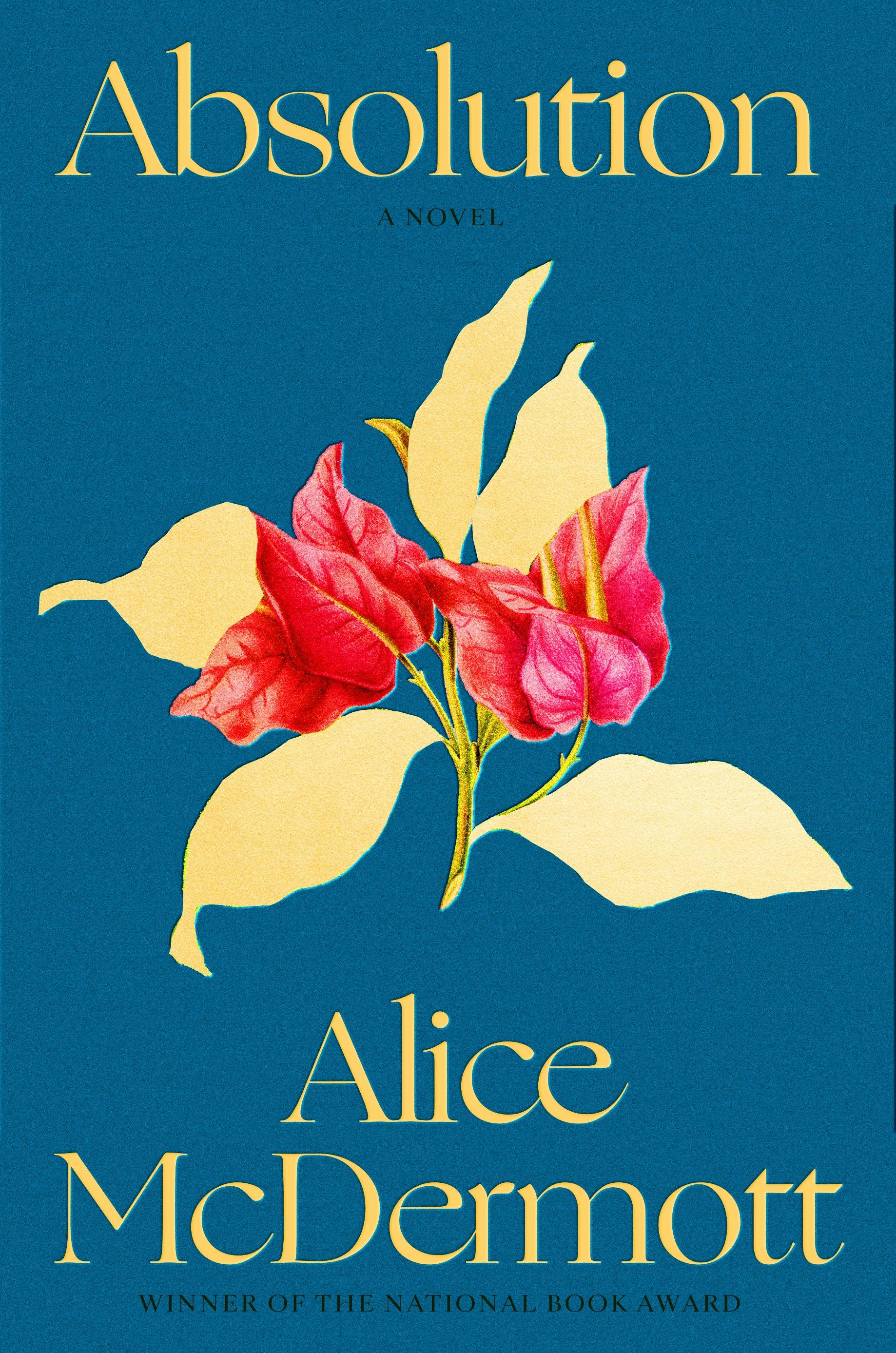
Alice McDermott- Absolution

American women—American wives—have been mostly minor characters in the literature of the Vietnam War, but in Absolution they take center stage. Tricia is a shy newlywed, married to a rising attorney on loan to navy intelligence. Charlene is a practiced corporate spouse and mother of three, a beauty and a bully. In Saigon in 1963, the two women form a wary alliance as they balance the era’s mandate to be “helpmeets” to their ambitious husbands with their own, inchoate impulse to “do good” for the people of Vietnam.
Sixty years later, Charlene’s daughter, spurred by an encounter with an aging Vietnam vet, reaches out to Tricia. Together, they look back at their time in Saigon, taking wry account of that pivotal year and of Charlene’s altruistic machinations, and discovering as they do how their own lives as women on the periphery—of politics, of history, of war, of their husbands’ convictions—have been shaped and burdened by the same sort of unintended consequences that followed America’s tragic interference in Southeast Asia.
A virtuosic new novel from Alice McDermott, one of our most observant, most affecting writers—about folly and grace, obligation, sacrifice, and, finally, the quest for absolution in a broken world.

Comment: I've seen this book being recommended at a site I usually follow and the premise sounded great. I don't recall many books I have encountered before where the story in Vietnam was told by the POV of the wives of the US military stationed there. I had high hopes for an immersive (and provocative?) plot but, sadly, it wasn't really so...

Patricia is a newlywed when she follows her husband Peter, who is an engineer in the military forces, to Saigon. There, she is exposed to a very different reality and only by becoming friends with Charlene, another wife, is she able to occupy her days. However, life in Saigon isn't as peaceful as it might seem and the US effort feels more and more like something that will have no pay off. What will happen to these expats if there is civil unrest? Are their actions enough to absolve them of any guilt?

I had not read anything by this author before trying this book but now I see the most likely label to apply to mrs McDermott's work is "literary fiction". Nothing against it, but it means the historical fiction and the book club labels I had seen first aren't as correct and the story wasn't focused on some of the elements I've imagined, since the goal wasn't on the several things the characters would be doing, as I hoped for. I wanted a story about the several women and their lives and the cultural shock and adaptation and, perhaps, how the experience there would shape them and wanted to see those things on the page.

Instead, the book is divided into three parts, being the first and main one a long rambling by Patricia on what life used to be, as she writes to Charlene's daughter, who had found letters she and her mother had exchanged. The second part is the daughter's reply, and the third, very small part, a final conclusion by Patricia. Thus, the plot feels like it's reduced to a set of episodes, with some linear development, of what Patricia and Charlene were doing while their husbands were working, how each had dreams that weren't easy to conquer, and how they acted in what we would say now as being a culturally inappropriate fashion.

I really hoped this would focus more on the historical aspects of being in Saigon, how life was like, how did people from different places deal with one another and while some hints of this, of course, come through, it wasn't as greatly presented as I imagined. Charlene and Patricia seem like bored housewives who decided to "do some good deeds" even if that meant meddling in things they shouldn't. However, not even this heady behavior was as interesting as I hoped for because the writing style is clearly one for rambling and musing and more literary. It was, in a word, arbitrary. I quickly would loose my focus on what I was reading because it was boring and some situations seemed irrelevant.

Patricia is a good enough narrator and her personality was likable, in the sense that she was a shy person at first and only wanted to be a good wife to Peter. I will not comment on social and historical aspects in regards to this because my contemporary POV is annoyed at what she thought she should be like for Peter, so let us simply say that I hoped she would learn to be more self assured and this didn't happen while she was abroad. We get some hints at their life once they returned to the US but Patricia seemed to be like one of those people who would never be a rebel.

Charlene is, as one can imagine, a lot more layered because she is incredibly confident in her actions and opinions and she claims she is doing everything she can to help the locals around. This comes across as incredibly inconsiderate as it looks because nothing she does truly helps and she barely respects those she interacts with. I think her personality was meant to clash with Patricia's so that we could see how each would influence one another but I never felt much sympathy towards Charlene.

Patricia does tell how their actions had consequences, nothing truly life changing, but very inappropriate through out contemporary lens. At the same time, political and social stuff was happening in the country and, in the end, this more than anything the women did, was the reason for their need to leave. I was a little disappointed because it turned out that the plot had no real goal, no real conflict to explore. I've felt there had been no point after all, and with all of Patricia's rambling, the story felt inconsequential.

Part two told by Charlene's daughter was more interesting but, again, rather pointless in the big scheme, and part 3 was meant to shock, I bet, but it was simply sad to me. I've finished the book and was immediately ready to jump into another, no need to reflect on what I had read so... I suppose this says it all about my personal experience.
Grade: 4/10

Tuesday, July 22, 2025

V.L. Locey - Life According to Liam

Someone needs to pinch web designer/humor blogger/Pittsburgh Ravens mega fan Mike Kneller. Hard. For years, Mike has been living his life for his younger sister Kelly and his four-year-old nephew Liam. He’d opened up his home to Kelly when she found herself pregnant at sixteen and facing having a baby alone. Sure, his days are filled with skinned knees, snotty noses, and the occasional mishap with stuffed superheroes, but he’s perfectly happy because he loves Liam as much as he loves his baby sister. Giving up a social life and going to bed alone is a small price to pay. Little does he know that someone on the Ravens is about to show Ravens goalie Bryn Mettler one of his vlog posts. Of course he’s not going to believe it when his phone rings and the world-famous netminder—and his goalie crush—is on the other end. I mean, life doesn’t work that way for ordinary, hardworking uncles like Mike. Does it?
Bryn Mettler is a superstar athlete and a major part of the Pittsburgh sports society. He seems to have it all. He’s well-dressed, handsome, wealthy, an elite goaltender, a famed philanthropist, and the holder of numerous medals and trophies. To date, there are two things that have avoided him: lifting that big shiny silver cup over his head and finding a man to settle down with. Now that he’s over thirty, Bryn is finding the gay club scene is wearing thin. His teammates’ wives have decided it’s their duty to the team—and to Bryn—to find him Mr. Right. He’s relatively sure the man who’ll capture his heart surely won’t be found on a humor blog. Funny how life likes to take the things that you’re most certain about and flip them—and you—on its ear. When Bryn meets Mike, he is instantly drawn to the warm, funny, sexy man who shares his hectic days with thousands of Pittsburgh natives. Now he just has to convince Mike he is who he says he is so he can get to know him better. Thankfully, Bryn isn’t a quitter. But does he have what it takes to leap into life with Mike, Kelly, and Liam?

Comment: This is another title that I don't remember why I decided to read. It probably had something to do with the mix of hockey and parenting but I didn't pay enough attention to the blurb nor any synopsis, since the plot isn't much of either subject for me to label it that way...

In this story we meet Mike, a good guy who is a web designer and who has opened his house to his younger sister Kelly and her son Liam. He and Kelly were both told to leave their parents' house, Mike for being gay and Kelly for being a teenage mother. Now the siblings have a steady life, they have each other and Mike loves to help take care of Liam, a wonderful boy who is his inspiration for a moderately successful blog. By chance, a post mentioning the unlikeliness of Mike dating hockey star Bryn Mettler catches the attention of a fan, who happens to be dating one of Bryn's teammates. Everyone knows Bryn is gay but he doesn't flaunt it, which means he only checks out the blog out of curiosity but he does like what he sees in Mike and decides to ask him out. Is there hope for two different people to be a solid couple?

This is the first book I try by this author and, as often happens after just one attempt, I think I have a good idea of the author's style and "voice". Unfortunately to me, this story is too sugary and, as so many other books I read, superficial. I also disliked the protagonists told the story in alternated first person... really, another romance in which third voice would be a better choice.

The themes I was interested in - hockey and single parenting, kind of - were present but in an almost secondary way. Was the romance center stage? To be fair, I can't really say because I conclude that this story doesn't really have a goal and it boggles the mind how there are so many sequels after this installment, all featuring the same main characters (except one novella). The writing itself isn't bad or incorrect but it's too bland and the content superficial. I think the themes had enough room for layered plot and characters but, not really.

Mike is a cute funny guy and I loved the fact he did all he could to help his sister. He has potential as a protagonist but nothing is shared about who he really is under the nice persona. There's not much on how being told to leave impacted him and how he managed until he had some stability. I wanted the emotions and the psychology of how he became this well established person after disappointment and betrayal by his parents. But he simply is a good guy!

Bryn is more alpha, that's for sure, but he is also a good guy although I didn't have as great vibes from him. There were moments he was a bit too intense in how he dealt with Mike and others. I also think his hockey side was just too cliched and thinly presented, as if the hockey was more a prop to who he was and not something especially important. His personality was more layered, that is true, but not to the point I'd say his relationship with Mike was properly balanced.

In fact, I wasn't very fond of their romance. Well, let me rephrase this, I was happy and eager to read at first, but as soon as they went on their second date things deflated to me because the intimacy was forced on them too soon, and not just because of the sex (which I didn't think added much to the story), but mostly because their connection was too swift and too easy. They both easily accepted each others' demands at work or with other things and the conflict seemed non existing.

Then, of course, we have Liam, a little boy who seemed to be key for this book and the origin of the blog which gives the title of the book. Liam should be important, right? Well, one more element I've felt was too superficial and only a means to an end without a real importance to any plot point. The only exception was on how he would deal with the decision of Mike and Bryn living together, if they were to take that step. This was done in such a silly way - to me - that I cannot understand how someone didn't advise the author to redo the story. Nothing bad happens, only Liam seems to be given a role he shouldn't really have. Let us not forget Liam is not Mike's son and his mother is a conscious loving one, so... unnecessary to place Liam at center stage.

The more I think about this book, the less appeal it seems to have... I think i'll lower my grade on GR too because while this is OK and has good details, it simply didn't wow me.
Grade: 4/10