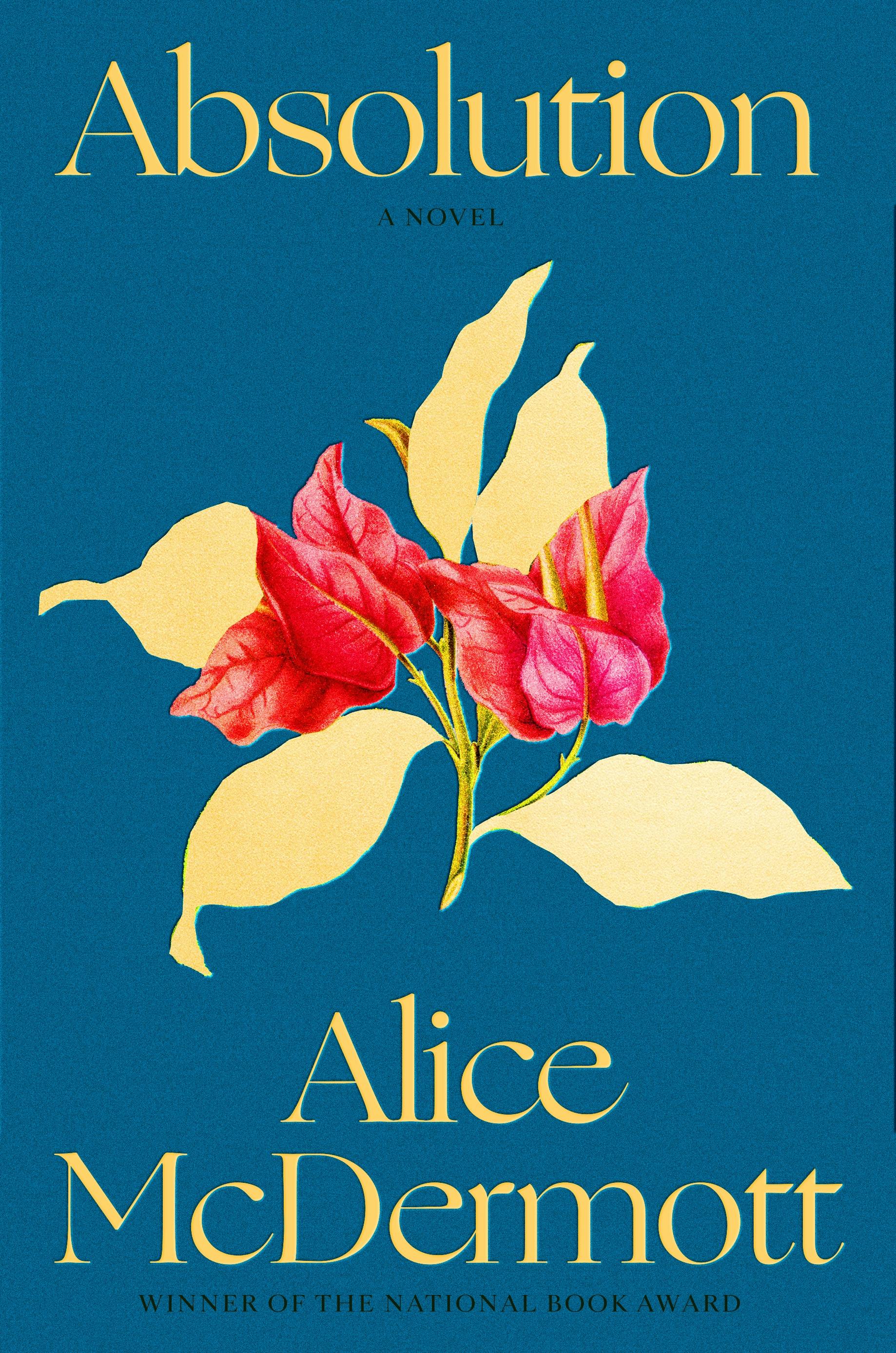
Sixty years later, Charlene’s daughter, spurred by an encounter with an aging Vietnam vet, reaches out to Tricia. Together, they look back at their time in Saigon, taking wry account of that pivotal year and of Charlene’s altruistic machinations, and discovering as they do how their own lives as women on the periphery—of politics, of history, of war, of their husbands’ convictions—have been shaped and burdened by the same sort of unintended consequences that followed America’s tragic interference in Southeast Asia.
A virtuosic new novel from Alice McDermott, one of our most observant, most affecting writers—about folly and grace, obligation, sacrifice, and, finally, the quest for absolution in a broken world.
Comment: I've seen this book being recommended at a site I usually follow and the premise sounded great. I don't recall many books I have encountered before where the story in Vietnam was told by the POV of the wives of the US military stationed there. I had high hopes for an immersive (and provocative?) plot but, sadly, it wasn't really so...
Patricia is a newlywed when she follows her husband Peter, who is an engineer in the military forces, to Saigon. There, she is exposed to a very different reality and only by becoming friends with Charlene, another wife, is she able to occupy her days. However, life in Saigon isn't as peaceful as it might seem and the US effort feels more and more like something that will have no pay off. What will happen to these expats if there is civil unrest? Are their actions enough to absolve them of any guilt?
I had not read anything by this author before trying this book but now I see the most likely label to apply to mrs McDermott's work is "literary fiction". Nothing against it, but it means the historical fiction and the book club labels I had seen first aren't as correct and the story wasn't focused on some of the elements I've imagined, since the goal wasn't on the several things the characters would be doing, as I hoped for. I wanted a story about the several women and their lives and the cultural shock and adaptation and, perhaps, how the experience there would shape them and wanted to see those things on the page.
Instead, the book is divided into three parts, being the first and main one a long rambling by Patricia on what life used to be, as she writes to Charlene's daughter, who had found letters she and her mother had exchanged. The second part is the daughter's reply, and the third, very small part, a final conclusion by Patricia. Thus, the plot feels like it's reduced to a set of episodes, with some linear development, of what Patricia and Charlene were doing while their husbands were working, how each had dreams that weren't easy to conquer, and how they acted in what we would say now as being a culturally inappropriate fashion.
I really hoped this would focus more on the historical aspects of being in Saigon, how life was like, how did people from different places deal with one another and while some hints of this, of course, come through, it wasn't as greatly presented as I imagined. Charlene and Patricia seem like bored housewives who decided to "do some good deeds" even if that meant meddling in things they shouldn't. However, not even this heady behavior was as interesting as I hoped for because the writing style is clearly one for rambling and musing and more literary. It was, in a word, arbitrary. I quickly would loose my focus on what I was reading because it was boring and some situations seemed irrelevant.
Patricia is a good enough narrator and her personality was likable, in the sense that she was a shy person at first and only wanted to be a good wife to Peter. I will not comment on social and historical aspects in regards to this because my contemporary POV is annoyed at what she thought she should be like for Peter, so let us simply say that I hoped she would learn to be more self assured and this didn't happen while she was abroad. We get some hints at their life once they returned to the US but Patricia seemed to be like one of those people who would never be a rebel.
Charlene is, as one can imagine, a lot more layered because she is incredibly confident in her actions and opinions and she claims she is doing everything she can to help the locals around. This comes across as incredibly inconsiderate as it looks because nothing she does truly helps and she barely respects those she interacts with. I think her personality was meant to clash with Patricia's so that we could see how each would influence one another but I never felt much sympathy towards Charlene.
Patricia does tell how their actions had consequences, nothing truly life changing, but very inappropriate through out contemporary lens. At the same time, political and social stuff was happening in the country and, in the end, this more than anything the women did, was the reason for their need to leave. I was a little disappointed because it turned out that the plot had no real goal, no real conflict to explore. I've felt there had been no point after all, and with all of Patricia's rambling, the story felt inconsequential.
No comments:
Post a Comment