Showing posts with label Jodi Picoult. Show all posts

Saturday, June 13, 2026

Jodi Picoult - Plain Truth

A shocking murder shatters the picturesque calm of Pennsylvania's Amish country, and tests the heart and soul of the lawyer who steps in to defend the young woman at the centre of the storm...The discovery of a dead infant in an Amish barn shakes Lancaster County to its core. But the police investigation leads to a more shocking disclosure: circumstantial evidence suggests that eighteen year old Katie Fisher, an unmarried Amish woman believed to be the newborn's mother, took the child's life. When Ellie Hathaway, a disillusioned big-city attorney comes to Paradise, Pennsylvania to defend Katie, two cutures collide, and, for the first time in her high-profile career, Ellie faces a system of justice very different from her own. Delving deep inside the world of those who live 'plain', Ellie must find a way to reach Katie on her terms. And as she unravels a tangled murder case, Ellie also looks deep within, to confront her own fears and desires when a man from her past re-enters her life.

Comment: One more book by this author I've decided to bring from the library. I've resigned myself o think this author's work - which i seem to appreciate in general - will be a task to complete very slowly...

Ellie Hathaway is a great defense lawyer, even though some of her clients are definitely not as innocent as they claim, and after such a trial, she decides to lay low at her aunt's house in Pennsylvania, which is how she get to be involved in a new case. Katie Fischer, the daughter of an Amish couple is accused of killing her newborn baby, although she claims she didn't give birth and she didn't kill any baby. While all evidence points to her being the mother, things are not as clear in regards to her being a murderer and Ellie decides to live with Katie's family as a way to learn the truth and to protect Katie from the sensationalism of how the case might develop. But what is truth in this situation, is all only difficult to process because the family lives in an Amish community?

What I seem to like the most about the author's books, at least the one I have read so far, is how the writing is appealing, even if not as nuanced as some readers might prefer. But I like the fluidity and smoothness of how the story is told. The author really is a storyteller.

This story is very compelling and as often happens in this author's books, offers a lot of food for thought. I liked knowing a bit more about the Amish and how they see the world, although some situations depicted here didn't seem to match what I've seen in novels by other authors. Could it be that geography, family branch, region and many other factors might change how the elements behave? It wasn't clear if all Amish in Pennsylvania would adhere to the rules/laws mentioned, or if it was only pertinent to some in some areas.

Still, the Amish and the others dichotomy was a very interesting dynamic to consider, especially when it comes to certain legal matters, as used in this plot. Some legislation even starts to seem pointless when seen through the eyes of someone who doesn't understand the laws of the laws, meaning that some things are really only there to makes everything difficult and a lot of things are simply hypocrisy. I'm specially thinking about the trial process Katie has to deal with and how she and the other Amish in her family see the proceedings.

I liked both Katie and Ellie, the main characters, and how they got to become friends somehow while this case is happening. A lot of their thoughts and emotions aren't that different which is always quite a detail to bar in mind if we also think they had different backgrounds. I think I've struggled with the time it took for Katie to admit what happened to her and how she didn't remember what happened to the baby. I know this was presented this way so that the plot could exploit the "temporary insanity" idea and so that we could see the process of going from point A to point B, but it was sometimes repetitive.

Katie's story wasn't that challenging to contemplate, because the biggest issue here really is her religion and her communities' beliefs. In this regard, I think everything was probably a bit too softly explained, if I compare with other books I've read with Amish characters. Katie's community did seem a bit more approachable than what i imagined, in fact. Perhaps this misleads me to think Amish behavior cannot really be like that.

Ellie was more intriguing and easier to "read", and I did like that she gets to have a new try at life and romance because of this case. I also would say that sometimes her characters was a little cliche but in general, I liked reading about her and about how her presence would allow for certain situations at the Fischers to be presented through her POV. It's quite telling to see something we don't get to in our lives through the eyes of someone we can relate to do precisely that.

The resolution of the case wasn't surprising, to be honest, and the final explanation either, although I hoped for something a little different. Overall, I liked spending time with these characters and for that lone it was worth reading this novel.
Grade: 8/10

Friday, March 20, 2026

Jodi Picoult - By Any Other Name

Young playwright Melina Green has just written a new work inspired by the life of her Elizabethan ancestor Emilia Bassano. But seeing it performed is unlikely, in a theater world where the playing field isn’t level for women. As Melina wonders if she dares risk failure again, her best friend takes the decision out of her hands and submits the play to a festival under a male pseudonym.
In 1581, young Emilia Bassano is a ward of English aristocrats. Her lessons on languages, history, and writing have endowed her with a sharp wit and a gift for storytelling, but like most women of her day, she is allowed no voice of her own. Forced to become a mistress to the Lord Chamberlain, who oversees all theatre productions in England, Emilia sees firsthand how the words of playwrights can move an audience. She begins to form a plan to secretly bring a play of her own to the stage—by paying an actor named William Shakespeare to front her work.
Told in intertwining timelines, By Any Other Name, a sweeping tale of ambition, courage, and desire centers two women who are determined to create something beautiful despite the prejudices they face. Should a writer do whatever it takes to see her story live on . . . no matter the cost? This remarkable novel, rooted in primary historical sources, ensures the name Emilia Bassano will no longer be forgotten.

Comment: I brought this book from the library. No specific reason, only it seemed interesting and I did like other books by the author...

In this tale of two women who live in different times but who are connected both in blood and in their love for the theater, the important thing is to be certain their voice can be heard.
In 2012 Melina Green, a descendant of Emilia, is also dreaming o being a writer but just like Emilia, her worth as woman isn't taken seriously among those who make the rules. She has a bad experience while in college and that is why, years later, she is reluctant to submit a play based on her ancestor. Everything changes when her best friend submits it for her... and just like Emilia did in her day, he does it using a male pseudonym... but will Melina be able to come clean about her identity?
In 1581, Emilia Bassano sees her life change when her guardian leaves and cannot take her, and this is how Emilia has to become the courtesan of Lord Chamberlain, a patron of the arts. Emilia does love writing and the theater and her passion for both is developed as the becomes used to her new status, but so does her feelings for the count of Southampton, a man she can not have. Emilia feels she needs to do what she loves, but she is aware a woman could never come out to the public as a playwright.

This book was engrossing and I went through the more than 400 pages of it very quickly, and only didn't finish sooner because of work. How our perception changes because ten years ago or more, when I read Keeping Faith, my first attempt with this author, I wasn't too impressed. Now, her writing just seems very appealing and I feel compelled to keep reading...

This book is divided into two parts. We alternatively follow the life of Emilia while she goes from a 12 year old until she is an old woman, and we follow Melina from her college years on, while we see how they both struggle to see themselves as play writers in a world still dominated by men and still oriented for men. I liked both sections, although Emilia's were harder to read at times, because we know she had no option but to become what the male members of her family wanted, and Melina at least has rights.

For a while I was preferring Melina's sections, because those are easier to go through, and they are obviously easier to relate to as well. There is also a slight hint at romance and I can be honest by saying that if this had been only a romance novel about Melina and her love interest, in this world of play writing, I'd be happy enough. I actually think this section was underdeveloped... it does touch way more themes than I imagined, and I think the personal relationships kind of suffered for it, due to the fact her sections seem to be more about a message than Melina's development.

Emilia's sections are way more complex, not only because of her life and what it means to be a woman at a time there were no rights nor way for women to have a voice in their lives, but because of who she is in the plot. I confess I wasn't too keen on her for a while, I had a hard time going through the passages in which she is powerless to avoid her fate of becoming a courtesan  but once she is established as such and even has some fondness for her lover, I started to be more and more in syn with her emotions and even though my commiseration for her never ended, I could appreciate her efforts more.

The point of this novel, I'd say, is to highlight how unfair women are treated and have been so, when it comes to acknowledging their intelligence, their skill and their right to be as successful as men in the play writing world. The author certainly studied the subject and to base this plot on, she picked up the theory which claims Shakespeare didn't actually write his plays (there are historical facts at the end of the book and notes on the author's research as well) and had deals with others who could not publish them on their own, including Emilia.

I mean, I won't say I think this is likely or not because I have no real academic knowledge of the issue, but the way the information is specifically presented for this book makes it seem possible, at least. Of course the philosophical and social debate about it makes for an interesting conflict in certain moments of the story,both in Emilia and Melina's sections. There are several details the author used that give come sense of credibility to the role of women in theater and even assuming it wasn't as described, it still gave me food for thought.

The end was kind of predictable, with some slight personal development there, mostly for Melina. I was still happy with how her section ended, and what went into it, but... again, it could have been so much better. As for Emilia's, well, I've cried and that is all I'll say...
All in all, a very compelling read... I'll keep on reading more by this author...
Grade: 8/10

Wednesday, December 4, 2024

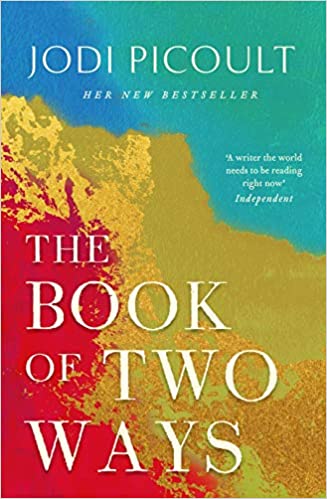
Jodi Picoult - The Book of Two Ways

Who would you be, if you hadn't turned out to be the person you are now?Dawn is a death doula, and spends her life helping people make the final transition peacefully.
But when the plane she's on plummets, she finds herself thinking not of the perfect life she has, but the life she was forced to abandon fifteen years ago - when she left behind a career in Egyptology, and a man she loved.
Against the odds, she survives, and the airline offers her a ticket to wherever she needs to get to - but the answer to that question suddenly seems uncertain.
As the path of her life forks in two very different directions, Dawn must confront questions she's never truly what does a well-lived life look like? What do we leave behind when we go? And do we make our choices, or do our choices make us?
Two possible futures. One impossible choice.

Comment: I got this book at the library the last time I went there for no other reason than the fact the plot seemed intriguing.

In this book we meet Dawn, a woman who works as a "death doula", meaning she helps those who are terminal with last wishes, technical and/or practical things and she is there for those who don't want to be alone and would, for some reason. One day, Dawn suffers a plane crash but luckily survives and as a compensation, the company offers her a ticket to any place she wants. Supposedly, Dawn should go back home, to her family in Boston, but what if he doesn't? While going through such a traumatic event, Dawn starts thinking about her life, her choices and her regrets... what choice will she make now?

This is the fourth book I try by this author if I remember correctly, and I was quite confident that I'd enjoy it, simply due to the writing style. It seems as if this should be a minor issue but it certainly affects one enjoyment, and I knew I'd like reading the book, even if the story itself wasn't that great. Still, since it would mix interesting situations and Egypt related content, I was even more curious to give it a go.

Dawn has a peculiar job and while it's not something that feels the norm - I had never heard of such a thing in a personal capacity, only if it was a task included in hospital services - it was still interesting to learn. I assume the author has researched this and she adds plenty of information which feels based on norms and legalities and if so, then it feels realistic. Supposedly, only related to the American reality, but still. I also liked all the stories/cases Dawn shares here and there and how this job is important according to her POV and to what society expects of someone in a terminal situation. Even if some situations are not a real thing, it was still food for thought.

I also liked all the Egypt content and the archaeological references, even if they are based on fictional details. A lot of the more theoretical ones are certainly based on real knowledge and History and I was fascinated. I mean, I'm as interested in Egypt as any other person, it's not a specific theme I feel obsessed with, but I had an archaeologist student for a roommate at university and I like History in general, so all the little - and not so little - debates and studies mentioned and the tasks performed in an Egyptian excavation were things I liked knowing and seeing the characters discuss.

This means that, as usual, the author clearly did a lot of research about what she wanted to use and some times that resulted in very interesting passages, other times it felt like all that information had to be used no matter how necessary... but that aside, the secondary themes here were captivating. How this related to Dawn and the secondary characters is the tricky part, but for the most part I think things were done in a very engaging manner. I think Dawn's two possible ways made sense according to what we learn of her life.

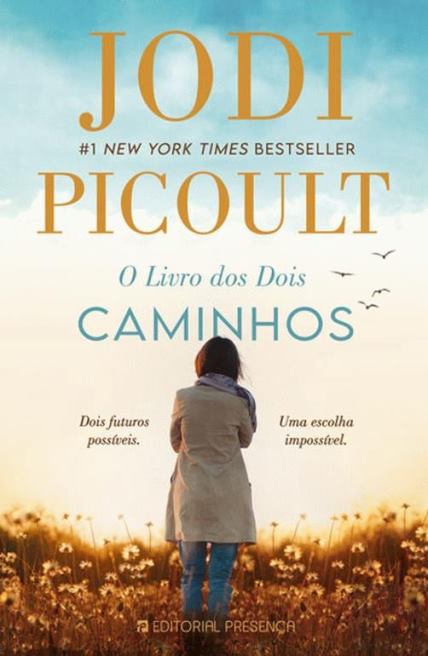
Portuguese cover
The story is told by Dawn, and until a certain point, in alternated roads: after the plane crashes, or 
Dawn goes back home, or Dawn goes back to Egypt, which she left 15 years before, to finished something. The two possible paths seem to not be connected except for Dawn as protagonist but, of course, there's a small twist closer to the end. I would not say the twist is that spectacular issue we often see in thrillers for instance, but it did offer interesting situations to be developed. Still, the twist alone isn't the end of the book and we do have a few more chapters after the big reveals. Were those well done? Perhaps not really and I assume that might be why some readers didn't grade this book higher in average.

Part of Dawn's dilemma is related to the fact she now has an established life with a husband and a child - whom have their own issues to deal with - but she left her heart in Egypt, so be a bit melodramatic. It is assumed that with the plane crash experience and how a big trauma often makes people think about their life, Dawn now feels she has something unfinished, but luckily a second opportunity in life to , perhaps, solve what is necessary. Dawn's actions regarding these two paths aren't impossible to accept and we do read a lot of her personality in how she acts and reacts, but...

I think the author could have done a better job when it comes to how the twist and the final scenes were presented. Somehow it felt that the end wasn't as cohesive as the rest of the book. I've seen some readers saying there's too much Egypt content, but I didn't mind that. Others felt the story had too many different elements to focus on, and I didn't mind that either. But I do agree that the twist options and what comes next wasn't the best option, perhaps even took out some of the intensity of what had happened before. To me, at least.

I still had a good time reading this novel, as I've said. I'll probably read more by the author in the future, in a more conscious decision, at least the ones whose blurbs catch my eye.
Grade: 8/10

Thursday, April 11, 2024

Jodi Picoult - My Sister's Keeper

Sara Fitzgerald's daughter Kate is just two years old when she is diagnosed with a rare form of leukaemia. Reeling with the helpless shock of it, Sara knows she will do anything -- whatever it takes - to save her child. Then the tests results come back time and again to show that no one in their family is a match for Kate. If they are to find a donor for the crucial bone marrow transplant she needs, there is only one option: creating another baby, specifically designed to save her sister. For Sara, it seems the ideal solution. Not only does Kate live, but she gets a beautiful new daughter, Anna, too. Until the moment Anna hands Sara the papers that will rock her whole world. Because, aged thirteen, Anna has decided that she doesn't want to help Kate live any more. She is suing her parents for the rights to her own body.

Comment: This is another book I brought from the library, for one of my book challenges, this time something that everyone has read and I didn't. I have read two other books by the author, but not this one.

In this famous story and movie, we meet the Fitzgeralds, a family whose main focus has been on Kate, the older sister, and someone with leukemia. In an attempt to find a way to help their daughter, Sara and Brian had another child, Anna, through a treatment, so this new child could be born with the exact requirements to donate blood from the umbilical cord, which worked at first. However, the disease has returned time after time and Anna has donate way more than what anyone would imagine, now the case being a possible kidney transplant. Then, Anna decides on a shocking step, she wants to ask legal medical emancipation from her parents, but how will everyone react, how will this affect the family and, of course, Kate's health?

One thing can be said about this book, whether people like it or not: it's an easy, compelling read and, as it had happened with the previous two I had tried by Jodi Picoult, I liked the experience of reading, always finding willingness to turn the pages. As it happened to many other readers, I also had the idea the author wrote melodramatic stories whose point was to present two sides and let the readers feel whatever. In a way, this is precisely the author's trademark, but regarding the books I've tried, this worked out quite well and the stories remained interesting to me.

It's true that this is a book many people had read, I had not, and there's a famous movie which I happen to not have seen either. However, social media makes it almost impossible, or at least very difficult, to avoid knowing spoilers and when I begun reading, I already knew that the book and the movie have different ends. I also knew which ends those would be but since the story was compelling to me, the journey of reading was good enough to make this interesting, even though I knew how it would end.

The obvious theme to debate is Anna's decision. Would she be able to have enough legal ability, despite being a minor, to really make her own decisions? She had the help of a lawyer (whose personal story with Julia, the person indicated by the court to help Anna endeared him to me, although I've seen reviews where readers didn't agree) and we do have courtroom scenes where the situation is discussed, but at the same time this felt rather simplistic... could something like this happen in real life the way is described..?

That aside, Anna is a sweet 13 year old and a big part of the story is told from her POV, for obvious reasons, and I did like her. I think the notion of making us sympathetic to her worked out well. We also have the POV of several others, and all present their reasons and feelings in a way one can relate to, and that is why I felt this was such an engaging story. However, precisely because of this, we can also notice when things seem to be exaggerated or emotionally heavy and, in this I do agree with many others, the author can't help but writing certain things manipulating the reader. The question is, is knowing this more or is less important than caring for the story/characters? I think I could separate myself from the fictional story enough to enjoy the story and not be overwhelmed, but perhaps this affected others differently.

The end is proof of this. I think the movie end is certainly more realistic, but even if the author wanted to prove a point, it didn't have to be done the way she chose, because that diminished all the decisions and supposed choices the characters had done, mainly Anna's and of her lawyer, of the court... but, again, I repeat, this didn't ruin the reading experience for me.. perhaps because I already knew what would happen? I am aware, though, how this might seem to others.

I know part of the negative reactions is also due to how the parents decided to have a baby to save the other child, but the way I saw it, this cannot be seen as only a negative thing, I didn't get the feeling things were as black and white as that, but I can imagine that this subject also affects people differently. I think the story was intriguing and provocative enough, and I felt that it did provide food for thought, but despite the less than good scenes and situations, or even those who are likely to cause disaproval or a negative reaction, as a fictional story, I still liked it. I will likely try more by the author as well, if I can.
Grade: 8/10

Tuesday, February 19, 2019

Jodi Picoult - Small Great Things

Ruth Jefferson is a labor and delivery nurse at a Connecticut hospital with more than twenty years' experience. During her shift, Ruth begins a routine checkup on a newborn, only to be told a few minutes later that she's been reassigned to another patient. The parents are white supremacists and don't want Ruth, who is African American, to touch their child. The hospital complies with their request, but the next day, the baby goes into cardiac distress while Ruth is alone in the nursery. Does she obey orders or does she intervene?
Ruth hesitates before performing CPR and, as a result, is charged with a serious crime. Kennedy McQuarrie, a white public defender, takes her case but gives unexpected advice: Kennedy insists that mentioning race in the courtroom is not a winning strategy. Conflicted by Kennedy's counsel, Ruth tries to keep life as normal as possible for her family--especially her teenage son--as the case becomes a media sensation. As the trial moves forward, Ruth and Kennedy must gain each other's trust, and come to see that what they've been taught their whole lives about others--and themselves--might be wrong.
With incredible empathy, intelligence, and candor, Jodi Picoult tackles race, privilege, prejudice, justice, and compassion--and doesn't offer easy answers. Small Great Things is a remarkable achievement from a writer at the top of her game.


Comment: I've decided to buy this book because the blurb seemed quite interesting and I knew the author would use a provocative but not dismissive style to address the racism subject. I got curious and got it. Of course, it took me a long time to actually read but that's the usual for me...

In this book we meet Ruth Jefferson, a nurse with years of experience working at labor and delivery an that, in the course of an apparently normal day, meets a couple who recently had a baby but the parents are white supremacists and don't want Ruth to be near their child. Although discriminatory and unfair, Ruth is put aside but things get to a very bad path when the baby dies, right after Ruth is seen close to him but seemingly not doing anything.
What follows is a spiral road towards situations Ruth has never imagined herself in but that still change the rest of her life.

I had read Keeping Faith by this author several years ago because it was said that was one of the author's easier stories (on an emotional level) to read and ended well. It also helped that it would touch the theme of faith which I more or less appreciate reading about. I liked that book but the writing style didn't seem to be that special so I never tried another book, especially after the fame she got with her more complicated subjects.

This book, thankfully, also has an end that wasn't too difficult to accept in terms of how emotional it was. I liked that it as possible to see choices and difficulties but the end was positive.
Before that, however, the protagonist Ruth must face a lot of challenges. I think the racism depicted in the book had the perfect dose to be informative, to be descriptive but not the only idea to focus on. Socially, it is quite a shock to imagine people must face the stigma of what it all involves and for me, personally, because I don't live in a place where there are many black people communities/families, the subject is especially strong as it's not part of my routines. I can't imagine how frustrating and unfair it must be for those who feel the racism, literally, on their skin.

The biggest part of the novel is focused on Ruth's trial. When the baby dies, his parents decide to blame and sue Ruth for malpractice but it gets quite clear the real reason is they want to blame someone from the black race for their hate and sadness.
This aspects was well portrayed and, as expected by this author, the issues related to both Ruth and Turk, the white supremacist father, are meant to let the reader think without inferring any pre - judgment. I confess some of the sections told by Turk were a little difficult to read, not because they were harsh or just hateful descriptions of cruelty and racism but because Turk is portrayed and having been convinced and almost manipulated to follow the path he did... I suppose this was also done to suit the end more convincingly.

The book is narrated by three people, Turk and Ruth, who both relate in the fist person their perspectives and backgrounds and also Kennedy, the white lawyer that helps and defends Ruth during her trial. I suppose Kennedy is the character most readers are supposed to relate to, not because she is white but because the plays the role of someone who isn't directly affected by the racism theme but who, inadvertently, lets it go or ignores it unconsciously precisely for that. Still, I really liked Kennedy because the is a young professional,she is a mother and her attitude and life are happy and table and it is a good counterbalance to the less positive aspects.

I had a good time reading this novel. The theme isn't always easy and I did cry here and there over the injustice of things. I liked the characterization, the ending and some details regarding the trial. It also made me want to try another book by the author that might have a positive end... let's see, but this one was touching and had the right balance, in my POV. 
Like I mentioned, some of the narrative by Turk and some dragging over certain parts of the plot were reasons that made me not like the book more. Still, a good read.
Grade: 8/10