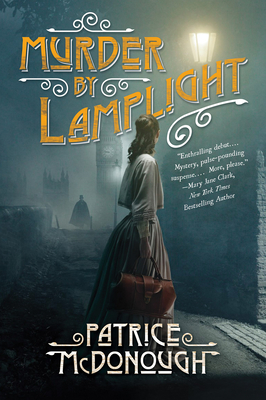
To study medicine, Julia had to leave Britain, where universities still bar their doors to women, and travel to America. She returned home to work in her grandfather’s practice—and to find London in the grip of a devastating cholera epidemic. In four years, however, she has seen nothing quite like this—a local clergyman’s body sexually mutilated and displayed in a manner that she—and Tennant—both suspect is personal.
Days later, another body is found with links to the first, and Tennant calls in Dr. Lewis again. The murderer begins sending the police taunting letters and tantalizing clues—though the trail leads in multiple directions, from London’s music halls to its grim workhouses and dank sewers. Lewis and Tennant struggle to understand the killer’s dark obsessions and motivations. But there is new urgency, for the doctor’s role appears to have shifted from expert to target. And this killer is no impulsive monster, but a fiendishly calculating opponent, determined to see his plan through to its terrifying conclusion . . .
In this book we meet dr Julia Lewis, who has done her best to become a physician like her grandfather, with whom she works. When the story begins Julia is replacing her grandfather on a murder scene, and that is when she meets detective Tennat of Scotland Yard. At first, every policeman is wary of her presence, but Julia is quite professional and as the murders pile up, she keeps attending the location and even provides interesting information. However, someone has a killing agenda, but the connection between the victims doesn't seem easy to find.... then, at some point, it also feels the killer might have his sight on Julia... could it be that her dedication is her downfall?
Women having professions which are not the norm in the 1800s might not always seem easy to accept but I must say I was all onboard with Julia as a doctor and having her help with police crime scenes too. I was very much in awe of her competence and professionalism, although it felt as if she was a little too aloof at times. Perhaps this has to do with the writing style, which is to the point and without many extras, and sometimes that can be read as impersonal.
The plot has many of the elements I usually look for in these types of books, meaning historicals where the main focus is on a crime being investigated. An unknown villain is killing people and at first it felt nothing would link them but the investigators start noticing the killer's calling card was a balloon (like the ones from kids' parties) and they start looking into the victims' identities until they find things that all of them have in common. The process didn't feel rushed and the several situations are often peppered by some social commentary and information about the protagonists.
I was quite interested in reading this and wanting to find out what would happen next. I would say the writing style isn't always as charismatic as it could, but the way things played out kept me curious. I never considered the villain to be the person it is, and that added one more surprising factor for me. It does feel a little unfair how the villain's reasons for the crimes are made to seem unfavorable and I wish more attention had been given to it. I suppose the historical factor here might be a reason for it.
Ah, I see you finally did read it, glad to see you liked it--although it seems I liked it quite a bit more than you did (my review, from last March, is here; you commented on it at the time)
ReplyDeleteVery true!!
DeleteIt was a very pleasant reading experience, even though the themes aren't happy nor all that positive.
I will certainly read the next one, I am that curious!