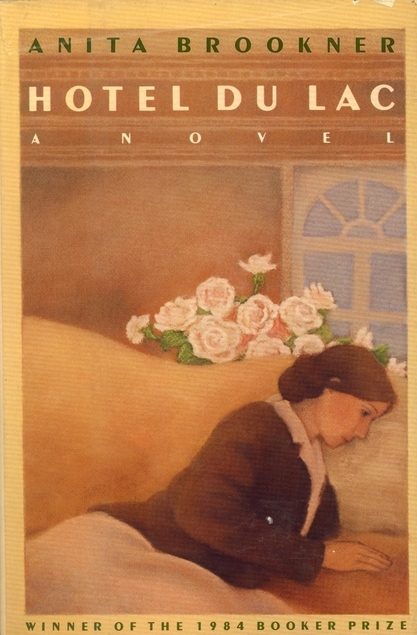
But instead of peace and rest, Edith finds herself sequestered at the hotel with an assortment of love's casualties and exiles. She also attracts the attention of a worldly man determined to release her unused capacity for mischief and pleasure.
Beautifully observed, witheringly funny, Hotel du Lac is Brookner at her most stylish and potently subversive.
Comment: This was another book I brought from the library. It was small and the blurb plus accolades on the cover - more than the fact it won the Booker Prize in 1984 - convinced me to try it...
Edith Hope is a novelist whose work is very well received but she does write her romances under a pseudonym, for her position in society demands discretion. She might have professional success but her personal life isn't as great and to avoid scandal, she is convinced by her friends to travel to Switzerland, to stay in a luxury hotel and have time to write. But Edith cannot avoid the other occupants of the hotel nor the realization that interacting with them brings her more than companionship... perhaps she should be more observant but the fact is, she meets an impressive man who might be the answer to her spinsterhood...
Spoilers included!
I feel very, very naive. I knew this was an older book (published before I was born) and that the writing would certainly be in par with its release, but I still let myself be seduced by the pretty words in the cover of the Portuguese edition I've read. The opinions of The Times and other sources claimed this would be "a remarkable love story" and similar characterizations, but to me this book was not romantic and not even heartbreaking as often happens in literary fiction.
It's true I didn't know the author before trying this book, thus I envisioned a book with tame subjects, a debate on the role of women in society, yes, but where sweet feelings would be the highlight and perhaps the "lessons" on what is morally accepted or not. Quickly, this proved to be the opposite; Edith is at the hotel on the aftermath of leaving her fiance while she maintains a hopeless relationship with a married man, with whom she is tremendously in love. I was put off, both for the adultery with no reason, and also for the pity of wasting a clever heroine on such a ridiculous premise.
The times were different, the rules and appearances of society too, but it makes me rather angry to think that people back then didn't care, or were led to think they didn't have to care for what their attitudes and decisions really meant. Why, of so many men, having to choose an unavailable one? Just like in the 13th century, platonic love being the climax of an impossible situation for which there was no choice after all, which was the commendable goal, now here were these "modern" people doing things without need. I kind of felt disappointed in Edith and struggled to be interested in her plight because she didn't have to be with that man and he, too, was despicable to me.
Anyway, Edith is at the hotel, with these thoughts and depressing ideas, and she keeps meeting other clients and somehow learns of their lives and we, of course, get to see them for what they represent. I can certainly see the cleverness of the author, and why her writing is worthy of being considered for a prize, but everything is, to me, too subtle. The author makes allusions and hints at things, in regards to the character's behaviors and decisions, which are indication of what judgement we should pass as well. I can see how this book offers the necessary to satisfy those who like posh writing, but the plot failed on all counts to me.
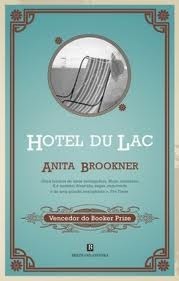 |
| Portuguese cover |
Literary fiction, ugh! (Better luck next time)
ReplyDeleteHow had Forrest Gump put it, or better, its writer? Books are also like a box of chocolates! LOL
Delete