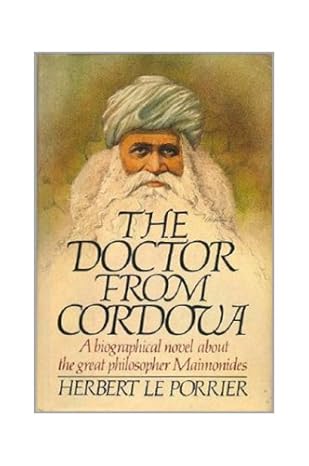
Comment: I got this book for a symbolic price on the purchase of a newspaper, several years ago. The newspaper had this initiative of "offering" a collection of historical romances if one were to buy the newspaper. The "offer" is not really an offer of course, but it did cost less than if one were to buy the book on a bookshop, plus the covers were all similar and I liked the idea of seeing them in the shelf.
Moses Maimonides, a possible name for this real life man, who was born in the 12th century, is the key character of this novel, narrated by him, as if he is dictating a letter to one of his disciples. In this text, he tells his story, namely of how he was born in a Jewish family in Cordova, Spain, and how everything changed when the Muslims conquered the region and forced conversions or death on those who were not of the same faith. Moses and his father and younger brother have to flee and seek another life somewhere else...
This is a short book and that helped to motivate me to pick it up now, but I will say I was positively impressed by it. Before this, I confess I had not heard of this doctor/philosopher, someone who was what we would call a trailblazer in his time, and it was a reward on itself to read about him and his ideas, at the same time I was learning a bit more about the period of time and the events mentioned. Nowadays, we are lucky to have internet to help investigate stuff if it catches our fancy!
I had not heard of the author either, thus, for clarification, the author was born in a region which is now in Ukraine, wrote this in the 1970s, using research to create a fictional life for a man who was referenced in many texts but of whom we don't have any official information beyond those references. The book is narrated as if by Moses himself and the author included not only possible events Moses saw and lived through, but also many personal moments and thoughts which are likely an interpretation.
I think what made me appreciate this book more was the fact the author perfectly blended his ideas and the descriptions of what he was going through. Moses was a Jewish man, believer and from a traditional family and when so many situations placed them in a position in which they couldn't live their faith as they thought was their duty, this placed a heavy burden on their shoulders and, perhaps, this is the origin of so much of his need to do research, to study, to match his beliefs with others. While reading, I kept thinking that, in so many centuries, we still fight nowadays over who is more right in thinking their God is the One.
I especially liked the philosophical ideas Moses presented because, being religious, some of his thoughts were certainly not seen well by many, but from a logical POV, many things make sense and are still quite viable to out contemporary way of analytical thinking. This is especially interesting when we think Moses was a doctor, at a time so much depended on the texts of former people such as Herodotus, and while understandable, some things still make me wonder how easier it would have been if certain things in the world of medicine had been made clear so long ago...
No comments:
Post a Comment