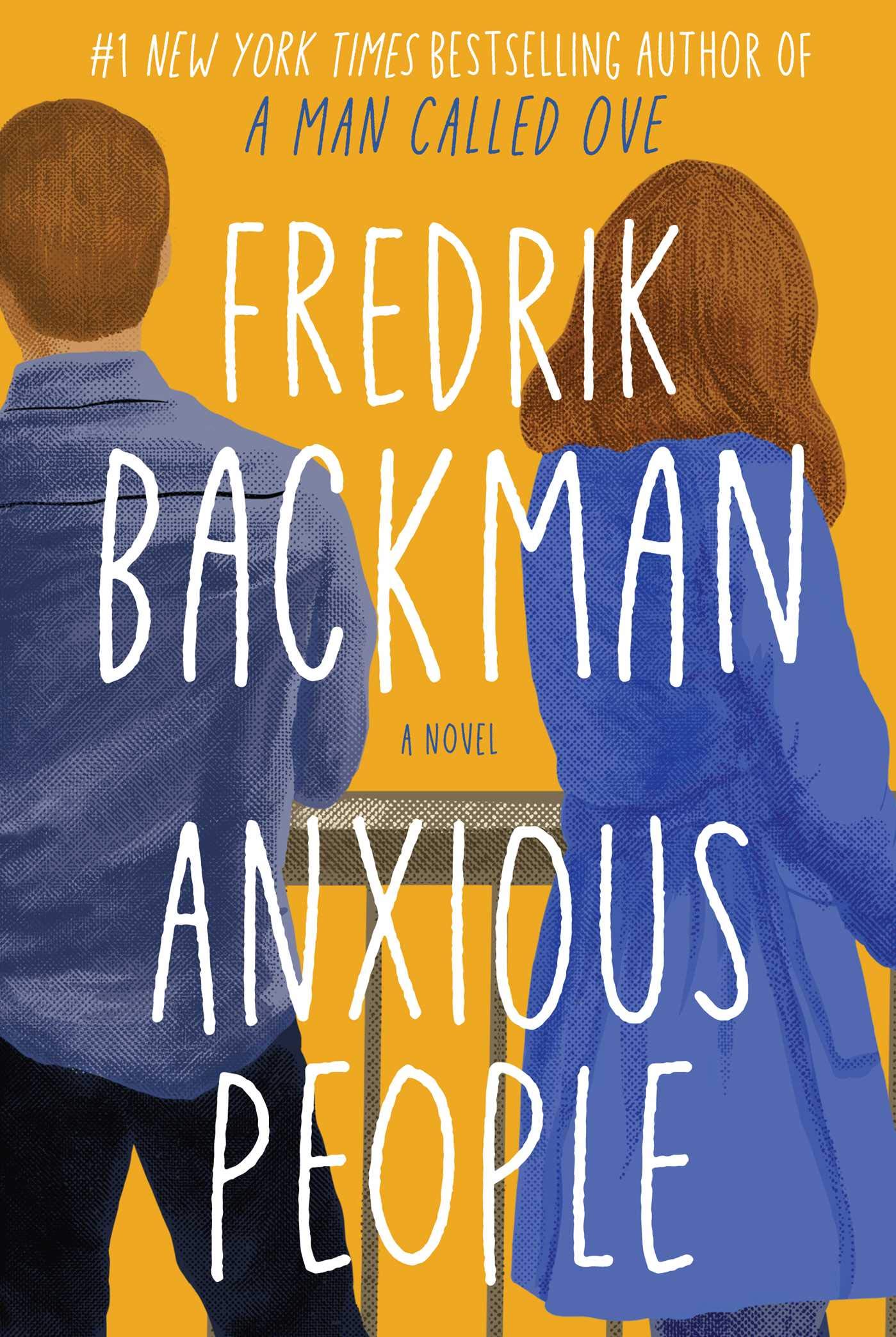
First is Zara, a wealthy bank director who has been too busy to care about anyone else until tragedy changed her life. Now, she’s obsessed with visiting open houses to see how ordinary people live—and, perhaps, to set an old wrong to right. Then there’s Roger and Anna-Lena, an Ikea-addicted retired couple who are on a never-ending hunt for fixer-uppers to hide the fact that they don’t know how to fix their own failing marriage. Julia and Ro are a young lesbian couple and soon-to-be parents who are nervous about their chances for a successful life together since they can’t agree on anything. And there’s Estelle, an eighty-year-old woman who has lived long enough to be unimpressed by a masked bank robber waving a gun in her face. And despite the story she tells them all, Estelle hasn’t really come to the apartment to view it for her daughter, and her husband really isn’t outside parking the car.
As police surround the premises and television channels broadcast the hostage situation live, the tension mounts and even deeper secrets are slowly revealed. Before long, the robber must decide which is the more terrifying prospect: going out to face the police, or staying in the apartment with this group of impossible people.
Rich with Fredrik Backman’s “pitch-perfect dialogue and an unparalleled understanding of human nature” (Shelf Awareness), Anxious People’s whimsical plot serves up unforgettable insights into the human condition and a gentle reminder to be compassionate to all the anxious people we encounter every day.
Comment: This is the fourth book I try by this author but I was not planning on reading more, to be honest. Still, this and another title I had not previously read seem to be available at the library so I've brought this one...and will likely read the other some day.
This story begins with a bank robbery but things go horribly wrong. The bank robber doesn't seem to be very certain of what is happening and how things should proceed and then decides to escape by entering an apartment which was open door. However, the people touring the apartment become very bothersome hostages, for they are incredibly willful and have too strong personalities. This turns out to be a positive thing for the robber, though, when the police is doing interrogations, because it seems the robber had a very good reason to think it would be a good idea to rob a bank...
After reading four books by this author I can say I have liked them all, but half of them had fit my taste perfectly, while the others were not as on point. This means that while I really appreciate the author's style as a whole, there are certainly stories - I can already anticipate this - in which the style is perfection and others where it feels tiresome.
For this book, the author intended to mix up comedy and social commentary. This is not a sweet story like A Man Called Ove, nor a character study as Beartown - these are my personal views on those books - but an almost satirical commentary one can find in a comedy or errors, in which ridiculous things happen in a way meant to seem funny or as if it's a comedy. Sadly, to me, I've failed to see it that way and my average focus only settled on how ridiculous some situations were. I can understand where the author was going with this story but I didn't like it that much.
I did like it that the author used this apparently silly story to criticize many things we see in most western societies, such as the pressure put on people to perform at work and in their daily lives and how so much is set on economy and markets, which glaring induce people to make certain's choices, especially when it comes to money and investments and so on. The bank robbing situation was kind of related to this, but the author found a way to involve all the characters in a chain of reactions, by placing them all in positions in which their lives touch one another more than what it should.
Thus, the two elements I've liked the most were these: the food for thought gained by having some characters say certain things sometimes and how this can translate into everyday life, and how the apparently random characters in an open house are linked so much more ewe would assume, which later includes the policemen and one or two other secondary characters. As I have seen in the other books, this author is a very good planner and has very compelling ideas behind everything.
Unfortunately, I simply did not enjoy the writing style here. The story feels cluttered with all the change of narrative and the interrogations of the hostages. The style was too much like a silly comedy and I did not find it fun. In fact, I was rather annoyed at how absurd this was, to the point of it being so over the top and so irritating that I've found myself skipping some of the interrogations. This certainly did not match the wonder of the books I liked the most by the author, in which similar tactics to use comedy worked out so well. I cannot explain it, but here it simply didn't suit me.
No comments:
Post a Comment